

Acquisition · Valuation · India
Pharmaceutical company valuation in India comes down to one question: what can these approvals, premises and cash flows earn under the rules in force today? Value the unit three ways — cost, income and market, the approaches named in ICAI’s Indian Valuation Standard 103[5] — and give the earnings figure weight only for a running unit with CA-certified accounts.
Then deduct three things most buyers miss: the capex needed to close the Revised Schedule M gap, the liabilities you take on, and the licence-continuity risk your deal structure creates. A drug manufacturing licence is tied to the licensee and the premises; on a change in the firm’s constitution it stays valid for at most three months unless a fresh licence is taken[1].
Pharmaceutical company valuation in 2026: what changed
Until 2025 a buyer could treat GMP upgrades as a post-deal project. That window has closed. Revised Schedule M is no longer a pending deadline; it is the standard every unit is inspected against, so the cost of meeting it now sits inside the price.
- 28 Dec 2023Schedule M substituted by G.S.R. 922(E). Large manufacturers (turnover above ₹250 crore) got six months; small and medium manufacturers (₹250 crore or less) got twelve[1].
- Feb 2025MoHFW allowed units of ₹250 crore turnover or less to extend to 31 Dec 2025, but only if they filed a Form A application with an upgradation plan[2].
- 7 Nov 2025DCGI directed state and UT regulators to inspect units that sought the extension, and to inspect and act immediately against units that did not apply[3].
- Jan 2026Revised Schedule M in force for all units, with no further extension reported; enforcement is risk-based, and NSQ results trigger CAPA notices and possible licence suspension[4].
Valuation consequence. A unit that has not closed its Schedule M gap is not worth its replacement cost minus a small discount. It is worth that figure minus the full upgrade capex, minus the months of lost production while the work and re-inspection happen. Ask for the gap assessment and CAPA status before you discuss price. Current dates and status: CDSCO Revised Schedule M status and checklist.
Three approaches to value a pharmaceutical company
ICAI’s Indian Valuation Standards, effective from 1 July 2018, group methods into the market, income and cost approaches (Ind VS 103), and apply to valuations carried out under the Companies Act, 2013[5]. Where the Act requires a valuation, it must be done by a registered valuer under section 247; IBBI administers registration, in three asset classes: Land and Building, Plant and Machinery, and Securities or Financial Assets[6]. For a pharma plant, each approach has a specific trap.
| Approach | What it measures | When it should lead | Pharma-specific trap |
|---|---|---|---|
| Cost (depreciated replacement cost) | Land at market value plus the cost to replace the building, cleanrooms, HVAC, water system and machinery, less wear and obsolescence | Shut units, loss-making units, small plants without clean accounts. Usually the floor in a negotiation | A cleanroom that must be rebuilt for Schedule M has no replacement value in its current form. Obsolescence, not age, drives the haircut |
| Income (DCF or capitalised earnings) | Present value of the cash the unit will generate | Running units with three years of CA-certified statements and contracts that survive the sale | Third-party conversion charges and loan-licence income can leave with the client. Normalise promoter salaries and related-party purchases first |
| Market (comparable transactions) | What similar units changed hands for | Only when genuinely comparable, disclosed deals exist | Unlisted Indian plant deals are rarely disclosed. Asking prices are not transaction prices, and listed formulation-company multiples overstate a single MSME plant |
Scroll the table sideways to see all columns.
In practice the cost approach sets the floor, the income approach sets the ceiling for a running unit, and the gap between them is where the regulatory findings in the next two sections do their work.
Pharmaceutical company evaluation factors that move the price
Generic advice lists “assets, revenue and location.” For an Indian formulation plant, these eight factors decide most of the gap between the asking price and a defensible one.
01Licences and product list
Form 25 covers drugs other than those in Schedules C, C(1) and X; Form 28 covers Schedule C and C(1) drugs, excluding Schedule X[1]. Value the sections and products actually endorsed, not the ones the seller says could be added.
02Revised Schedule M status
Compliant after inspection, CAPA under way, or not started. Gap capex is a deduction, never an upside.
03HVAC and water system
Zoning, classification and qualification records. These are the costliest items to rebuild and the slowest to requalify.
04QC laboratory
Qualified, calibrated instruments and, where the product range needs it, a microbiology facility. A lab that must be outsourced changes both cost and control.
05Land tenure and location
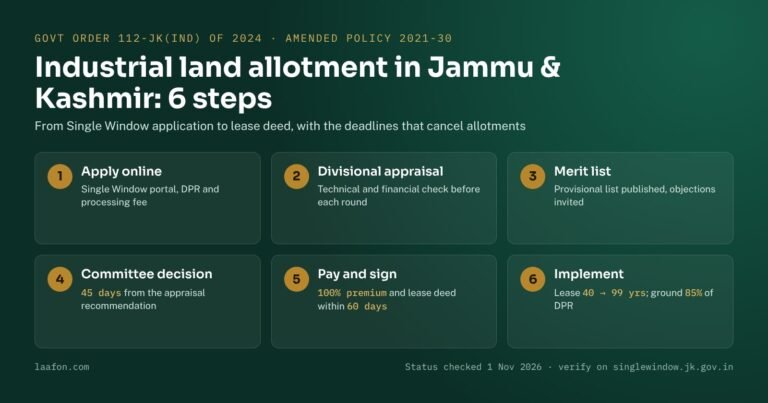
Freehold or industrial-plot lease, and the lessor’s transfer conditions. Clusters such as Baddi, Haridwar–Roorkee and Jammu matter for labour and vendors. Practice note: read the allotment or lease deed before pricing.
06Quality of revenue
Own-brand sales, third-party conversion and loan-licence clients behave differently after a sale. Until CA-certified statements are reviewed, every figure is seller declared.
07Regulatory history
NSQ results, show-cause or suspension orders and the last inspection report. NSQ surveillance alone drove about 850 CAPA notices in ten months[4].
08Consents and safety
State Pollution Control Board consent to operate and the fire NOC, both current. An expired consent is a restart delay you will pay for.
Area is a separate test: a unit that cannot fit its sections within the space Schedule M expects cannot be fixed with money alone. See the Schedule M area requirements for each section.
Licence continuity: why deal structure changes the value
You are buying premises and approvals, and the approvals do not travel freely. Three rules in the Drugs Rules, 1945 decide how much of the licence value actually reaches the buyer[1]:
- Change in constitution. The licensee must inform the licensing authority of any change in the constitution of the firm. The current licence is then valid for a maximum of three months from the change, unless a fresh licence is taken in the name of the changed firm (Form 25 and Form 28 conditions).
- Perpetual validity, with a fee. Licences in Form 25 and Form 28 remain valid if the licence retention fee is paid before the end of every succeeding five-year period from issue (Rules 72 and 77). Late payment attracts 2% of the licence fee per month for up to six months; after that the licence is deemed cancelled.
- Periodic assessment. Compliance with licence conditions is assessed not less than once in three years, or as needed on a risk basis.
| Deal route | What changes | Licence consequence | How to reflect it in price |
|---|---|---|---|
| Asset purchase | A new entity buys land, building and machinery | The buyer applies for its own licence for the premises. Practice note: treat approvals as re-obtainable with time and inspection, not as owned | Value approvals at the cost and months needed to re-obtain them; discount for the production gap |
| Share purchase | The licensee company stays the same; ownership and directors change | Changes must be intimated. Practice note: whether a state treats a change of control as a change in constitution varies, so get the licensing authority’s position in writing before closing | Higher licence value, but you inherit every liability; price indemnities and escrow accordingly |
| Partnership or proprietorship change | Partners or proprietor change | Licence valid for at most three months unless a fresh licence is taken[1] | Make the fresh licence a condition precedent to final payment |
Scroll the table sideways to see all columns.
Fact versus practice. The three-month rule, the retention fee and the three-yearly assessment are quoted from the Drugs Rules. The asset-versus-share consequences are practice notes from transaction work; state licensing authorities differ, and your legal adviser should confirm the route for the specific state.
Indicative valuation calculator
Enter your own figures in ₹ crore. The tool sets an asset-based floor and, for a running unit, an earnings-based figure, then deducts liabilities and the Schedule M gap from both. It does not supply a multiple: the multiple must come from a registered valuer’s comparables. The example values describe a hypothetical shut unit — replace them.
Assets (cost approach)
Deductions
Earnings (running units only)
Asset-based value
Earnings-based value
Indicative range
- Land—
- Building after condition—
- Machinery after condition—
- Net working capital—
- Less liabilities—
- Less Schedule M gap capex—
Indicative only. A figure for negotiation, not a valuation report.
Comparing buying with building? Benchmark the new-build side with the pharma plant setup cost calculator and the 2026 pharma manufacturing plant cost breakdown.
Red-flag check before you sign
Tick each document you have actually seen and found clean. Anything left unticked is a price risk until it is resolved.
12 of 12 items still open. Treat any number as an indicative asking range only.
Tips for buyers and sellers
For buyers
- Do the regulatory diligence before the financial model. A licence or Schedule M problem changes the method, not just the number.
- Separate what you are paying for: land, buildings, machinery, approvals and goodwill. Each carries a different risk.
- Tie payments to events: a fresh or confirmed licence, a clean inspection, transfer of consents.
- Hold back part of the price against Schedule M CAPA items and undisclosed liabilities.
For sellers
- Prepare the documents in the red-flag list before you set a price; every missing one becomes a discount.
- Get CA-certified accounts. Without them, buyers price your turnover as an unproven claim.
- Disclose the Schedule M gap and your CAPA plan. Buyers will find it, and disclosed gaps cost less than discovered ones.
- Commission a registered valuer’s report so the negotiation starts from a defensible figure.
Price the plant only after the diligence is done
A valuation is only as good as the documents behind it. The 50-point checklist covers licences, Revised Schedule M, utilities, QMS and data integrity, and how share and asset purchases affect the licence.
Open the pharma plant acquisition checklistLooking for a unit to value? See pharma plants for sale in India.
Related on Laafon
Frequently asked questions
Using the cost, income and market approaches recognised in ICAI’s Indian Valuation Standard 103. For a single formulation plant, the depreciated replacement cost of land, buildings and machinery usually sets the floor; discounted or capitalised earnings matter only for a running unit with certified accounts. Revised Schedule M gap capex, assumed liabilities and licence-continuity risk are then deducted.
Not automatically. Under the Form 25 and Form 28 conditions in the Drugs Rules, 1945, a change in the constitution of the firm must be reported, and the licence stays valid for at most three months unless a fresh licence is taken. In an asset purchase the buyer applies for its own licence; in a share purchase the licensee company is unchanged, but confirm the state licensing authority’s position in writing before closing.
Directly. Revised Schedule M (G.S.R. 922(E), 28 December 2023) applies to all units from January 2026 and state regulators are inspecting against it. The capex and production time needed to close any gap are deducted from the price, and a unit facing suspension is valued closer to its asset floor.
Where the Companies Act, 2013 requires a valuation, a registered valuer under section 247, registered with IBBI in the relevant asset class: Land and Building, Plant and Machinery, or Securities or Financial Assets. In a private deal it is still the safest basis for negotiation, and a regulatory review of licences and GMP status should sit alongside it.
Laafon does not publish one, because disclosed transaction data for unlisted Indian plants is thin and a single figure would mislead. Listed formulation-company multiples overstate a single MSME plant. Use a multiple drawn from a registered valuer’s comparables, and only on normalised, certified earnings.
Usually, because it is valued on the cost approach with no earnings to support a premium. Its licence remains valid only if the retention fee has been paid every five years and the licence has not been suspended or cancelled, and restarting needs current consents and a unit ready for Schedule M inspection. Check all three before pricing.
References
- Central Drugs Standard Control Organization. The Drugs Rules, 1945 (consolidated, dated 1 Jul 2024): Rules 72 and 77; Form 25 and Form 28 conditions; Schedule M as substituted by G.S.R. 922(E) dated 28 Dec 2023. New Delhi: Ministry of Health and Family Welfare; 2024. Available from: https://cdsco.gov.in/opencms/opencms/en/Acts-and-rules/Drugs-Rules/. Accessed Oct 2026.
- Lexplosion. Health Ministry extends Schedule M compliance deadline for small and medium manufacturers with turnover below Rs 250 crores to 31st December 2025. 14 Feb 2025 (secondary report of the MoHFW notification). Available from: https://lexplosion.in/health-ministry-extends-schedule-m-compliance-deadline-for-small-and-medium-manufacturers-with-turnover-below-rs-250-crores-to-31st-december-2025/. Accessed Oct 2026.
- Business Standard. Pharma units likely to face action for Schedule M violations: experts. 8 Nov 2025 (reports the DCGI directive dated 7 Nov 2025). Available from: https://www.business-standard.com/industry/news/cdsco-asks-state-units-to-start-inspections-under-schedule-m-norms-125110801170_1.html. Accessed Oct 2026.
- Business Standard. CDSCO tightens quality net with audits, scientific cadre overhaul. 23 Feb 2026. Available from: https://www.business-standard.com/industry/news/cdsco-tightens-quality-net-with-audits-scientific-cadre-overhaul-126022300465_1.html. Accessed Oct 2026.
- KPMG in India. First Notes: ICAI issues Indian Valuation Standards (Ind VS 101–103, 201, 301–303). Aug 2018 (secondary summary of the ICAI standards). Available from: https://assets.kpmg.com/content/dam/kpmg/in/pdf/2018/08/firstnotes-ind-vs-valuation-standard-icai.pdf. Accessed Oct 2026.
- Insolvency and Bankruptcy Board of India. Press release: Registered Valuers (section 247 of the Companies Act, 2013; Companies (Registered Valuers and Valuation) Rules, 2017). New Delhi: IBBI; 31 Dec 2017. Available from: https://ibbi.gov.in/webadmin/pdf/whatsnew/2017/Dec/Valuer-Press Release_2017-12-31 19:27:48.pdf. Accessed Oct 2026.
This page is technical and educational information for pharmaceutical professionals. It is not investment, legal, tax or valuation advice, and the calculator output is not a valuation report. The Drugs Rules, 1945 and Revised Schedule M are amended from time to time and state licensing practice varies; confirm the current position with the licensing authority, a registered valuer and your legal adviser before any transaction.