Plant listing · Paonta Sahib, Sirmaur, Himachal Pradesh
Dual-Licence Pharma and Nutraceutical Plant for Sale in Paonta Sahib, Himachal Pradesh — ₹4 Crore
A running two-stream unit on a single licensed address. The tablet section manufactures drug formulations under state licences in Form 25 and Form 28, while the capsule and oral liquid sections produce nutraceutical and herbal supplement lines under a central FSSAI manufacturing licence carrying 22 approved products. ISO Class 8 core areas, a 1 KL/hour purified water plant and an HPLC-equipped quality control laboratory. Seller-stated annual turnover ₹5 crore. Asking price ₹4 crore.
At a glance
Facility overview
The figures below are taken from the site master file, the two drug manufacturing licences and the FSSAI central licence supplied by the seller. Where a field is blank in those documents it is shown here as not disclosed rather than filled with an assumption. The unit is stated to be operational, with an annual turnover of ₹5 crore across both streams. The seller’s identity, licence numbers and product brands are withheld at this stage and are released under a signed non-disclosure agreement.
| Parameter | Details |
|---|---|
| Location | Village Patti Natha Singh belt, Tehsil Paonta Sahib, District Sirmaur, Himachal Pradesh · PIN 173025 |
| Distance from Chandigarh | Approximately 110 km, per the site master file |
| Total covered area | 268.25 square metres, confirmed by the seller as 2,887 sq ft, on a single ground floor |
| Plot / land area | Not disclosed — the documents state covered area only |
| Land tenure | Not disclosed — freehold, leasehold or HPSIIDC allotment to be confirmed |
| Construction | Brick and plaster walls with PU paint, epoxy flooring, epoxy coving wall-to-wall and wall-to-floor, false ceiling, powder-coated flush doors |
| Sections and what each makes | Tablet section: drug formulations, non-beta-lactam general category, under the drug licences. Capsule and oral liquid sections: nutraceutical and herbal supplement production under the FSSAI licence — not drug manufacture |
| Drug licences | Form 25 and Form 28, granted 25 August 2023 by the Assistant Drugs Controller-cum-Drugs Licensing Authority, Nahan, District Sirmaur. Both endorsed “as permitted for Tablets Section — General Category only”, which matches the way the unit is actually run |
| Food / nutraceutical licence | FSSAI central manufacturing licence (Form C) for food and health supplements and nutraceuticals, issued 22 November 2022, valid to 21 November 2027, production capacity 5 MT per day, 22 approved product lines. This is the licence the capsule and oral liquid sections operate under |
| WHO-GMP certificate | Not produced. The site master file refers to WHO-GMP guidelines for stability testing only. Do not treat this unit as WHO-GMP certified unless a certificate is produced |
| Stated annual capacity | Tablets 232 million · capsules 12 million · oral liquid 18 million (unit of measure for oral liquid not defined in the document; treat all three as nameplate figures) |
| Cleanliness classification | ISO Class 8 (Class 100,000) at rest in all core process areas, described as Grade D, minimum 20 air changes per hour |
| Purified water | 1.0 KL/hour DM plant with 1.0 KL jacketed SS 316L storage and circulating loop, to Indian Pharmacopoeia purified water specification |
| Quality control | In-house instrumental and chemical laboratory with HPLC and UV-VIS; microbiological testing outsourced to a contract laboratory |
| Manpower on record | 11 persons — 2 QA, 1 QC, 2 production, 1 warehouse, 1 engineering, 4 workers |
| Markets served | Domestic only, by road transport. No COPP or export registration disclosed |
| Annual turnover | ₹5 crore, seller-stated and unaudited. EBITDA and the split between drug tablets and FSSAI nutraceutical output are not disclosed |
| Current operating status | Running. Confirm shift pattern, capacity utilisation and current order book during the site visit |
| Revised Schedule M status | Not disclosed — mandatory for every manufacturer since 1 January 2026 |
| Asking price | ₹4 crore, approximately 0.8 times stated turnover. Scope of inclusion (land, building, plant and machinery, licences, brands, stocks) to be confirmed in writing |
Swipe the table sideways to see all columns.
Inside the unit
Installed plant and machinery
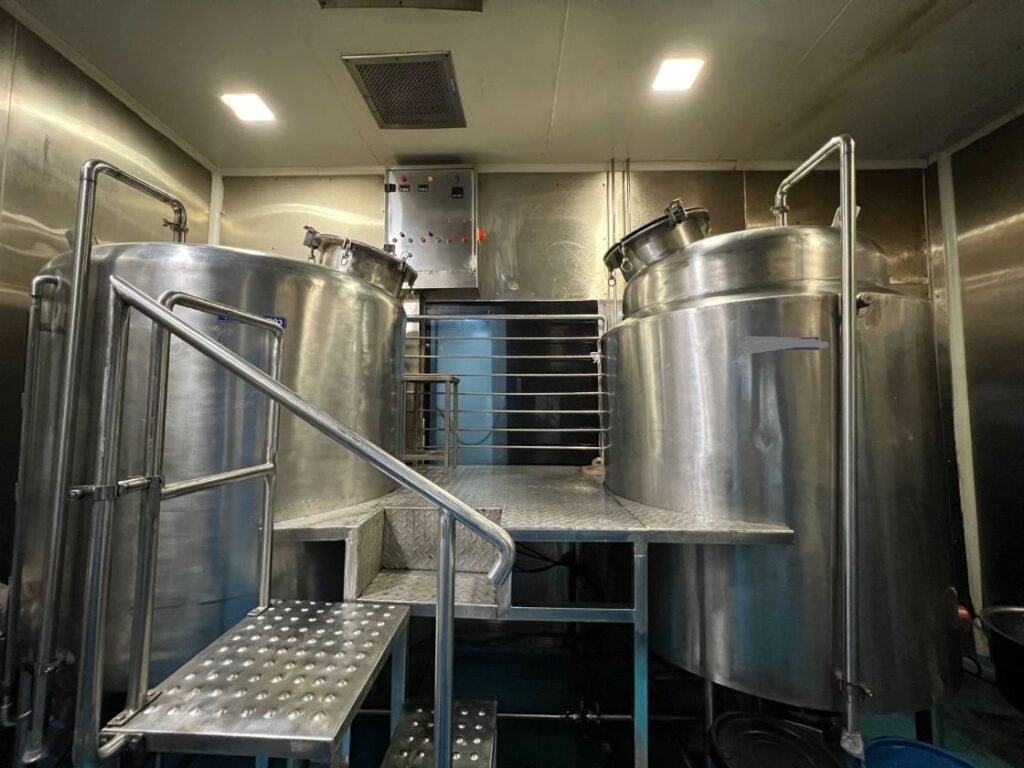
Photographs supplied by the seller and taken on site in March 2026. Machine names visible on the nameplates are reproduced as seen; make, model, year of manufacture, qualification status and current working condition all need to be verified against the equipment history cards and a physical inspection.
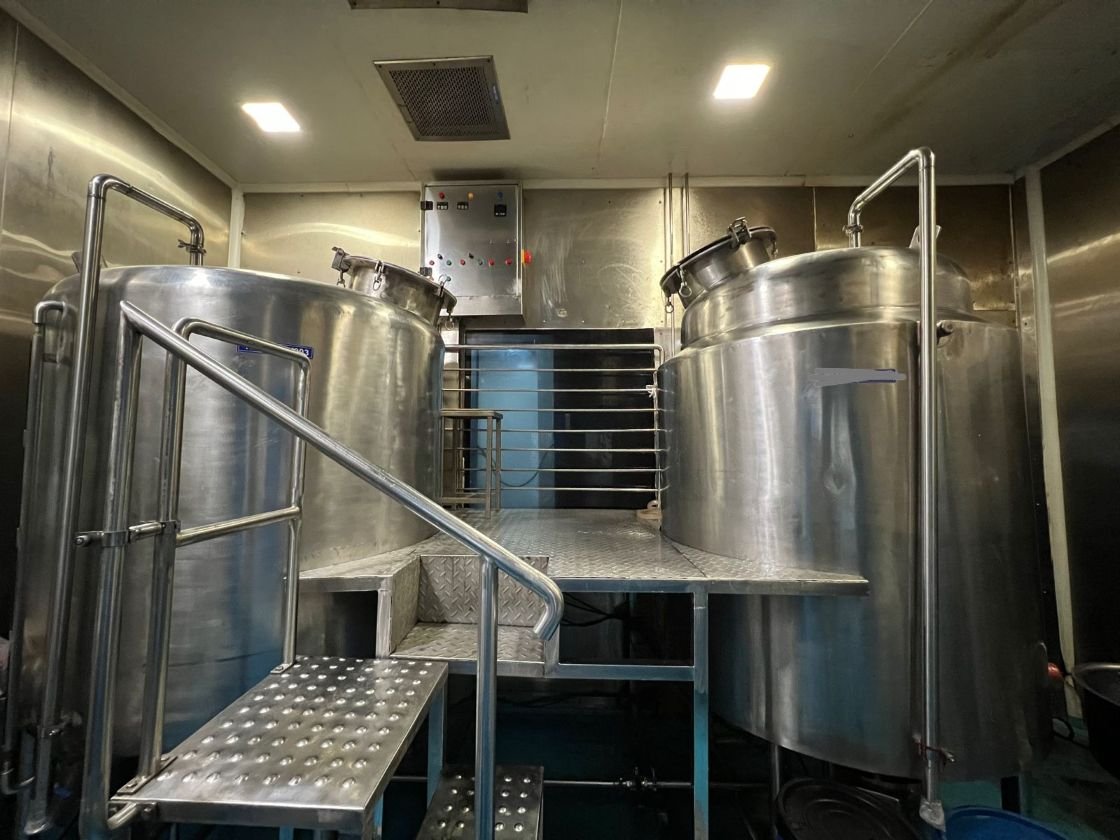
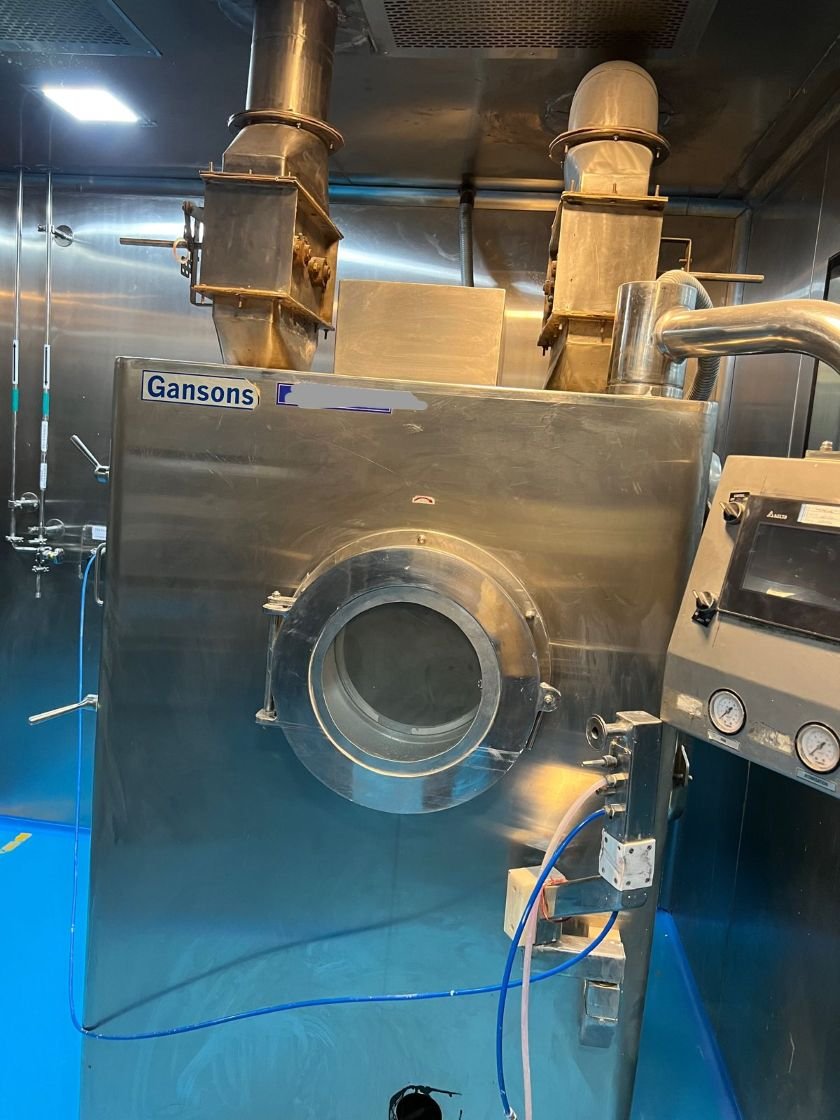

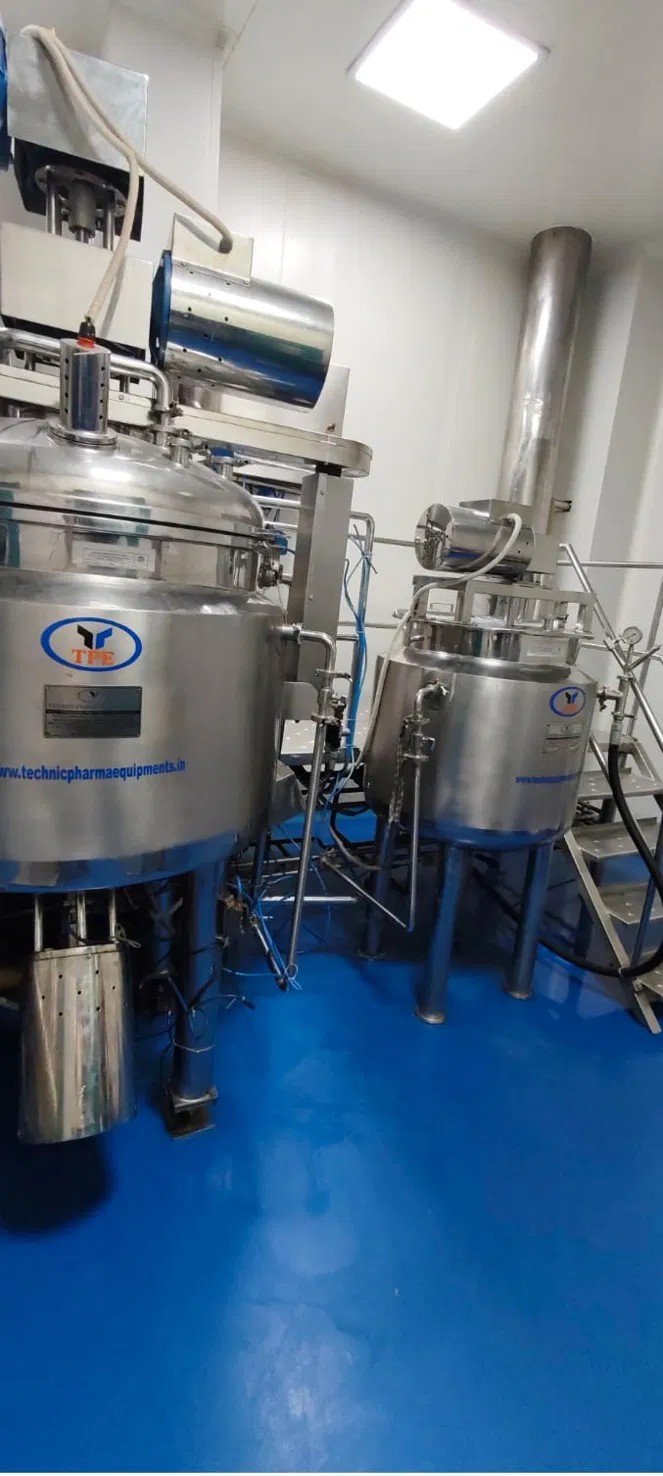
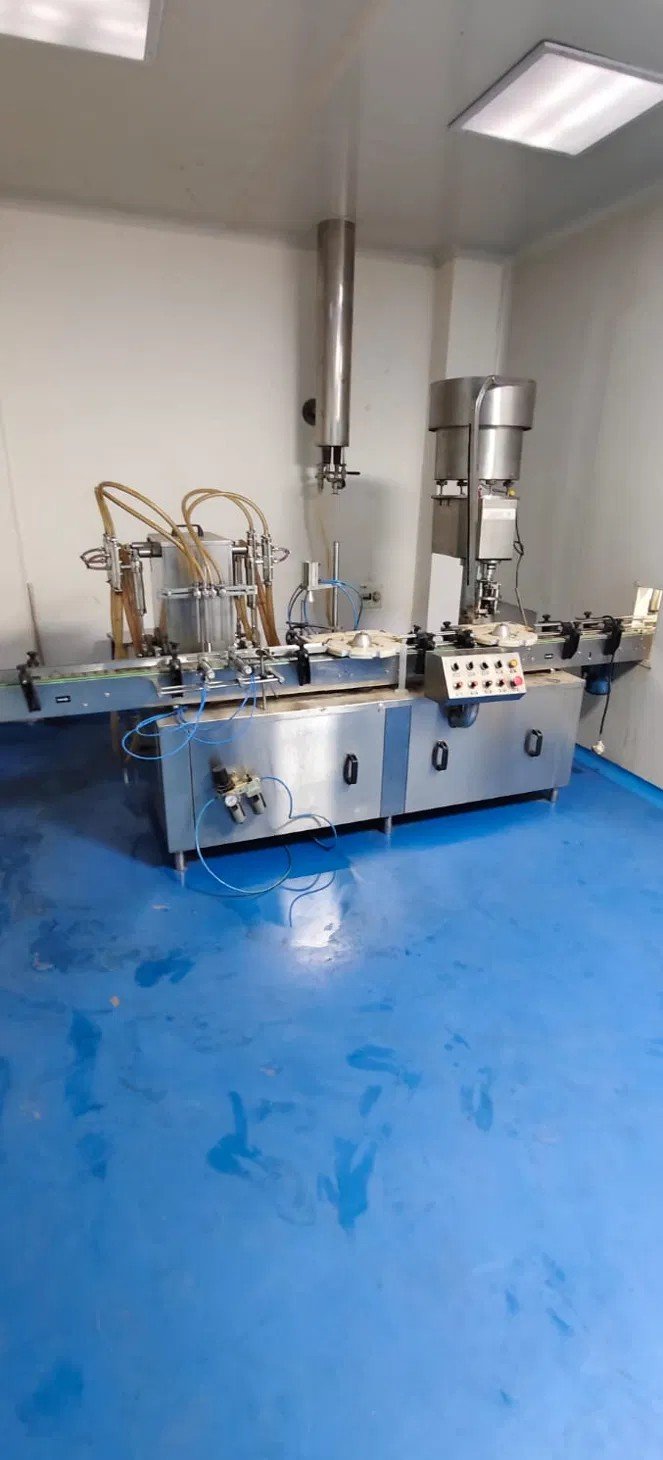
What the photographs do not show: the compression machine, the capsule filling machine, the granulation train, the blister or strip packing machine, the air handling units, the purified water plant and the quality control laboratory. Ask for images and equipment history cards for each of these before valuing the machinery.
Compliance
What the licences actually permit
This unit runs two regulated streams from one address, under two different statutes. Understanding which section sits under which licence is the key to reading the rest of this listing, and to knowing what a buyer can and cannot make on day one.
Stream one — drugs
Form 25 and Form 28, tablet section
Form 25 is issued under Rule 70 of the Drugs Rules, 1945 for drugs other than those specified in Schedules C, C(1) and X. Form 28 is issued under Rule 76 for drugs specified in Schedules C and C(1), excluding Schedule X.1 Holding both is genuinely useful: it opens Schedule C(1) categories, which is where a good deal of vitamin and hormone tablet work sits, on top of ordinary general-category products.
Both licences are endorsed “as permitted for Tablets Section — General Category only”, and that is exactly how the plant operates. Drug manufacture happens in the tablet section. The capsule and oral liquid sections are not drug-licensed and are not used for drug manufacture.
The upside for a buyer sits here. The capsule and liquid rooms are already built, classified and equipped. Bringing them onto the drug licence is a paperwork and inspection exercise under Rule 69(5) for Form 25 and Rule 75(3) for Form 28, not a construction project. Get the licensing authority’s view on timeline and conditions before you price that option in.
Licence duration
Perpetual, but assessed on a risk basis
Since the 2019 amendment, manufacturing licences in these forms remain valid perpetually unless suspended or cancelled, with compliance assessed not less than once in three years or more often on a risk-based approach.2 The licence conditions printed on both certificates repeat this wording.
These licences were granted on 25 August 2023. Three years have therefore elapsed. Ask for the most recent risk-based inspection report, any Form 483-equivalent observations issued by the state authority, the compliance responses filed, and confirmation that the approved technical staff named on the licences are still in post — a change in competent technical staff must be reported to the licensing authority immediately.
FSSAI
A second revenue channel on the same premises
The unit holds a central FSSAI manufacturing licence in Form C under the Food Safety and Standards Act, 2006, for food and health supplements and nutraceuticals, with a declared production capacity of 5 MT per day. The product annexure lists 22 approved lines across syrups, powders, tablets and capsules — folic acid and iron combinations, cholecalciferol, calcium with vitamin D3, whey and soya protein, lycopene combinations, probiotic and prebiotic powders, creatine, silymarin, cranberry and several botanical extracts.
Commercially this is not a side activity, it is half the plant. The capsule and oral liquid sections run against this licence, producing nutraceutical and herbal supplement lines outside CDSCO scope and outside drug price control. The licence runs to 21 November 2027, and renewal can be filed from 180 days before expiry. The full approved schedule is set out in the next section.
Revised Schedule M
No extension window remains
Revised Schedule M was notified on 28 December 2023 by G.S.R. 922(E). Manufacturers with turnover of ₹250 crore or below could apply in Form A to the Central Licence Approving Authority for an extension to 31 December 2025.3 That window closed. The Drugs Controller General directed state controllers in November 2025 to inspect extension applicants against an effective date of 1 January 2026, and the revised standard has applied without relaxation since.4
A unit of this size falls squarely inside the bracket the extension was written for. Three documents settle the position: the Form A upgradation plan if one was filed, the evidence of completion, and the latest inspection report. If none exists, the upgrade cost belongs in your offer, not in the seller’s story.
Nutraceutical scope
The 22 approved FSSAI product lines
Every product below is approved under Food Category 13, foodstuffs intended for particular nutritional uses, sub-category 13.6 food supplements, on the central FSSAI licence held for this site. This is the schedule the capsule and oral liquid sections currently run against, and for many buyers it is the most immediately usable asset on the page: 22 formulations already cleared, on machinery already installed, with no CDSCO approval pathway to repeat.
| # | Approved product | Form |
|---|---|---|
| 1 | Folic acid, zinc, vitamin C and ferric ammonium citrate | Syrup |
| 2 | Cholecalciferol | Syrup |
| 3 | Vitamin D3 and vitamin C with dextrose | Powder |
| 4 | Zinc sulphate and vitamin C with dextrose | Powder |
| 5 | Tri-calcium citrate, magnesium and zinc with vitamin D3 | Tablet |
| 6 | L-lysine with multivitamin and multimineral | Syrup |
| 7 | Vitamins and minerals | Syrup |
| 8 | L-arginine, anthocyanin, krill oil standardised for DHA, vitamin B6 and folic acid | Powder |
| 9 | Silymarin with vitamins and minerals | Syrup |
| 10 | Soya protein isolate with krill oil standardised for DHA, vitamins B1, B2 and C, manganese, cyanocobalamin and folic acid | Powder |
| 11 | Whey protein concentrate with multivitamin and multimineral | Powder |
| 12 | Amla with harar and aloe vera | Syrup |
| 13 | Carica papaya, ginseng, grape seed, green tea and giloy with vitamins and minerals | Capsule |
| 14 | Cranberry extract, D-mannose, potassium citrate and magnesium aspartate | Powder |
| 15 | Diastase with pepsin and vitamin B complex | Syrup |
| 16 | L-arginine with anthocyanin | Powder |
| 17 | Lycopene with thiamine, riboflavin, copper, zinc and L-lysine | Capsule |
| 18 | Lycopene with vitamins B1 and B2, niacin, zinc, L-lysine, biotin, copper, selenium and iodine | Capsule |
| 19 | Pomegranate, tulsi, carica papaya and giloy | Syrup |
| 20 | Prebiotic, probiotic and amylase with zinc | Powder |
| 21 | Creatine | Powder |
| 22 | Lycopene with multivitamin and multimineral | Syrup |
Swipe the table sideways to see all columns.
One question to settle on the herbal range. Several approved lines are botanical — amla with harar and aloe vera, carica papaya with ginseng and giloy, pomegranate with tulsi. Sold as food supplements under this FSSAI licence they are correctly licensed. Marketed with therapeutic claims as Ayurvedic medicines, they would instead need a separate manufacturing licence for Ayurvedic, Siddha and Unani drugs from the state AYUSH licensing authority. Ask which basis the herbal range is actually sold on, and read the label claims and promotional literature, not only the licence.
Layout
Room-wise area schedule
The entire facility sits on one ground floor totalling 268.25 square metres. Every room is small by modern standards, which is the defining physical constraint of this asset and the first thing to test against Revised Schedule M expectations on material flow, personnel flow and segregation.
| Area | m² | Area | m² |
|---|---|---|---|
| Manufacturing (granulation) | 20.32 | Packing hall | 18.01 |
| Compression | 10.89 | Raw material store | 21.05 |
| Coating | 10.89 | Primary packing store | 11.15 |
| Liquid manufacturing | 13.63 | Secondary packing store | 13.90 |
| Capsule filling | 12.26 | Finished goods store | 9.20 |
| Packing machine room | 7.61 | Quality (QA and QC) | 8.92 |
| Liquid filling and sealing | 3.87 | Office | 11.15 |
| Change part room | 3.87 | Corridors and common area | 36.87 |
| Work in process area | 3.87 | Service and utility area | 0.00 (shown as nil in the document) |
Swipe the table sideways to see all columns.
Note on how the rooms are used. The compression and coating rooms serve the drug-licensed tablet section. The capsule filling room and the liquid manufacturing, filling and sealing rooms serve the FSSAI nutraceutical and herbal supplement output. The dispensing area, warehouse, laboratory, water system and HVAC are shared between both streams, which is what makes segregation and changeover cleaning the central inspection question at this site.
Two things to check on site. First, the service and utility area is recorded as zero square metres, yet the unit runs air handling units, a DM water plant, an air compressor rated 205 CFM and an effluent treatment plant. Ask where those sit and whether that space is inside or outside the 268.25 m² figure. Second, an 8.92 m² room housing both quality assurance and quality control, with an HPLC, a UV-VIS spectrophotometer, stability chambers and chemical storage, is tight. Expect a laboratory expansion to be part of any upgrade plan.
Engineering
Utilities, HVAC and quality control
HVAC
ISO Class 8, Grade D
- All core process areas classified ISO Class 8, Class 100,000 at rest — sampling, dispensing, granulation, compression, coating, capsule, liquid manufacturing and primary packing.
- Minimum 20 air changes per hour across operational areas.
- Filtration train: 10 µm synthetic pre-filter, 5 µm micro-vee fine filter, terminal HEPA rated EU13 at 99.997% down to 0.3 µm.
- Temperature 25 ± 3 °C, relative humidity 55 ± 5%, magnehelic gauges on pressure differentials, corridors held at positive pressure.
- Reverse laminar air flow booths for sampling and dispensing.
- Requalification stated at yearly intervals for air flow, filter integrity by DOP or PAO, and non-viable particle counts; airflow visualisation every two years.
Water and air
1 KL/hour purified water
- Potable supply from the government pipeline feeds a single demineralisation train.
- Treatment sequence: cation bed, anion bed, mixed bed exchanger, ultraviolet sanitiser, storage, distribution loop.
- Storage 1.0 KL in a jacketed SS 316L vessel with SS 304 cladding, self-draining.
- Loop maintained at roughly 1 metre per second and 2 bar, SS 316 seamless tubing, electropolished internals, orbital arc welded, dead legs limited to three pipe diameters.
- Specification: Indian Pharmacopoeia purified water, total microbial count not more than 100 CFU/ml, absence of E. coli, Salmonella, Pseudomonas aeruginosa and Staphylococcus aureus.
- Oil-free compressed air rated 205 CFM.
Laboratory
Instrumental and chemical testing
- Listed instruments: HPLC, UV-VIS spectrophotometer, polarimeter, refractometer, pH meter, conductivity meter, Karl Fischer titrator, auto titrator, analytical balance, melting point apparatus.
- Physical testing: dissolution, disintegration, friability, leak test, IR moisture balance.
- Stability chambers located within the QC laboratory; stability protocols stated as per ICH, with three initial batches on accelerated and long-term study.
- Retention samples held one year beyond expiry.
- Microbiological testing is outsourced to an external contract laboratory. There is no in-house microbiology laboratory, which is a gap if export or WHO-GMP certification is the plan.
Location
Paonta Sahib as a manufacturing address
Paonta Sahib sits at the western edge of the Doon valley on the Yamuna, where Himachal Pradesh meets Uttarakhand and, a short distance further, Haryana. It is a tehsil headquarters in Sirmaur district and one of the state’s older industrial pockets, developed alongside Kala Amb and Nahan after the 2003 industrial package. For a pharmaceutical buyer the practical draw is not the town, it is being inside the Himachal drug licensing regime while sitting within an hour of Dehradun and roughly two hours of the BBN cluster’s supplier base.
Connectivity
Road, rail and air
- Chandigarh: about 110 km per the site master file; published figures range from roughly 110 to 125 km by road.
- Dehradun: approximately 44 to 47 km, the nearest large city and the nearest convenient railhead.
- Nahan (district headquarters): approximately 37 to 45 km.
- Yamunanagar and Jagadhri, Haryana: approximately 48 to 56 km, the nearest railhead on the Haryana side and a significant packaging and engineering supply base.
- Nearest airports: Jolly Grant, Dehradun at roughly 50 to 70 km depending on route; Chandigarh International at roughly 90 to 120 km.
- Codes: PIN 173025 · Tehsil and postal head office Paonta Sahib · District Sirmaur.
Who regulates this site
Three separate authorities
- Drugs: Drugs Control Administration, Himachal Pradesh. The licences here were issued by the Assistant Drugs Controller-cum-Drugs Licensing Authority at the CMO office complex, Nahan, District Sirmaur.
- Food and nutraceuticals: FSSAI Central Licensing Authority, with compliance filed through the FoSCoS portal.
- Environment: Himachal Pradesh State Pollution Control Board — consent to establish and consent to operate, plus effluent treatment plant compliance, are separate from the drug licence and must be verified independently.
- Confirm licence status, endorsed categories and inspection history directly with the state licensing authority before signing anything.
Decision support
Due diligence score
Scored conservatively on the documents disclosed so far. A low score means missing evidence, not proven weakness — several of these should move once the seller opens the data room.
Overall, disclosed information only
16 of 25 points. Audited financials, the land documents and the Schedule M evidence are the three items that move this number most.
Before you sign
Buyer checklist
Tick items as you clear them. Nothing is stored or transmitted — the list resets when you reload the page.
0 of 14 cleared
Numbers
Investment snapshot
One financial figure has been disclosed — annual turnover of ₹5 crore, seller-stated and unaudited. Everything that determines a return on the deal sits behind it. The flow shows what is known and what is still blank; the calculator works entirely on figures you type in.
Indicative model
Test the deal against your own operating case
Every field is editable and every output comes from what you type. Work in lakh throughout — 100 lakh equals ₹1 crore.
Read this before using the numbers: the ₹4 crore asking price and the ₹5 crore turnover are both seller-stated and unaudited. Profitability, the drug-versus-supplement revenue split, land value and machinery value have not been disclosed. The calculator ignores interest, depreciation, tax, stamp duty, transfer costs, licence downtime and goodwill. It is not a valuation, a forecast or financial advice. Have a chartered accountant and a lawyer run the real numbers before you commit.
Data quality
Six points that need clarification
- The site master file contradicts the licences. The drug licences cover the tablet section only, and the seller confirms that the capsule and oral liquid sections make nutraceutical and herbal supplements under the FSSAI licence, not drugs. That is a coherent operating model. The problem is that the site master file still describes the site as licensed to manufacture tablets, hard gelatin capsules and oral liquid dosage forms as drugs, and quotes annual capacities for all three. An inspector reading that document against the licence will raise it. Ask for a corrected and re-issued site master file before completion.
- The land parcel is still missing from the documents. Only the covered area of 268.25 m², or 2,887 sq ft, has been given. At ₹4 crore that is roughly ₹13,850 per square foot of building. For a licensed, running unit that figure is reasonable, but it only holds together if the land underneath it is included and unencumbered. Ask for the plot area, the title documents and the tenure — freehold, leasehold or industrial allotment — before treating the ask as settled.
- One number is not a set of accounts. ₹5 crore of annual turnover has been stated, which is genuinely useful and moves this listing well ahead of most. What has not been shared: audited financials, EBITDA, the split between drug tablets and FSSAI supplement sales, customer concentration, and the product list — the site master file itself records the list of products manufactured at site as not available. At 0.8 times revenue the price looks reasonable; at an unknown margin the payback is still unknowable.
- The stated capacities need arithmetic support. 232 million tablets a year is roughly 770,000 a day over 300 days, which implies a high-speed press running most of a shift. 18 million oral liquid units a year is around 60,000 a day, which a single filling line of the type photographed will not reach in one shift. The unit of measure for the liquid figure is not even defined in the document. Treat these as theoretical nameplate figures until machine ratings are produced.
- The site master file is overdue for review. The document carries an issue date of 14 March 2023 and a review date of 13 March 2025. As of today that review is more than a year overdue, and the document number itself is inconsistent between pages. Under Revised Schedule M the site master file is a live quality document, not a filing formality. An out-of-date SMF is a reasonable proxy for how the wider quality system has been maintained.
- Drug and food manufacture share one address. The FSSAI licence and the drug licences name the same premises. That is legal and commercially useful, but it puts segregation, campaign planning, cleaning validation and cross-contamination control at the centre of any inspection. Ask how the two operations are separated in space or in time, and get it in writing.
If you are weighing this against building new, run the comparison through the pharma plant setup cost calculator. If the plan is to load the unit with your own marketing network, see how PCD and propaganda-cum-distribution models work in practice. Buyers who want a larger running business should compare this against the WHO-GMP unit at Baddi, and a mid-sized alternative is the cGMP unit at Tahliwal, Una. Before a site visit, review the SOP framework you will be auditing against and the expectations set out in guidance on high-purity water systems. If regulated-market export is the eventual plan, benchmark the current systems against WHO-GMP and USFDA expectations, and browse every current pharma plant for sale listing on this site.
FAQs
Questions buyers ask about this unit
The asking price is ₹4 crore, against a seller-stated annual turnover of ₹5 crore, which puts the ask at roughly 0.8 times revenue. The scope of inclusion has not yet been defined in writing — land, building, plant and machinery, licences, brands, stock and receivables each need to be confirmed item by item in a heads of terms before the number can be compared with any other listing.
Yes, the unit is running. The seller states annual turnover of ₹5 crore across both streams — drug tablets under the Form 25 and Form 28 licences, and nutraceutical and herbal supplements under the FSSAI licence. That figure is unaudited. EBITDA has not been disclosed, and nor has the split between the two streams, which matters because they carry different margins and transfer to a buyer by different routes. Ask for three years of audited financial statements and GST returns before relying on it.
Drug manufacture is confined to the tablet section. The two drug licences — Form 25 under Rule 70 and Form 28 under Rule 76, both granted on 25 August 2023 — are endorsed “as permitted for Tablets Section — General Category only”, for non-beta-lactam general category products. The capsule and oral liquid sections are not drug-licensed; they produce nutraceutical and herbal supplement lines under the site’s central FSSAI licence. A buyer who wants to manufacture drug capsules or syrups here would need those sections endorsed onto the drug licence under Rule 69(5) and Rule 75(3), which is a licensing exercise rather than a construction one because the rooms and machinery already exist.
No WHO-GMP certificate has been produced. The site master file refers to WHO-GMP guidelines only in the context of stability testing, and describes the plant as following cGMP. The World Health Organization does not certify factories; in India a WHO-GMP certificate is issued by the State Licensing Authority after a joint inspection, and the Certificate of Pharmaceutical Product used for export registration is issued through CDSCO. Neither document has been shown for this unit, and no export activity is disclosed.
It allows the same premises to manufacture health supplements and nutraceuticals under a central FSSAI licence in Form C, valid to 21 November 2027, with a declared capacity of 5 MT per day across 22 approved product lines including vitamin and mineral syrups, protein and probiotic powders, and botanical extract capsules. Commercially this gives a buyer a nutraceutical contract manufacturing channel that sits outside CDSCO scope and outside drug price control, using machinery already installed.
The total covered area is 268.25 square metres, approximately 2,887 square feet, all on one ground floor. The largest single room is the corridor and common area at 36.87 m²; granulation is 20.32 m², compression and coating are 10.89 m² each, liquid manufacturing 13.63 m², capsule filling 12.26 m², and quality assurance and quality control share 8.92 m². The seller confirms the covered area as 2,887 sq ft. The land or plot area has not been disclosed.
Not disclosed. Revised Schedule M was notified by G.S.R. 922(E) on 28 December 2023. Manufacturers with turnover of ₹250 crore or below could apply in Form A for an extension to 31 December 2025, after which the revised standard applied to all manufacturers from 1 January 2026 with no further relaxation. Ask for the Form A upgradation plan if one was filed, evidence of completion, and any inspection report issued after that date.
Core process areas are classified ISO Class 8, Class 100,000 at rest, described as Grade D, with a minimum of 20 air changes per hour, a 10 µm pre-filter and 5 µm fine filter ahead of terminal HEPA filters rated EU13 at 99.997% down to 0.3 µm, held at 25 ± 3 °C and 55 ± 5% relative humidity. Purified water comes from a 1.0 KL per hour demineralisation train with cation, anion and mixed bed units and a UV sanitiser, stored in a 1.0 KL jacketed SS 316L vessel and circulated through an SS 316 electropolished loop at roughly 1 m/s and 2 bar, to Indian Pharmacopoeia purified water specification with a total microbial count limit of 100 CFU/ml.
The unit is in Tehsil Paonta Sahib, District Sirmaur, Himachal Pradesh, PIN 173025, on the Himachal side of the Uttarakhand border. The site master file records it as roughly 110 km from Chandigarh. Dehradun is approximately 44 to 47 km and provides the nearest railhead and, at Jolly Grant, the nearest airport. Nahan, the district headquarters and the seat of the drug licensing authority for the district, is approximately 37 to 45 km. Yamunanagar and Jagadhri in Haryana are approximately 48 to 56 km.
Not directly. A manufacturing licence under the Drugs and Cosmetics Rules is granted to a specific licensee at a specific premises and does not transfer with an asset sale. Buyers generally choose between acquiring the shares of the licensed company, which preserves the licence subject to intimating the licensing authority of the change in constitution, or buying the assets and applying for a fresh licence, which means downtime. The licence conditions allow a maximum of three months’ validity after a change in the constitution of the firm unless a fresh licence is obtained in the meantime, so the route should be decided before signing, not after.
Request the licences, land papers and machinery list
Send an enquiry and we will share the available documents under a non-disclosure agreement, put your questions on the licence endorsement position to the seller, and arrange a site visit at Paonta Sahib. Independent verification and professional due diligence are recommended before any commitment.
References
- Ministry of Health and Family Welfare. The Drugs Rules, 1945 — Rule 70 (Form 25), Rule 76 (Form 28), Rule 69(5) and Rule 75(3) endorsement of additional items. Central Drugs Standard Control Organisation compilation. Available from: cdsco.gov.in
- Ministry of Health and Family Welfare. G.S.R. 1337(E) — amendment substituting the licence duration paragraphs in Forms 25, 28 and related forms with perpetual validity subject to assessment not less than once in three years or as needed on a risk-based approach. Gazette of India, Extraordinary, Part II Section 3(i).
- Ministry of Health and Family Welfare. G.S.R. 922(E), dated 28 December 2023 — Drugs (Amendment) Rules revising Schedule M; and the subsequent extension permitting manufacturers with turnover of ₹250 crore or less to apply in Form A to the Central Licence Approving Authority for compliance by 31 December 2025.
- Central Drugs Standard Control Organisation. Directive to state licensing authorities, November 2025, to plan inspections of units granted the Revised Schedule M extension, with an effective implementation date of 1 January 2026.
- Food Safety and Standards Authority of India. Licence in Form C under the Food Safety and Standards Act, 2006 — central licence for manufacture of food or health supplements and nutraceuticals. Verifiable through the Food Safety Compliance System at foscos.fssai.gov.in
- Seller-supplied documents reviewed for this listing: site master file, Form 25 and Form 28 drug manufacturing licences, FSSAI central licence with product annexure, and site photographs dated March 2026. Held on file and released under a non-disclosure agreement.
Laafon Galaxy Pharmaceuticals acts as an information intermediary for this listing. Every specification, area, capacity, licence detail and price on this page is reproduced from documents supplied by the seller and has not been independently audited. The identity of the seller, licence numbers and product brands are withheld and released only under a signed non-disclosure agreement. Nothing on this page is an offer, a valuation, investment advice or legal advice. Prospective buyers must carry out their own technical, legal, financial and regulatory due diligence, and verify licence status directly with the Drugs Control Administration, Himachal Pradesh and with FSSAI, before entering into any transaction.