
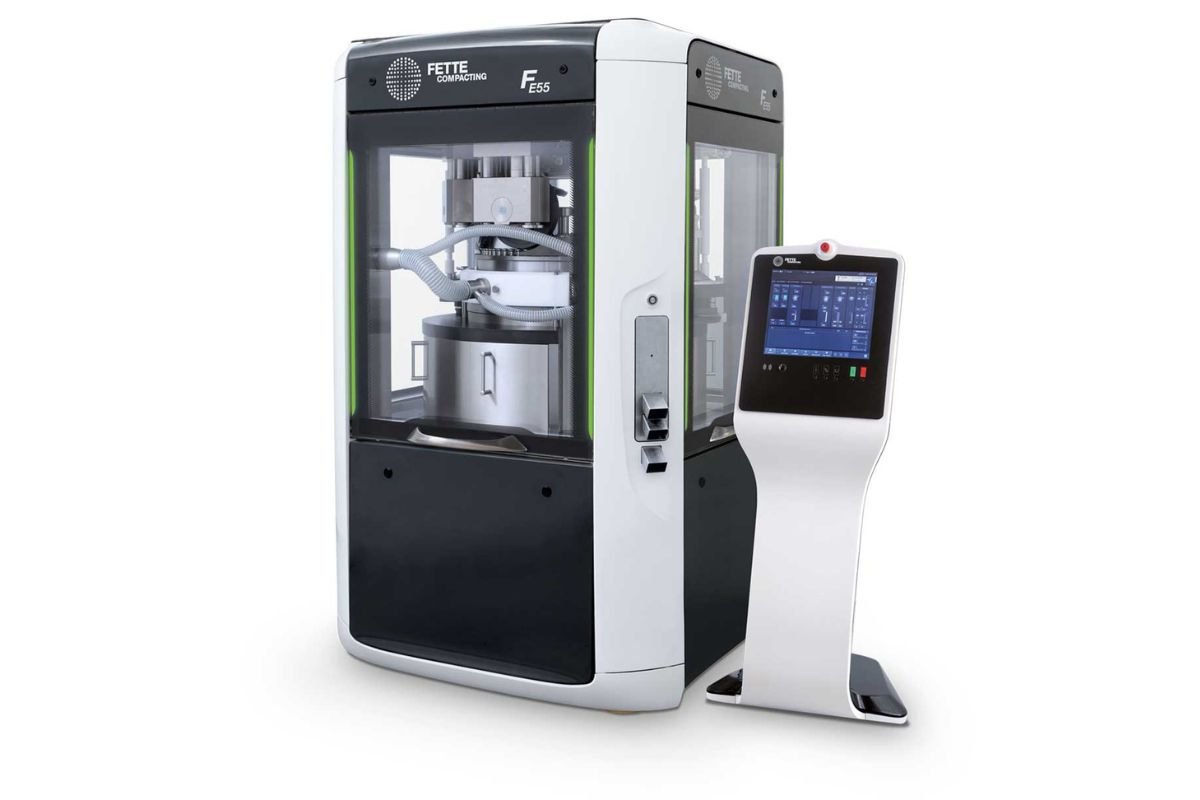

Tablet compression machines, also known as tablet presses, are precision pharmaceutical manufacturing equipment designed to transform carefully formulated powders or granulated materials into tablets of uniform size, shape, weight, and hardness. These machines operate according to Pascal’s Law and the principles of hydraulic pressure, where force applied to an incompressible fluid is transmitted unreduced through that fluid in all directions. This principle enables the controlled application of compression forces ranging from 5 to 100 kN, depending on machine type and tablet specifications.
Tablet presses are classified into two primary categories: single-station presses (eccentric presses), used for small-scale production and R&D, and rotary/multi-station presses, which represent the industry standard for commercial-scale manufacturing. Rotary presses can produce between 500 and 1,000,000+ tablets per hour, depending on turret speed, station configuration, and tablet size. These machines operate under USFDA and WHO-GMP standards, ensuring compliance with regulatory requirements for pharmaceutical manufacturing quality, traceability, and safety.
The fundamental working principle involves a highly orchestrated four-stage compression cycle: filling, metering, compression, and ejection. Each stage is controlled through cam track geometry, compression roller positioning, and process parameters such as compression force, press speed, and fill depth. The interaction between formulation properties (flowability, compressibility, deformation behavior) and machine settings directly determines final tablet quality attributes including tensile strength, friability, porosity, dissolution rate, and content uniformity.
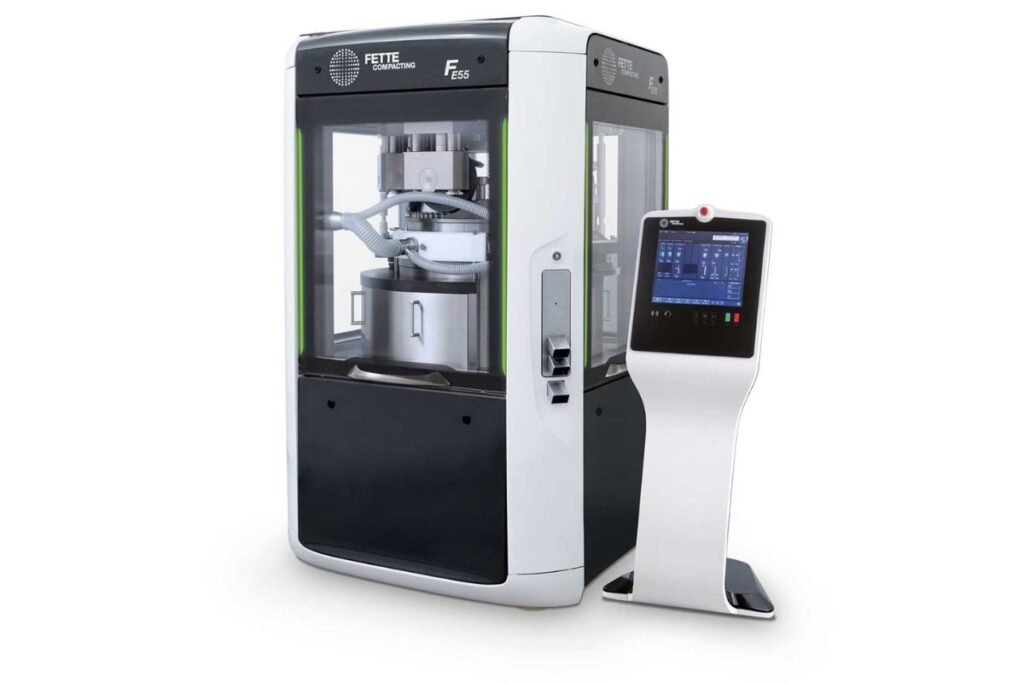
Anatomy of the Machine: Functional Description
1. Hopper and Material Handling System
The hopper serves as the initial storage reservoir for the bulk powder or granulated material prior to compression. Its design is critical for ensuring consistent material flow and preventing segregation of the formulation components.
Flow Dynamics and Gravity Feeding:
- The hopper geometry is tapered to facilitate gravity-driven flow toward the feeder mechanism
- Material depth and pressure create a hydrostatic column that promotes consistent discharge
- Vibratory devices are often incorporated to assist materials with poor flowability or high cohesivity
- Optimal hopper design prevents bridging (arch formation) and flooding (uncontrolled discharge)
The hopper works in concert with material handling units that employ either conical hoppers with level sensors (3.2–7 L capacity) or gravity-controlled refill systems. For highly cohesive materials—such as micronized Active Pharmaceutical Ingredients (APIs)—pneumatic vibrators are installed to improve processability and reduce processing time variability.
2. Feeder System: Force vs. Gravity Mechanisms
The feeder system is the critical interface between the hopper and the die filling station, responsible for metering a precise, consistent volume of material into each die cavity. Two primary feeding architectures exist:
Gravity Feeders:
- Relies on material density and hopper pressure differential
- Suitable for granulated materials with good flowability (Flowrate > 20 g/s)
- Simple mechanical design; minimal moving parts
- Prone to fill depth variation if material properties fluctuate (moisture, particle size distribution)
Force Feeders (Loss-in-Weight, LIW):
- Employs a rotating screw mechanism driven by a dedicated motor (typically VFD-controlled)
- Deposits a precise volumetric quantity (e.g., 0.4, 0.8, 1.2, 1.6 L per revolution) into the die
- Accommodates powders with poor flowability (Compressibility Index CI > 25%)
- Allows real-time adjustment of feed rate based on tablet press feedback
- Modern systems employ loss-in-weight (gravimetric) control, adjusting screw speed to compensate for material density variations
The feeder’s metering action is the first point of control for tablet weight uniformity. Any inconsistency in fill depth—driven by material flowability, vibration, or feeder wear—propagates directly downstream as weight variability (RSD_TW) in the finished tablets.

3. Turret Assembly
The turret is a massive, rotating circular platform precision-machined to hold multiple sets of punches and dies. In a rotary tablet press, the turret is the mechanical centerpiece that enables high-throughput, continuous production.
Turret Geometry and Tolerance:
- Precision-machined die pockets accommodate standardized tooling (B-type or D-type configurations)
- Die bore alignment tolerances: typically ±0.01 mm to ensure concentricity
- Locking mechanisms (usually two perpendicular screws per die) secure the die and prevent lateral movement or rotation
- Protection radii and shoulders on die pockets prevent damage to locking screws and minimize burrs
- Typical station configurations: 12, 16, 20, 25, 27, 35, or 55 stations per turret
Rotational Dynamics:
- Turret speed (typically 20–70 rpm) is a critical process parameter (CPP) that directly influences dwell time—the period during which the tablet remains under maximum compression force
- Higher turret speeds increase production throughput but reduce dwell time, potentially compromising tablet strength for materials requiring extended bonding periods (e.g., plastic-deforming materials like microcrystalline cellulose)
- The turret rotates continuously, moving each station sequentially through the filling station, pre-compression position, main compression position, and ejection position
4. Cam Tracks
Cam tracks are stationary, precisely-machined grooved surfaces positioned above and below the rotating turret. They guide the vertical (up-and-down) motion of the punches with exquisite precision as the turret rotates beneath them.
Upper Cam Track:
- Guides the upper punches (shorter stem) in and out of the die cavity
- The contour of the upper cam determines:
- Approach angle: How gradually the punch enters the die (prevents shock/impact)
- Compression trajectory: The depth and speed at which the punch moves into the die
- Dwell region: The flat section where maximum pressure is maintained
- Withdrawal angle: How rapidly the punch retracts post-compression
Lower Cam Track:
- Guides the lower punches (longer stem) through the filling, compression, and ejection phases
- Controls the fill depth by determining the initial height of the lower punch within the die
- The shape of the lower cam ensures:
- Initial position for maximum die cavity volume during filling
- Gradual rise during pre-compression to achieve proper densification
- Continued rise during main compression phase
- Rapid rise during ejection to push the tablet clear of the die
Cam Track Precision:
The geometry of cam tracks is measured in micrometers (µm). Manufacturing tolerances of ±0.05 mm are common, ensuring that punch position is repeatable within ±0.1 mm across all 25–35 stations, maintaining consistent tablet thickness and hardness.
5. Tooling (Punches & Dies)
Punches and Dies are the working interface between the machine and the material. They determine tablet shape, size, surface markings, and mechanical properties.
Punch Components:
Each punch consists of:
- Head: The working surface in contact with the powder; typically flat or slightly domed; determines punch tip imprint (markings/logo)
- Neck: Transition zone between head and barrel; provides alignment with cam track
- Barrel: The body of the punch; contains keyways (if shaped punch) and flutes (if needed for de-sticking)
- Stem: The long portion in the turret bore; upper stems are shorter (~4–6 cm), lower stems are longer (~8–15 cm)
Die Components:
- Die bore: Cylindrical or slightly tapered cavity; precise diameter controls final tablet diameter (±0.05 mm tolerance)
- Bore chamfer: Bevel at the top of the bore provides a lead for the upper punch entry
- Tapered bore (optional): Wider at the top, tapers toward the bottom; allows trapped air to escape during compression and facilitates ejection by gradually releasing stress
- Locking mechanism: Groove and screw holes ensure rigid positioning in the turret
Tooling Standards (International):
Two primary standards dominate pharmaceutical tablet manufacturing:
| Standard | Barrel Diameter | Overall Length | Head Diameter | Common Regions | Notes |
|---|---|---|---|---|---|
| B-type (EU19/TSM19) | 19 mm | Compact (~35 mm upper, ~50 mm lower) | 23 mm | Europe (EU19), USA (TSM 19), Japan | Thinner; cost-effective; limited dwell time |
| D-type (EU1/TSM 1) | 32 mm | Longer (~40 mm upper, ~60 mm lower) | 38 mm | Europe (EU1); used in production | Thicker; extends dwell time; better pressure transmission; Fette EU1 441 variant without neck allows even longer dwell |
Surface Finish and Materials:
- Punches and dies are typically made from hardened tool steel (e.g., 440C with 17% chromium for wear resistance; D2/D3 with 12% chromium and >1.5% carbon for hardness and toughness)
- Surface polish: <1 µm peak-to-valley roughness (smooth, mirror-like finish)
- Purpose: Prevent sticking (powder adhesion to punch faces), picking (material being pulled away from the tablet surface), and filming (residual material coating)
- Heat treatment: Secondary tempering in vacuum furnaces softens the material slightly, preventing brittleness and fracture during high-speed operation
Tapered Dies:
- Cost premium but significant benefits
- Allow trapped air to escape gradually as the upper punch enters
- Provide gradual stress release during ejection, significantly reducing capping (tablet surface separating) risk
- Enable higher machine speeds (up to 50–70 rpm) with improved quality
- Particularly valuable for brittle formulations (e.g., mannitol-based) prone to high ejection forces
Shaped Punches and Multi-Tip Tooling:
- Shaped punches (oblong, heart, capsule shapes) require keys to prevent rotation during compression
- Two key types: Woodruff key (curved) and flat key (European key) (rectangular)
- Key position and length are determined by turret bore geometry
- Multi-tip punches for simultaneous compression of multiple tablets
The 4-Stage Compression Cycle: Granular Mechanics and Material Behavior
The tablet compression process is a precisely orchestrated sequence of four distinct stages, each with unique mechanical objectives and material responses.
Stage 1: Filling (Die Cavity Overfill and Dosage Adjustment)
Mechanical Action:
- As the turret rotates, the lower punch is drawn downward by the lower cam track, creating a cavity within the die bore
- The feeder system dispenses a metered volume of powder into this cavity
- Typically, the die cavity is deliberately overfilled (10–20% excess material) to ensure consistent weight despite minor powder density variations
Powder Behavior:
- Material flows by gravity into the die, aided by feeder paddle action
- The powder experiences minimal force (gravity alone); particle arrangement is random and loosely packed
- Bulk density of the filled powder is approximately 60–75% of the true density, indicating significant void space (air pockets)
- Particle size distribution affects die filling uniformity; fines may settle preferentially if vibratory assistance is inadequate
Weight Control Mechanism:
The critical process parameter controlling tablet weight during filling is the fill depth (FD)—the height to which the lower punch rises within the die cavity. This is adjusted via the lower cam track and/or electronic control systems.
Formula:
TWtarget=FD×ρapparent×Adie
where:
- TW_{target} = target tablet weight (mg)
- FD = fill depth (mm)
- ρ_{apparent} = apparent (bulk) density of the blend (mg/mm³)
- A_{die} = cross-sectional area of the die bore (mm²)
Practical adjustment: The lower cam height is manually or automatically adjusted post-startup until the average tablet weight matches specification. Any variability in ρ_{apparent} (due to humidity, particle segregation, or material supplier variation) requires dynamic re-adjustment of FD to maintain constant tablet weight.
Rotary Tablet Press Concept
Stage 2: Metering (Removal of Excess Granules via Scraper Blade)
Mechanical Action:
As the lower punch rises toward the target fill depth, excess powder overflows from the die cavity onto the die table surface. A stationary scraper blade (feeder blade) wipes the die table surface, removing this excess and returning it via a recycle chute back to the feeder hopper or discharge.
Precision of Metering:
- The scraper blade is positioned immediately downstream of the feeder housing, rotating with the turret at the same angular velocity
- Blade gap: typically 0.5–1 mm from die table surface to prevent scratching while efficiently removing excess
- Excess material removed during metering is approximately 10–20% of the dispensed volume
Material Behavior:
- Powder adhering to the die table is sheared off by the blade
- Materials with high cohesion (e.g., micronized APIs, spray-dried materials) may layer or cake on the blade and die table, compromising weight control
- This is a critical quality control point; if too little material is scraped, tablets become overfilled; if too much is scraped, tablets become underfilled
Critical Quality Aspect:
Metering consistency directly determines tablet weight variability (RSD_TW). In modern continuous direct compression (CDC) systems, the metering stage is often the most sensitive point to material property changes, requiring dynamic adjustment of fill depth as material properties fluctuate.
Stage 3: Compression—De-aeration and Consolidation
Compression is the core mechanism of tablet formation, where loose powder is transformed into a solid, mechanically coherent tablet. Critically, compression occurs in two distinct sub-stages: pre-compression (de-aeration) and main compression (consolidation/hardening).
3.1 Pre-Compression: De-aeration and Air Removal
Purpose:
Pre-compression applies a moderate, initial force (typically 1.5–2.5 kN for a standard 25-station press) to the punch heads as they enter the compression zone. The objectives are:
- Remove entrapped air from the powder bed
- Establish uniform density within the die cavity
- Prevent defects such as capping and lamination caused by air pockets
- Prepare the material for the main compression phase
Mechanical Action:
- The upper and lower punches pass beneath the pre-compression rollers (typically fixed rollers, though some designs use moving rollers)
- These rollers apply a controlled, perpendicular force to the punch heads
- The punch heads maintain contact with the rollers over a dwell distance determined by the punch head flat diameter (typically 8–12 mm flat diameter)
- Pre-compression force is adjustable via hydraulic pressure adjustment on the compression roller itself
Material Response:
At the pre-compression stage, the powder undergoes elastic and plastic deformation, depending on material properties:
- Plastic-deforming materials (e.g., microcrystalline cellulose): Particles compress and remain compressed; bulk density increases to ~75–80% of theoretical
- Brittle materials (e.g., lactose, mannitol): Particles fracture into smaller fragments, creating new particle surfaces
- Elastic materials (e.g., starch, highly cohesive APIs): Particles compress but retain elastic memory; may rebound after force removal
Air Removal Mechanism:
As the bulk density increases, the void fraction (porosity) decreases, and trapped air is expelled through:
- Between punch and die wall clearance (0.1–0.2 mm typical)
- Through the top of the die cavity (before upper punch penetrates fully)
- Through tapered dies (if used), which have graduated bore widening toward the top
The efficiency of air removal is critical; residual air pockets create stress concentrations and weak bonding regions that subsequently fail during main compression or post-ejection, manifesting as capping or lamination.
Pre-Compression Force Optimization:
- Too low: Insufficient air removal; residual air causes capping post-compression
- Too high: Over-consolidation; material may stick to punches or reject at high ejection force
- Optimal range: 1.5–2.5 kN for standard 25-station presses; proportionally scaled for different machine sizes
3.2 Main Compression: Hardness and Bond Formation
Purpose:
Main compression applies the high, final force (typically 5–10 kN for direct compression; up to 100 kN for dense, difficult-to-compress materials) required to:
- Compact the material to the target solid fraction (porosity ~5–15% for typical immediate-release tablets)
- Create strong inter-particle bonds through plastic deformation, particle fragmentation and re-welding, or material matrix formation
- Achieve target tablet hardness and thickness
- Establish density that ensures proper dissolution rate and structural integrity
Mechanical Action:
- Immediately after pre-compression, the punches exit the pre-compression zone and enter the main compression rollers
- Main compression rollers are typically fixed (stationary) rather than moving, applying a much larger perpendicular force
- Main compression force is adjustable via hydraulic system settings (pressure transducers monitor force in real-time)
- Compression roller width is typically 40–60 mm; as the punch head passes beneath this width, the tablet is held under maximum force
Compression Force-Hardness Relationship:
The relationship between applied compression force and final tablet tensile strength (hardness) is non-linear and material-dependent:
σtensile=f(Fcompression,ρtablet,dparticle,μdeformation)
where:
- σ_{tensile} = tablet tensile strength (MPa)
- F_{compression} = main compression force (kN)
- ρ_{tablet} = final tablet solid density (fraction of theoretical density)
- d_{particle} = particle size distribution
- μ_{deformation} = deformation mechanism (plastic, brittle, elastic)
Empirical observations from Quality by Design (QbD) studies show:
- Plastic materials: Strong positive correlation (r² > 0.90); ~0.1–0.2 MPa increase per 1 kN force increase
- Brittle materials: Weaker correlation (r² = 0.70–0.85); brittle fracture creates many small particles with reduced bonding surface area
- Elastic materials: Highly variable; elastic recovery can offset compression gains, requiring significantly higher force for equivalent final strength
Dwell Time and Tablet Quality:
Dwell time is the duration for which the tablet remains under full compression force. This is a critical parameter often overlooked in operational discussions but paramount for tablet quality.
Definition:
Dwell time (ms) is determined by the punch head flat diameter and the turret speed:
tdwell=Croller_widthdflat×π×RPMturret60
Alternatively, simpler formulation:
tdwell(ms)≈turret_speed(rpm)dflat(mm)×5
For example:
- D-tooling with 38 mm head flat at 50 rpm turret speed → dwell time ~38 ms
- B-tooling with 23 mm head flat at 50 rpm turret speed → dwell time ~23 ms
Impact on Bond Formation:
- Longer dwell time: Permits more time for plastic deformation, particle inter-penetration, and hydrogen bonding (if moisture present); results in mechanically stronger tablets with lower friability
- Shorter dwell time: Materials relying on plastic deformation may not achieve full bonding; elastic recovery reduces final strength; more prone to capping if material contains air pockets
- Optimal dwell time: Depends on material deformation mechanism; plastic materials benefit from dwell times >30 ms; brittle materials less sensitive to dwell time
Modern machine optimization:
Manufacturers like Fette Compacting have designed special punches (e.g., FS19 for the FE55 press) with extended punch head flats, increasing dwell time by >80% compared to standard tooling. This enables better processing of challenging direct compression formulations, particularly those with multiple APIs or requiring extended bonding time.
Head Flat Geometry Impact:
The diameter of the punch head flat is the single most critical dimensional parameter for dwell time control. This is why:
- Tooling wear is monitored closely; even 0.2–0.3 mm wear reduces dwell time significantly
- Different tooling standards (B vs. D) are chosen partly for their dwell time characteristics
- Fette EU1 441 variant (38 mm flat, no neck) allows maximum dwell time for difficult formulations
Compression Force Variability:
Modern presses monitor and control main compression force continuously via pressure transducers. However, variations inevitably occur due to:
- Material density fluctuations (humidity effects, segregation, supplier variation)
- Turret wobble or vibration
- Punch wear causing increased clearance
- Hydraulic system temperature changes affecting fluid viscosity
These variations (typically ±2–5% of setpoint) accumulate and manifest as tablet hardness variability, requiring online monitoring and periodic adjustment.
Stage 4: Ejection—Tablet Removal and Take-Off
Mechanical Action:
After main compression, the tablet must be extracted cleanly from the die cavity without damage (chipping, breakage, or surface defects).
Ejection Sequence:
- Upper punch withdrawal: The upper punch retracts from the die cavity as it passes the upper cam track’s withdrawal section. This vertical separation is typically rapid (occurs within ~30–50 mm of turret rotation), reducing contact time between punch and tablet surface.
- Lower punch rise: The ejection cam (positioned immediately after the main compression zone) pushes the lower punch upward within the die bore. The lower punch rises at a controlled rate (typically 5–20 mm per turret revolution, depending on cam angle).
- Tablet elevation: As the lower punch rises, the tablet (still compressed within the die cavity) is gradually pushed upward until it becomes flush with the die table surface.
- Take-off blade deflection: A stationary take-off blade (wiper arm) positioned just above the die table deflects the tablet off the die table surface, directing it into a discharge chute or collection bin.
Mechanical Challenges:
Capping and Lamination Risk:
- If the tablet contains residual air pockets (inadequate pre-compression) or elastic material that has rebounded, the structure is weak
- During ejection, high compressive stress is still present; rapid decompression and mechanical deflection can cause the top or bottom surface to separate
- This is particularly acute for brittle materials (mannitol, lactose) that have high ejection forces due to friction between punch and die wall
Ejection Force:
The force required to push the tablet up and out of the die is determined by:
- Die wall friction: Controlled by die bore surface finish and die material
- Lubricant concentration: Magnesium stearate reduces friction; optimal range 0.5–1.5% w/w depending on material
- Tablet density: Higher density (lower porosity) increases friction
- Material deformation type: Brittle materials creating new unlubricated surfaces during pre-compression experience much higher ejection forces
Typical ejection forces:
- Plastic formulations: 50–150 N per 25-station press
- Brittle formulations: 200–500 N per 25-station press
- Poorly lubricated brittle formulations: >500 N (capping risk increases significantly)
Tapered Die Benefits:
Tapered dies (wider at top, narrower at bottom) provide a gradual stress relief during ejection. As the tablet moves upward into the wider bore section, the compressive stress decreases gradually, reducing mechanical shock and capping risk by 50–80% compared to straight dies.
Quality Control at Ejection:
Post-ejection inspections often reveal the quality of the compression cycle:
- Chipped edges: Punch wear or inadequate lubrication
- Curved/bent tablets: Excessive ejection force or improper punch alignment
- Powdery surface: Mechanical damage or delamination from brittle formulation
- Surface markings smudging: Punch wear or inadequate punch head flatness
Advanced Physics and Optimization
Compression Force and Tablet Hardness
The relationship between applied compression force and resulting tablet tensile strength (hardness) is governed by powder consolidation theory. Key models include:
Heckel Plot Analysis:
The Heckel equation describes powder densification under compression:
ln(1−D1)=kP+A
where:
- D = relative density (solid fraction) of the tablet
- P = applied pressure (MPa)
- k = Heckel slope (plastic deformation indicator)
- A = Heckel intercept (initial porosity/packing)
Lower k values (higher slope) indicate materials that deform more plastically and consolidate with applied pressure. Higher k values (gentler slope) indicate materials that resist consolidation, either through brittleness or elasticity.
Practical Application:
From a quality perspective, tablets from plastic materials (low k) require lower compression forces to achieve target hardness but are more sensitive to speed changes (dwell time effects). Brittle materials (high k) require higher forces but are less dwell-time sensitive.
Compression Force vs. Tablet Hardness (Empirical Data from QbD Studies):
For a typical direct compression formulation (e.g., 10% API + 89% MCC PH101 + 1% MgSt):
- At MCF = 5 kN: Tablet hardness ≈ 80–100 N; Friability ≈ 0.5–0.8%
- At MCF = 7 kN: Tablet hardness ≈ 120–150 N; Friability ≈ 0.2–0.4%
- At MCF = 9 kN: Tablet hardness ≈ 150–180 N; Friability ≈ 0.1–0.2%
- At MCF = 11+ kN: Risk of over-compression → reduced dissolution rate, increased tablet thickness variability
Over-Compression Risks:
- Excessive density reduces porosity below 5%, hindering water penetration and disintegration
- Tablets may become too hard, requiring longer dissolution times
- Machine wear accelerates; punch and die stress increase
Head Flat Geometry and Dwell Time Optimization
The punch head flat diameter is a dimensional parameter with profound effects on tablet quality through dwell time control.
Relationship:
The constant depends on the specific machine design and is typically in the range of 0.8–1.2 ms/mm per RPM.
Strategic Use of Tooling Variants:
- Standard B-tooling: 23 mm flat; suitable for materials not sensitive to dwell time (brittle formulations, flowable granules)
- Standard D-tooling: 38 mm flat; preferred for plastic formulations requiring longer bonding time
- Extended dwell tooling (e.g., Fette EU1 441): 40–45 mm flat, no neck; specialized for challenging formulations
Practical Optimization:
If tablets from a direct compression formulation show:
- Low hardness despite adequate compression force: Consider switching to larger head flat (D-tooling) to extend dwell time
- Capping issues: Check if dwell time is too short; increase turret speed or switch to larger head flat
- Surface defects from punch wear: After repeated use, even 0.3 mm flat wear reduces dwell time by ~10%; consider punch replacement at wear limits (typically ±0.2 mm from original dimension)
Direct Compression Challenges: Segregation and Processability
Direct compression (DC) is an increasingly popular manufacturing approach that eliminates granulation steps, reducing cost and complexity. However, it introduces specific challenges absent in granulated blends:
Segregation Risk:
Without granulation’s mixing and particle size averaging, direct compression blends are prone to segregation—preferential movement or settling of different particle sizes or densities:
- Density segregation: Denser particles (e.g., APIs often denser than cellulose excipients) settle downward during blending, storage, and feeding
- Particle size segregation: Smaller particles settle through larger particles (Brazil-nut effect), leading to non-uniform distribution
- Material property segregation: Cohesive micronized APIs separate from free-flowing fillers
Consequences:
- Weight variability: Some tablets overweight (high API), others underweight (low API)
- Content uniformity issues: RSD_CU (relative standard deviation of content uniformity) can exceed 10–15%, failing USP/EP specifications (<6%)
- Dissolution rate variability: High-API tablets dissolve faster; low-API tablets slower
- Dosing inconsistency: Affects bioavailability and therapeutic efficacy
Mitigation Strategies:
- Improve blend uniformity pre-compression: Use continuous blenders with longer residence times; increase number of blade passes
- Optimize feeder design: Use loss-in-weight (gravimetric) feeders instead of volumetric; monitor and adjust feed rate dynamically
- Adjust fill depth dynamically: Respond to blend uniformity fluctuations with real-time fill depth adjustment
- Incorporate Process Analytical Technology (PAT): In-line NIR monitoring at blender outlet and tablet press feed frame inlet provides real-time API concentration feedback
- Add binders or flow enhancers: Small additions (1–3% w/w) of microcrystalline cellulose or silica improves blending stability
- Increase machine speed moderately: Faster turret speeds reduce time for segregation within the feed frame
- Use tapered dies: Improved air escape and reduced sticking risk enhance overall process robustness
Process Analytical Technology (PAT) Integration
PAT is a system for designing, analyzing, and controlling manufacturing through real-time measurement of critical process parameters and quality attributes.
Typical PAT Implementations in Tablet Compression:
- Blend Uniformity Monitoring (NIR Spectroscopy):
- Measurement point: At blender outlet or tablet press feed frame inlet
- Frequency: Every second
- Parameter measured: API concentration (% label claim)
- Acceptable range: 90–110% label claim; RSD < 5%
- Force Monitoring (Pressure Transducers):
- Measurement point: Compression roller pressure lines
- Frequency: Every tablet (multiple points per second)
- Parameters measured: Pre-compression force, main compression force, force variability
- Alerts: Deviation >±10% triggers operator alert
- Tablet Property Monitoring (In-line Hardness/Thickness):
- Measurement point: Post-discharge
- Frequency: Sampling (every 5–10 tablets)
- Parameters measured: Tablet hardness (N), thickness (mm), weight (mg)
- Feedback: Adjusted to tablet press settings if out of specification
PAT Challenges in Direct Compression:
a) NIR Window Fouling:
Cohesive materials (micronized APIs, spray-dried powders) tend to adhere to the sapphire probe window of NIR sensors. This causes:
- Spectral distortion
- False high/low API concentration readings
- Inaccurate blend uniformity assessment
- Solution: Periodic cleaning protocols; hydrophobic window coatings; or probe retraction between measurements
b) Blend Uniformity Variability:
Direct compression blends are inherently more variable than granulated ones:
- API concentration fluctuations ±2–5% common vs. ±1–2% for granulated blends
- Requires tighter tolerances or larger sample sizes for accurate monitoring
c) Real-Time Release Testing (RTRT):
Using PAT data to release tablets without offline testing requires:
- Validated NIR models (RMSECV < 2% of target)
- Multiple redundant measurements to ensure accuracy
- Regulatory acceptance; fewer facilities have established RTRT programs
- Robustness testing across material supplier changes, environmental conditions
Troubleshooting Common Compression Issues
Tablet compression defects are typically symptomatic of misalignment between formulation properties, machine settings, and process environment. Systematic troubleshooting requires identifying the root mechanical cause and applying targeted remediation.
1. Capping and Delamination
Defect Definition:
- Capping: Horizontal separation of the tablet top or bottom surface from the main body, typically occurring immediately post-ejection or during handling
- Lamination: More pronounced delamination; tablet may visibly separate into 2–3 layers
Problem → Root Cause → Solution Matrix:
| Symptom | Mechanical Root Cause | Primary Solution | Secondary Actions |
|---|---|---|---|
| Capping post-ejection | Residual air in tablet → stress concentration | Increase pre-compression force from 1.5 kN → 2.0–2.5 kN; verify pre-compression roller condition | Check feeder consistency; ensure adequate fill depth for material density |
| Capping at high ejection force | Brittle material (mannitol/lactose) + high friction → punch withdraws before full stress release | Increase lubricant concentration (0.5% → 0.75–1.25%); switch to tapered dies; reduce main compression force slightly | Verify punch head flatness (wear limits ±0.2 mm); increase turret speed to reduce relative punch velocity |
| Lamination in elastic materials | Elastic recovery post-compression → weaker inter-particle bonds | Increase main compression force (MCF 5 kN → 7–9 kN); increase dwell time via larger head flat or slower turret speed | Add small amount (1–3%) of plastically deforming excipient (MCC); optimize moisture content (2–3% optimal for MCC) |
| Moisture-related capping | Excessive moisture → plastic deformation but reduced bonding; elastic recovery on drying | Reduce moisture content via proper storage in <40% RH environment; pre-dry blend if >4% moisture | Use moisture-absorbing silica (0.5–1%); store in moisture-controlled container; install desiccant hopper |
Preventive Strategies:
- Formulation design: Choose plastic-deforming excipients (MCC, polyvinylpyrrolidone) over brittle ones where possible
- Moisture control: Monitor and maintain granule/powder moisture at 2–4% (optimal range for most materials)
- Punch/die maintenance: Inspect for wear at 1-week intervals; replace if working length varies >±0.1 mm or head flat wear >±0.2 mm
- Tapered die adoption: For new products, standard practice is to use tapered dies to proactively reduce capping risk by 50–80%
2. Sticking and Picking
Defect Definition:
- Sticking: Powder adheres to the face of the upper or lower punch during compression/ejection, causing the stuck material to appear as a residue or deposit
- Picking: Material being pulled away from the tablet surface as the punch withdraws, leaving indented or missing surface areas on the tablet
Problem → Root Cause → Solution Matrix:
| Symptom | Mechanical Root Cause | Primary Solution | Secondary Actions |
|---|---|---|---|
| Powder buildup on punch face | High moisture + cohesive API (micronized) + inadequate lubrication | Increase lubricant concentration (MgSt 0.5% → 0.75–1.0%); ensure moisture <3% | Check punch surface finish (target <1 µm Ra); replace punches if worn (Ra >1.5 µm) |
| Picking (material pulled from surface) | Friction exceeds bonding strength; punch retracts before tablet bonds to die | Reduce moisture slightly (below 2%); reduce turret speed to increase dwell time and bonding | Add small amount of slip agent (talc 0.25–0.5%); switch to low-friction punch coating (DLC, chromium nitride) |
| Localized sticking on punch edge | Wear on punch head edge (burr/sharp edge) + material interaction | Polish punch head edge (chamfer 0.3–0.5 mm); replace severely worn punches | Inspect die bore for damage/scratches; refurbish if necessary |
| Intermittent sticking (after ~1–2 hours runtime) | Cumulative material buildup on punch surfaces | Increase maintenance frequency; clean punches every 1–2 hours; apply anti-sticking agents (silicone lubricant spray, talc) | Reduce turret speed to minimize heating; verify coolant system function if machine-equipped |
Preventive Strategies:
- Tooling maintenance: Schedule monthly deep cleaning of all punches and dies; inspect for wear and polish as needed
- Material property control: Screen incoming materials for moisture; spec suppliers for moisture <2.5%
- Lubricant optimization: Use pharmaceutical-grade magnesium stearate (not industrial grade); consider alternative lubricants (stearic acid, silica, talc) if sticking persists
- Punch/die material selection: Choose high-chromium tool steels (440C, D2) for better corrosion and sticking resistance; avoid lower-grade steels for cohesive formulations
- Surface finish: Ensure all punch surfaces maintain <1 µm peak-to-valley roughness; use lapping/polishing services for worn tooling
3. Weight Variation (Tablet Weight Inconsistency)
Defect Definition:
- Weight variation: Tablets from a single batch exhibit inconsistent weights; measured as RSD_TW (relative standard deviation of tablet weight)
- USP specification: RSD_TW < 5% for most tablets; tighter specifications <2% for high-value or dose-critical drugs
- Causes: Include formulation variation, feeder inconsistency, fill depth drift, and turret wear
Problem → Root Cause → Solution Matrix:
| Symptom | Mechanical Root Cause | Primary Solution | Secondary Actions |
|---|---|---|---|
| High variability (RSD > 5%) immediately after startup | Feeder not yet settled; fill depth not optimized | During startup sequence (~10–15 min), gradually adjust fill depth to achieve target weight; monitor weight for drift | Ensure material is flowing uniformly; clear any bridges in hopper; verify feeder screw is not worn |
| Progressive weight drift (light → heavy or vice versa) | Moisture gain/loss in blend or material settling/segregation | Verify ambient RH <60% and temperature stable; increase blender residence time or mix frequency to re-homogenize blend | Switch to loss-in-weight (gravimetric) feeder if currently using volumetric; install RH/temperature monitoring |
| High variability consistently | Material flowability poor; feeder unable to meter precisely; die filling inconsistent | Improve material flowability via: (1) increase glidant (silica 0.5–1%); (2) optimize particle size distribution; (3) switch to force feeder instead of gravity feeder | Inspect feeder screw for wear/damage; check die bore for alignment (±0.05 mm tolerance); verify turret bore concentricity |
| Cyclical weight pattern (every 5–10 tablets low, then high) | Turret bore wear → die seating inconsistent; punch wobble | Measure turret bore on all die pockets (tolerance ±0.01 mm); refurbish or replace turret if >±0.02 mm deviation | Check anti-vibration mounts; ensure machine is on level, stable surface; verify drive belt tension |
| Weight variability increases with turret speed increase | Poor die filling at high speed; blend not feeding uniformly; air entrainment | Reduce turret speed incrementally while maintaining fill depth consistency; consider adding flow enhancer; increase feed frame paddle speed if variable available | Inspect blend uniformity at feed frame inlet; add NIR probe to monitor API content; verify blender outlet residence time |
Preventive Strategies:
- Formulation: Include flow enhancers and binders to improve die filling consistency
- Material sourcing: Spec suppliers for tight particle size distribution and moisture control
- Machine maintenance: Monthly inspection of turret bore, die seating, and punch alignment
- Process monitoring: Implement in-process weight checks (every 50–100 tablets); trend data weekly
- Environment control: Maintain manufacturing area at 40–60% RH and 18–25°C temperature
4. Punch Wear and Penetration Issues
Defect Definition:
- Upper punch penetration: Excessive downward movement of the upper punch into the die, causing thicker tablets and higher ejection forces
- Punch wear: Physical deterioration of punch working surfaces; causes dimensional changes, surface roughness increase, and reduced functional performance
Problem → Root Cause → Solution Matrix:
| Symptom | Mechanical Root Cause | Primary Solution | Secondary Actions |
|---|---|---|---|
| Tablets gradually increase in thickness | Upper punch wears (tip dulls or head flat decreases); die bore widens slightly | Replace upper punches; check die bore diameter (target ±0.05 mm); refurbish dies if bore diameter increased >0.1 mm | Inspect all punch working lengths (target ±0.1 mm tolerance); recalibrate fill depth after punch replacement |
| Increasing ejection force | Punch barrel wear → increased clearance with turret bore; punch wobble increases friction | Replace worn punches; verify turret bore guides (target ±0.01 mm tolerance); refurbish turret if wear exceeds ±0.02 mm | Inspect punch barrel diameter (standard 19 or 32 mm; tolerance ±0.01 mm); replace if out of spec |
| Variable upper punch penetration | Turret wobble due to bearing wear or misalignment; cam track wear causing variable punch positioning | Have turret bearings inspected/replaced by OEM service; verify cam track wear pattern (check for grooves, pitting) | Measure turret runout (should be <0.05 mm total indicated runout); realign drive system if needed |
| Surface defects on tablets (dimples, ridges) | Punch head wear (flattening, cracking) or die bore damage; punch wear creating irregular contact | Inspect punch heads under magnification (>1000x if possible) for flaking or microcracking; replace immediately if found | Polish dies if scratched; use tapered dies to reduce re-compression from bouncing |
Preventive Strategies:
- Routine punch inspection: Monthly visual inspection under LED lighting; measure working length every 3 months
- Timely replacement: Replace punches before reach theoretical wear limits; use data-driven replacement based on trend of tablet thickness variability
- Proper storage: Store spare punches in clean, dry environment; inspect before installation for any shipping damage
- Surface maintenance: For long production runs, consider mid-run punch lapping/polishing to restore surface finish
- Bearing/drive maintenance: Service turret drive bearings per OEM schedule (typically annually); monitor for unusual vibration or noise
GMP Compliance and Regulatory Context
Tablet compression machine operation is subject to stringent regulatory frameworks established by the United States FDA (21 CFR Parts 211 and 320), European Medicines Agency (EMA), and WHO-GMP guidelines. Key compliance considerations:
Equipment Qualification and Validation
Installation Qualification (IQ):
- Verification that machine arrives and is installed according to specifications
- Documentation of OEM certifications, calibrations, and serial numbers
- Environmental conditions (RH, temperature) verified suitable for operation
Operational Qualification (OQ):
- Verification that machine operates within design specifications
- Compression force calibration (typically ±2% of setpoint)
- Fill depth accuracy (±0.1 mm)
- Weight repeatability (5 consecutive tablets)
- Performance Qualification (PQ): Demonstration on intended product under production conditions; batch release based on statistical sampling and online/offline testing
Critical Process Parameters and Quality Attributes
Regulatory framework (ICH Q8 & Q14) requires identification and control of:
- Critical Process Parameters (CPPs): Pre-compression force, main compression force, turret speed, fill depth
- Critical Quality Attributes (CQAs): Tablet weight, hardness, thickness, friability, dissolution, content uniformity
- Design Space: Multi-dimensional combinations of CPPs that ensure all CQAs remain within acceptable ranges
Documentation and Traceability
Manufacturers must maintain:
- Master equipment file: Compression machine specifications, maintenance schedule, qualification reports
- Batch records: For each production batch, documented compression force trends, weight checks, environmental conditions
- Change control: Any modification to machine settings, tooling, or process requires documented justification and re-validation
Conclusion
Tablet compression machines represent a convergence of mechanical precision, material science, and process engineering. Mastery of tablet compression requires simultaneous understanding of:
- Machine mechanics: Cam track geometry, punch/die tooling standards, compression roller design, and precision tolerances
- Material properties: Powder flowability, compressibility, deformation behavior, and moisture effects
- Process parameters: Compression force, turret speed, fill depth, and dwell time; their interactions and optimization
- Quality systems: GMP compliance, PAT implementation, statistical process control, and continuous improvement
The four-stage compression cycle—filling, metering, compression (pre- and main), and ejection—is the fundamental rhythm of tablet manufacturing. Each stage is sensitive to formulation properties and machine settings; harmonization of these factors determines whether the final product is a high-quality, bioavailable, aesthetically acceptable pharmaceutical tablet.
Advanced optimization increasingly leverages Design of Experiments (DoE), predictive modeling, and Process Analytical Technology (PAT) to establish design spaces that provide regulatory-defensible flexibility and ensure consistent quality across the product lifecycle.
For new Quality Assurance officers and Production Managers, deep familiarity with this technical foundation is essential for troubleshooting field issues, optimizing manufacturing efficiency, and ensuring compliance with international pharmaceutical standards.
References
- Senieer.com. Tablet Press Machine.
- Fluidpack.net. Working Principle of Tablet Compression Machine.
- AchieveChem.com (2024). How Tablet Compression Machine Works?
- SaintyCo. Working Principle of a Rotary Tablet Press Machine.
- ChinaCanaan Technology. How Tablet Press Machines Work.
- Kim, K., Cao, S., Pyo, J. S. (2024). Tablet Compression Optimization of Ivabradine Sustained-Release Tablet Using Full Factorial Design. Indian Journal of Pharmaceutical Education and Research, 58(3), 730–735. [IJPER]
- Bekaert, B., Van Snick, B., Pandelaere, K., et al. (2021). Continuous direct compression: Development of an empirical predictive model and challenges regarding PAT implementation. International Journal of Pharmaceutics: X, 4, 100110. [NCBI/PMC]
- Fette Compacting. Gentle Compression.
- Korsch (YouTube). Tablet Press Mechanism Demonstration.
- Vanhoorne, V., Bekaert, B., Van Snick, B., et al. (2017). Continuous Direct Compression Platform for Tablet Formulation Development. [Referenced in CDC research]