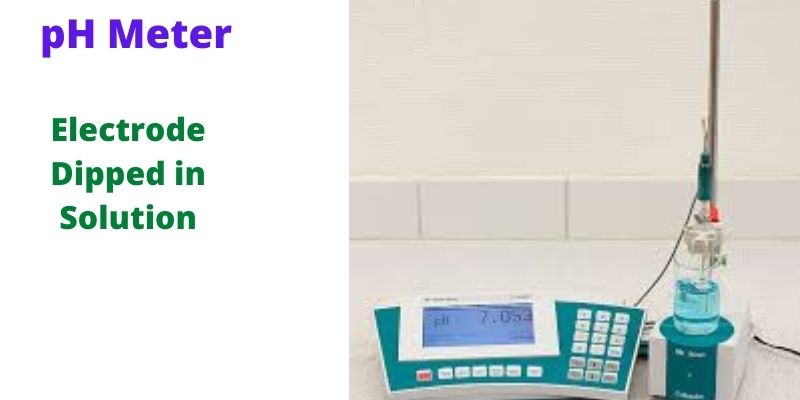

In the pharmaceutical industry, a variance of just 0.1 pH can mean the difference between a stable, effective drug and a failed batch. From buffer preparation in Quality Control (QC) to monitoring bioreactors in production, the pH meter is perhaps the most ubiquitous—yet misunderstood—instrument in the lab.
Understanding the pH meter principle is not just academic; it is a regulatory necessity. With strict guidelines like USP <791> and FDA data integrity expectations, “trusting the number on the screen” is no longer enough. You must understand how that number is generated.
In this comprehensive guide, we break down the potentiometric principle, the working mechanism of modern electrodes, and the critical operational standards required for 2025 pharmaceutical compliance.
Table of Contents
- The Scientific Principle of the pH Meter
- How a pH Meter Works: The Mechanism
- Types of pH Meters in the Pharmaceutical Industry
- Calibration: Meeting USP <791> Standards
- Operation: A Step-by-Step Pharma SOP
- Troubleshooting & Electrode Maintenance
The Scientific Principle of the pH Meter
At its core, the pH meter principle is based on potentiometry. Unlike colorimetric methods (like litmus paper) that rely on visual changes, potentiometry measures the electrical potential (voltage) difference between two electrodes to determine the concentration of hydrogen ions (H+) in a solution.
The Nernst Equation
The relationship between the measured voltage and the pH value is governed by the Nernst Equation. Ideally, for every single unit change in pH (e.g., from pH 7.0 to pH 6.0), the potential changes by approximately 59.16 mV at 25OC.
Where:
- E: Measured potential
- E⁰: Standard electrode potential
- R: Gas constant
- T: Temperature (Kelvin) — This is why temperature compensation is critical.
- n: Valency of the ion (1 for Hydrogen)
- F: Faraday constant
Key Takeaway for QC Analysts:
Because T (Temperature) is a variable in the equation, the slope of the pH reading changes with temperature. A pH meter without Automatic Temperature Compensation (ATC) will yield inaccurate results if the buffer and sample temperatures differ.
How a pH Meter Works: The Mechanism
A modern pH probe usually combines two separate electrodes into a single “combination electrode” body.
A. The Sensing Half-Cell (Glass Electrode)
This is the bottom bulb made of specialized pH-sensitive glass. Inside, it contains a neutral solution (usually pH 7.0 buffer) and a silver/silver chloride (Ag/AgCl) wire.
- The Mechanism: When submerged in a sample, H+ ions from the sample interact with the outer hydrated gel layer of the glass.
- The Result: If the sample is acidic (high H+), ions crowd the outer surface, creating a positive potential relative to the inner surface. This potential difference is what the meter measures.
B. The Reference Half-Cell
To measure the change in potential at the glass electrode, you need a stable baseline that doesn’t change. This is the reference electrode’s job.
- It typically uses a Silver/Silver Chloride (Ag/AgCl) wire in a saturated Potassium Chloride (KCl) electrolyte.
- The Junction: A small porous ceramic or Teflon junction allows a tiny amount of internal electrolyte to flow out into the sample, completing the electrical circuit without contaminating the measurement.
pH meter diagram:

Types of pH Meters in the Pharmaceutical Industry
Selecting the right instrument depends on the application—from raw water testing to sterile injectables.
2025 Trend: The rise of “Smart Sensors” (ISM/Memosens). These digital sensors store their own calibration data, allowing you to calibrate them in the lab and then hot-swap them into the production line without downtime.
Calibration: Meeting USP <791> Standards
In pharmaceutical analysis, an uncalibrated meter is non-compliant. According to USP <791>, the following strict rules apply:
The “Bracketing” Rule
You cannot simply calibrate with pH 4.0 and 7.0 if you are measuring a sample with pH 9.0.
- Requirement: Your calibration curve must bracket the expected sample value.
Minimum Points
A minimum of 2 measurement points is required. However, a 3-point calibration (e.g., 4.01, 7.00, 10.01) is industry best practice to ensure linearity across the full range.
Acceptance Criteria (Critical)
Before measuring any sample, check your slope and offset:
- Slope: Must be between 95% and 105% (or 56–61 mV/pH).
- Offset: Must be within $\pm 30$ mV (approx $\pm 0.5$ pH at pH 7).
- If your meter falls outside these ranges, cleaning or replacement is mandatory.
Operation: A Step-by-Step Pharma SOP
Follow this standard procedure to ensure data integrity and repeatability.
- Pre-Check: Inspect the electrode bulb for cracks and the junction for crystallization. Ensure the reference electrolyte level is higher than the sample level to prevent back-flow.
- Rinsing: Rinse the electrode with Distilled Water (DI) or Purified Water. Never wipe the bulb with a tissue; this creates static electricity which causes drifting readings. Gently blot only.
- Calibration:
- Immerse in the first buffer (usually pH 7.00). Wait for the “Stable” indicator.
- Repeat with the second buffer (4.01 or 10.01).
- Verify the Slope/Offset are within limits.
- Measurement:
- Rinse and blot the electrode.
- Immerse in the sample. Stir gently to homogenize (magnetic stirrers can sometimes cause heat/interference; use caution).
- Wait for the reading to stabilize.
- Storage:
Troubleshooting & Electrode Maintenance
Even the best equipment fails without care. Here are common issues and their Pharma-grade solutions.
A Note on Temperature
USP <791> explicitly states that pH is temperature-dependent. Always report the temperature alongside the pH value (e.g., “pH 7.25 at 25.1oC”).
Conclusion
The pH meter principle combines sophisticated electrochemistry with precise operation. For pharmaceutical professionals, the goal is not just to get a reading, but to ensure that reading is traceable, accurate, and compliant. By adhering to the Nernstian principles and strict calibration protocols outlined above, you ensure the quality and safety of the final pharmaceutical product.
ALSO READ; Pharmaceutical formulation plant for sale in North India
Frequently Asked Questions:
What is pH meter and what is it used for?
A pH meter is a device used for measuring the pH value of a solution. It consists of an electrode and a voltmeter.
Does Automatic Temperature Compensation (ATC) correct my sample’s pH to 25°C?
No, this is a common misconception. ATC only adjusts the electrode’s slope (the theoretical Nernstian response) to account for the current temperature. It does not mathematically convert the chemical pH of your sample to what it would be at 25°C. Because solution pH changes with temperature, you must always report the pH value along with the temperature at which it was measured.
Why can’t I store my pH electrode in Distilled or Deionized (DM) water?
Storing a pH probe in pure water causes osmotic stress. The ions inside the glass sensing bulb and reference electrolyte will leach out into the pure water, resulting in a sluggish, drifting response and significantly shortened electrode lifespan. Always store electrodes in 3M KCl or the specific storage solution recommended by the manufacturer.
Can I reuse calibration buffers to save cost?
Never in a GMP/GLP environment. Once a buffer solution is poured out, it is exposed to air and can absorb Carbon Dioxide ($CO_2$), which shifts the pH value (especially in alkaline buffers like pH 10.01). Additionally, dipping the probe causes cross-contamination. Always use fresh aliquots for every calibration and discard them immediately after use.
How do I measure the pH of creams, gels, or viscous pharmaceutical products?
Standard liquid-filled probes often clog in viscous samples. You should use a spear-tip electrode designed for semi-solids or an electrode with an Open Junction (or sleeve junction) that prevents clogging. Alternatively, consult your specific product monograph to see if preparing a percentage slurry (e.g., 10% solution in water) is the approved method.
My pH reading is unstable when measuring Water for Injection (WFI). Why?
WFI has very low ionic strength (low conductivity), meaning there are few ions to complete the electrical circuit between the reference and sensing half-cells. Standard pH probes will drift or fluctuate wildly in WFI. For high-purity water, you must use a specialized low-ionic strength electrode made with low-resistance glass and a high-flow junction.
How often should a pH electrode be replaced?
Unlike other instruments, pH electrodes are consumables. In a busy QC lab, a typical electrode lasts 6 to 12 months. Signs of failure include a slope dropping below 95%, a slow response time (>30 seconds to stabilize), or an inability to hold calibration. Do not attempt to “revive” an old electrode indefinitely; replacing it is safer for data integrity.
References
- United States Pharmacopeia (USP). General Chapter <791> pH Measurement. (Access via USP-NF Online Subscription or institutional access)
- Mettler Toledo. (2025). pH Measurements Following USP <791> White Paper. https://www.mt.com/in/en/home/library/white-papers/lab-analytical-instruments/pH-measurement-USP-791.html
- Thermo Fisher Scientific. (2022). pH & ORP Measurement Guide: Theory and Practice. https://www.thermofisher.com/in/en/home/life-science/lab-equipment/ph-electrochemistry/ph-measurement-testing/ph-orp-meters.html
- Hamilton Company. (2025). pH Sensor Cleaning and Maintenance Knowledge Base. https://www.hamiltoncompany.com/knowledge-base/article/ph-sensor-cleaning
- National Center for Biotechnology Information (NCBI). A Common Source of Error in pH Measurements. https://pmc.ncbi.nlm.nih.gov/articles/PMC1162880/