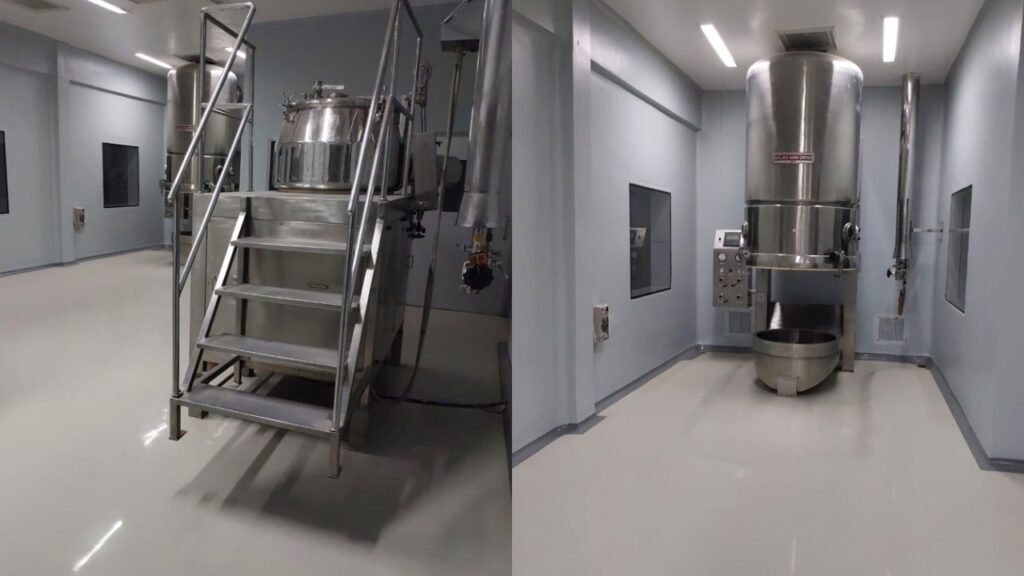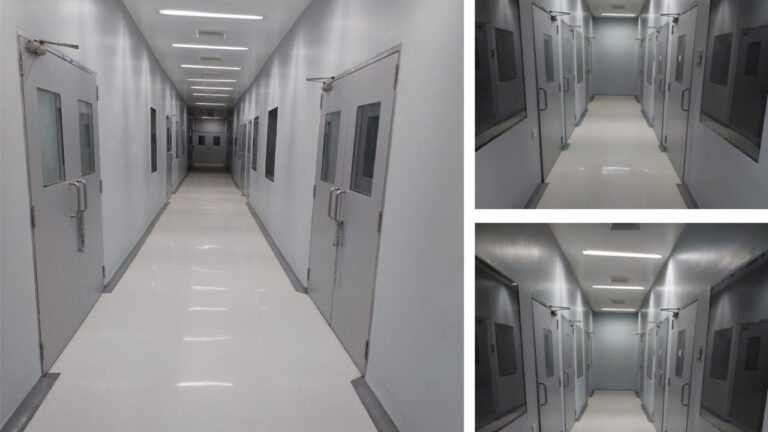
A Golden Opportunity: Pharma Unit for Sale in Baddi, Himachal Pradesh

Plot Size

30000 Sq. Ft.

Building Size

78000 Sq. Ft.

Asking Price

INR 51 Crore

Available

For Sale

Certification

WHO-GMP

Company Details

Baddi, nestled in the Himachal Pradesh foothills, has quietly become India’s most valuable pharmaceutical real estate. With over 700 manufacturing units generating ₹30,000 crore in annual turnover and ranking third globally in pharmaceutical volume, a ready-to-operate WHO-GMP certified facility here isn’t just inventory—it’s a ticket to India’s fastest-growing healthcare supply chain.

If you’re evaluating a pharmaceutical manufacturing investment, you’re probably asking: “Is this the right unit? Should I buy or build new? What’s my actual return going to be?” This article answers those questions by examining a premium pharmaceutical unit available for acquisition in Baddi, breaking down not just what you’re buying, but why you should buy it now, and what risks to evaluate before signing.


Why Baddi? The Strategic Context Every Buyer Should Know

Most investors see Baddi and think: “Good location, low costs, skilled workforce.” They’re right—but that’s incomplete. Here’s what actually makes Baddi indispensable in 2025-2026, and why it matters for your investment decision.

The Numbers: A Global Pharmaceutical Nucleus

Baddi-Barotiwala-Nalagarh industrial belt (affectionately called the world’s pharmaceutical nucleus) hosts 700+ pharma units exporting to over 200 countries. The region generates ₹30,000 crore annually, with ₹9,500 crore in pure exports. That’s not entrepreneurial enthusiasm—that’s institutional-grade pharmaceutical manufacturing.

To put this in perspective: Baddi ranks third globally by pharmaceutical manufacturing volume and 14th by value of bulk drugs produced. Major companies like Sun Pharma, Cipla, Glenmark, Dr. Reddy’s, Torrent, Unichem, and Abbott have established manufacturing centers here. When the world’s largest pharmaceutical companies choose a location, it’s a signal that the ecosystem works.

Why the Ecosystem Matters More Than You Think

If you’re acquiring a facility in Baddi, you’re not competing in isolation. You’re tapping into an ecosystem where:

  • Raw material suppliers are already concentrated (10+ bulk drug manufacturers nearby)
  • Equipment vendors stock pharma-specific machinery and maintain service centers
  • Regulatory consultants understand local CDSCO processes and compliance requirements
  • Logistics providers have established international export networks
  • Skilled labor is trained in pharmaceutical GMP standards

A unit in a tier-2 industrial zone might cost the same, but your supply chain velocity will be 3-4x slower, your compliance costs will be 2-3x higher, and your recruitment timeline will stretch months longer. Baddi removes these friction points.

Government Backing That Goes Beyond Tax Holidays

The central government’s 2003 tax incentive package sparked Baddi’s initial growth, but the zone has already moved beyond incentives into structural importance. Here’s the evidence:

Recent investments signaling long-term commitment:

  • ₹200 crore sanctioned for dedicated Bulk Drug Pharma Park development
  • NIPER (National Institute of Pharmaceutical Education and Research) satellite center established
  • Enhanced power infrastructure and water treatment facilities
  • Dedicated industrial police force for security

This signals that Baddi isn’t a fading tax haven—it’s a structural pharma hub receiving fresh capital investment from central and state governments.

Regulatory Momentum: Your Competitive Advantage Window

India’s revised Schedule-M 2025 has significantly tightened GMP (Good Manufacturing Practice) compliance requirements. Here’s why this matters for your acquisition decision:

What changed:

  • Stricter QC/QA documentation requirements
  • More frequent regulatory inspections expected
  • Higher infrastructure standards for cleanliness, temperature control, humidity
  • Enhanced batch record management and testing protocols

What this means for you:
Non-compliant units now face expensive retrofitting (₹50 lakh to ₹1.5 crore per production line). Facilities built from scratch must include compliance at project inception. But a ready-to-operate, already-certified facility? You’re ahead of the curve.

Your competitors are writing checks to upgrade their facilities. You’re not. That’s a cost advantage that compounds over 5+ years of operations.


The Unit: Beyond Specifications

Let’s examine this opportunity with specificity and context—because the devil (and the opportunity) lives in the details.

Physical Asset: What You’re Actually Acquiring

Land and Infrastructure:

  • Total land: 3,000 sq. meters
  • Constructed facility: 78,000 sq. ft. (optimized for lean pharmaceutical manufacturing)
  • Ownership structure: Freehold (eliminates lease renewal risk and provides asset appreciation potential)
  • Location advantages:
    • 45 minutes from Chandigarh
    • 30 minutes from Panchkula
    • 4.5 hours from Delhi

Why does freehold ownership matter? Real estate in Baddi’s industrial zone is consolidating. As larger companies acquire smaller units, available freehold properties become scarce. The land itself—independent of pharmaceutical operations—holds appreciation potential as Baddi urbanizes.

The 78,000 sq. ft. constructed area is neither oversized nor cramped. It’s optimized for operational efficiency, meaning you’re not paying for unused space while maintaining flexibility for capacity upgrades.

Manufacturing Capability: Flexibility as a Competitive Moat

The facility is engineered to produce over 1,000 different formulations across four categories. Let’s break this down by shift (8 hours):

Formulation TypeDaily Capacity (8-hr shift)Weekly CapacityAnnual Capacity (250 working days)
Tablets20 lakh168 lakh5 crore
Capsules10 lakh84 lakh2.5 crore
Liquid Orals (syrups/suspensions)2.5 lakh bottles21 lakh bottles62.5 lakh bottles
Ointments & Topicals1 lakh tubes8.4 lakh tubes25 lakh tubes

Why flexibility matters:

Instead of being locked into one drug category (tablets-only manufacturer is vulnerable if market demand shifts), you can serve multiple product segments. For a third-party manufacturer, this is revenue diversification on steroids.

Consider this scenario: A major customer who previously ordered 10 lakh tablets/month shifts to capsule-based formulations. Most facilities can’t accommodate this shift without long equipment changeovers. Your facility can transition within hours. That’s customer retention insurance.

Certifications & Regulatory Standing: The Trust Multiplier

CertificationWhat It EnablesMarket Access
WHO-GMPInternational quality standard compliance200+ regulated countries (USA, EU, Japan, Australia, Canada)
Revised Schedule-M (CDSCO)Compliance with latest Indian GMP standardsDomestic regulatory clearance; demonstrates commitment to continuous improvement
ISO 9001:2015Quality management system certificationDemonstrates systematic quality approach; valued by international customers
DCGI Product ApprovalsRegulatory recognition for specific formulationsEnables manufacturing and distribution of approved drugs

The WHO-GMP certification alone opens doors that unaccredited facilities can’t access. Many Indian manufacturers hold basic licenses but lack international certifications. Those facilities can serve domestic markets and low-regulation export zones. This unit can supply regulated markets—where prices are 20-40% higher than commodity markets.

Put differently: If an unaccredited facility and this unit both produce amoxicillin capsules, the unaccredited facility might sell at $0.08/capsule to emerging markets. This unit sells to tenders in USA, EU, or Japan at $0.18-0.25/capsule. Same product, 2-3x margin. WHO-GMP certification is the difference.


Current Business Performance: What the Numbers Actually Tell You

Let’s examine the financial metrics with industry context—because raw numbers without benchmarks are meaningless.

Revenue: ₹100+ Crore Annually

This is the baseline. But what does ₹100+ crore mean?

For context:

  • ₹100 crore annual revenue from pharmaceutical manufacturing is substantial (middle of the road for Indian mid-cap pharma, lower end for multinational subsidiaries)
  • This revenue supports 350 employees (₹28.6 lakh revenue per employee, industry average is ₹25-35 lakh—so this unit is well-staffed but not overstaffed)
  • Generated sufficient EBITDA to reinvest and maintain WHO-GMP certification (which requires continuous capex)

EBITDA Margin: 15-25% (Industry Competitive)

Here’s where most investors stumble. They see “15-25% margin” and think: “Is that good or bad?” Without context, it’s meaningless.

Industry benchmarks for pharmaceutical manufacturing (2025-2026):

CompanyEBITDA MarginContext
Marks Pharma (FY2025 results)20.2%Listed company, portfolio of multiple manufacturing facilities
Gland Pharma (FY2025 results)15.0%Listed company, focus on third-party manufacturing
This Unit (baseline)15-25%Mid-range facility, proven customer base
Axis Pharma Forecast (FY2026)23.2%Industry aggregate forecast for mid-cap pharma

Interpretation: This unit’s 15-25% range is not below average—it’s competitive with listed companies and meets industry aggregate forecasts. The variance (15-25%) isn’t a problem; it reflects realistic seasonal capacity utilization and product mix variability.

In simple terms: You’d be buying an asset with cash generation comparable to companies trading on stock exchanges.

Customer Base: 400+ Third-Party Manufacturing Clients

This is your revenue moat. Unlike a company with 5-10 major customers (vulnerable to one customer leaving), this unit has diversified, sticky revenue sources.

Why this matters:

Third-party manufacturing relationships, once established, tend to persist because:

  1. Switching costs are high (customer’s drug requires re-validation at new facility = 6-12 months, ₹20-50 lakh investment)
  2. Quality standards are locked in (customer has approved your QC standards; switching means re-approving elsewhere)
  3. Regulatory approval is manufacturer-specific (customer’s FDA approval lists this facility, not competitors)

This creates what economists call “switching costs”—the customer stays because leaving is expensive.

Practical implication: If a customer generates ₹50 lakh annual revenue, they won’t leave over a 2-3% price increase (which would cost them ₹15-30 lakh to re-validate elsewhere). Your pricing power is structurally protected.

Workforce: 350 Skilled Employees

In Baddi, finding trained pharmaceutical professionals isn’t a constraint—it’s an advantage. The region’s 30-year pharma manufacturing history has created a talent pool trained in:

  • GMP process compliance
  • Quality control analytical techniques
  • Batch record documentation
  • Regulatory inspection protocols
  • Equipment operation and maintenance

This unit’s workforce is already trained on these requirements and the specific equipment sets. When you acquire, you’re not hiring; you’re inheriting operational expertise.

Cost implication: A new facility would require 6-12 months and ₹50-100 lakh in training investment. You’re avoiding this entirely.


The Investment Case: Why Now? Three Converging Macro Trends

If you’re considering this acquisition, timing matters. Here’s why 2025-2026 is a strategic window that won’t stay open forever.

Trend 1: Third-Party Manufacturing Boom

India manufactures 50% of the world’s vaccines, 20% of global generic drugs, and supplies active pharmaceutical ingredients to virtually every pharmaceutical company on Earth. This scale isn’t accident—it’s driven by outsourcing.

Why companies outsource manufacturing:

Pharma startups:

  • Can’t afford ₹2-5 crore capex to build a facility
  • Can’t justify fixed overhead for a single product
  • Solution: Third-party manufacturer handles production; startup handles branding, marketing, distribution
  • Result: Market expanding rapidly (₹500+ crore worth of new startups entering Indian pharma annually)

Large pharma companies:

  • Own multiple manufacturing facilities, but not all are fully utilized
  • Can reduce fixed costs by outsourcing commoditized products
  • Can focus capital on R&D and market-facing functions
  • Result: Outsourcing demand up 15-20% annually

Contract manufacturing organizations (CMOs):

  • Growing fastest segment of pharma ecosystem
  • India-based CMOs have cost advantage (40-60% cheaper than Western equivalents)
  • Result: Third-party capacity in India has 10-year supply shortage

What this means for acquisition ROI:
A ready-to-operate facility can capture this demand immediately. A greenfield setup takes 18-24 months to become operational. During that time, demand isn’t waiting—it’s being served by competing facilities.

Trend 2: Regulatory Compliance Creates Competitive Moats

Revised Schedule-M 2025 has made non-compliance expensive. Here’s the real-world impact:

Old, non-compliant facilities now face:

  • ₹50 lakh to ₹1.5 crore per production line retrofitting cost
  • 6-12 months of production downtime during upgrades
  • ₹2-5 crore total compliance investment across a 3-4 line facility
  • Regulatory inspection backlogs (CDSCO can issue warnings, which damage customer confidence)

This facility:

  • Already compliant (zero retrofitting needed)
  • Zero production downtime
  • Zero regulatory inspection risk
  • Cost advantage = ₹2-5 crore saved

Market impact:
As compliance enforcement increases, non-compliant facilities lose customers to this facility. You’re acquiring a business that’s gaining market share structurally, not defending it.

Trend 3: Export Opportunity Unlocked by WHO-GMP Certification

This unit currently exports to: Afghanistan, Sri Lanka, Myanmar, Yemen, Uzbekistan, Nepal, Maldives, and Ghana.

But WHO-GMP certification (which this unit holds) unlocks 200+ countries. The current export footprint uses <5% of available market.

Export market opportunity:

MarketTypical Pharma PricesGrowth Rate (Annual)Addressable Market (Units This Facility Could Serve)
USA (Generic drugs)$0.18-0.35 per unit3-5%Moderate (market leader dependent)
EU (Generic + specialty)$0.20-0.40 per unit4-7%Significant (WHO-GMP enables)
Japan (High-quality generics)$0.25-0.50 per unit2-4%Moderate (quality premium)
Australia (Regulated market)$0.22-0.45 per unit3-6%Moderate (regulatory approval required)
Middle East (Growing healthcare spend)$0.12-0.30 per unit8-12%High (expanding demand)
Africa (High growth, WHO-GMP advantage)$0.10-0.25 per unit10-15%Very High (few local alternatives)

Real-world example:
If this facility currently exports 5% of capacity to low-price markets at $0.15 average selling price, and expands to 20% capacity exported to regulated markets at $0.25 average selling price:

  • Current export revenue: 0.5 crore (5% capacity × ₹10 crore capacity value × $0.15)
  • Expanded export revenue: ₹4 crore (20% capacity × ₹10 crore capacity value × $0.25)
  • Revenue uplift: ₹3.5 crore (35% EBITDA increase if margins hold)

This isn’t speculative—it’s a proven business model. Baddi’s existing manufacturers already do this.


Financial Reality: What You’ll Actually Earn

Let’s build realistic financial projections. I’m showing you both conservative and optimistic scenarios so you can evaluate this with your own risk tolerance.

Conservative Scenario (Year 1-5 Baseline)

Assumptions:

  • Revenue remains at ₹100 crore (no growth, no new customers)
  • EBITDA margin holds at 15% (lower end of 15-25% range)
  • Equipment maintenance: ₹50 lakh/year
  • Regulatory compliance: ₹25 lakh/year
  • Working capital requirement: ₹5 crore (tied up, not available)

Financial model:

MetricYear 1Year 2-5 (Steady State)
Revenue₹100 crore₹100 crore
EBITDA₹15 crore₹15 crore
Less: Maintenance/Compliance₹0.75 crore₹0.75 crore
Operating Cash Flow₹14.25 crore₹14.25 crore
Less: Debt Service (₹58 cr at 8%, 5-yr amortization)₹3.25 crore₹3.25 crore
Free Cash Flow (Distributable)₹11 crore₹11 crore
Implied ROI on ₹58 crore investment19%19%

Interpretation: At conservative assumptions, you’d earn 19% annual return—substantially above India’s 10% cost of capital.

Optimistic Scenario (Export Expansion + Customer Acquisition)

Assumptions:

  • Revenue grows to ₹110 crore by Year 3 (via customer acquisition + export expansion)
  • EBITDA margin expands to 20% (product mix improvement, capacity utilization)
  • Equipment maintenance: ₹75 lakh/year (slightly higher due to more production)
  • Regulatory compliance: ₹35 lakh/year
  • Working capital increase: Additional ₹1 crore tied up

Financial model:

MetricYear 1Year 2Year 3-5 (Optimized)
Revenue₹100 crore₹105 crore₹110 crore
EBITDA Margin17%18.5%20%
EBITDA₹17 crore₹19.4 crore₹22 crore
Less: Maintenance/Compliance₹1.1 crore₹1.1 crore₹1.1 crore
Operating Cash Flow₹15.9 crore₹18.3 crore₹20.9 crore
Less: Debt Service₹3.25 crore₹3.25 crore₹3.25 crore
Less: Working Capital Increase₹1 crore
Free Cash Flow (Distributable)₹11.65 crore₹15.05 crore₹17.65 crore
Cumulative 5-year distributable cash₹77.4 crore
Implied 5-year ROI31%

Interpretation: With active management (customer acquisition, export expansion), you’d distribute ₹77.4 crore over 5 years on a ₹58 crore investment—essentially recovering your initial capital by Year 3 and keeping years 4-5 as pure return.

Valuation Reality Check

Is ₹58 crore asking price fair?

Pharmaceutical manufacturing units typically trade at 3-4x EBITDA multiple:

  • ₹100 crore revenue × 18% EBITDA (conservative midpoint) = ₹18 crore EBITDA
  • ₹58 crore asking price ÷ ₹18 crore EBITDA = 3.2x multiple

Verdict: Fair-to-slightly-premium price. You could negotiate if you can demonstrate risks (customer concentration, equipment age, working capital requirements) that justify lower EBITDA assumptions.


The Operational Reality: What You’re Actually Taking On

Financial projections are only valuable if you can execute operationally. Let’s talk about what managing this facility actually looks like.

Operational Strengths (Why You Won’t Fail)

1. Proven customer base (400+ clients)

  • Revenue is sticky; switching costs are high for customers
  • Not dependent on acquiring new customers (though expanding is upside)
  • Churn rate is likely 5-10% annually (normal for pharma)

2. Diversified product portfolio

  • Not locked into one formulation type
  • Can serve tablets, capsules, liquids, AND ointments
  • Can shift product mix to follow market demand

3. Regulatory credentials already in place

  • No re-certification needed for domestic operations
  • Export capabilities already proven
  • Compliance infrastructure exists

4. Trained workforce

  • Not hiring greenfield employees; inheriting skilled staff
  • Pharma manufacturing knowledge already embedded
  • Lower onboarding risk

5. Brownfield asset (not greenfield)

  • No environmental cleanup risk
  • No infrastructure unknowns
  • Facility is already production-optimized

Operational Risks & Honest Assessment

Risk FactorLikelihoodImpact if OccursMitigation Strategy
Key customer loss (top 5 customers = 15-25% revenue)Medium₹3-4 crore annual revenue lossPre-acquisition: Customer retention audit and transition agreements. Post-acquisition: Proactive customer engagement, quality maintenance, modest price competitiveness
Equipment breakdown (major production line stops)Low-Medium₹2-5 crore quarterly revenue loss during downtimeCommission independent equipment audit pre-buy (cost: ₹5-10 lakh). Budget ₹1.5-2 crore over 5 years for preventive maintenance. Maintain equipment spares.
Regulatory inspection failureLow₹50 lakh to ₹1 crore remediation cost + reputation damageCurrently compliant; minimal risk. Budget ₹25-50 lakh annually for ongoing compliance audits and training.
Capacity underutilizationMediumRevenue stays at ₹100 crore instead of growingDevelop customer acquisition plan (identify 10-15 target customers). Budget ₹50-100 lakh annually for sales/marketing. Competitive pricing strategy. Export market expansion.
Working capital spikeMediumTie up additional ₹2-3 crore in inventory/debtorsNegotiate 30-45 day payment terms with customers. Manage inventory tightly (target: 30-45 days inventory, 45-60 days receivables). Maintain ₹3-5 crore cash buffer.
Skilled staff attritionLow-MediumRehiring/training costs: ₹25-50 lakh per personOffer retention bonuses (₹5-10 lakh per key employee). Create career pathways. Maintain competitive wages (Baddi market rates: ₹8-15 lakh for supervisors, ₹12-25 lakh for managers).
Supplier dependency (raw materials)LowRaw material cost increases 10-15%Baddi ecosystem = multiple suppliers. Long-term contracts with price escalation caps. Inventory buffer for critical materials.
Regulatory environment shiftsLowCompliance costs increase 20-30%Already ahead of regulatory curve. Compliance costs already accounted for in models.

Honest assessment: These risks are real but manageable. None is existential if you’re actively managing the business. This isn’t a passive investment—it requires operational engagement.


Due Diligence Checklist: What You Must Verify Before Signing

Before committing ₹58 crore, you need to verify specific facts. Here’s your comprehensive checklist.

Financial Due Diligence (Weeks 3-5, Cost: ₹5-10 Lakh)

Objective: Validate the ₹100+ crore revenue and 15-25% EBITDA claims.

What to verify:

  1. Revenue validation
    • ☐ Last 3 years audited P&L (FY2024, FY2025, FY2026 partial)
    • ☐ GST filings (GSTR-1 outward supplies) for last 3 years
    • ☐ Bank statements reconciliation (monthly deposits should match GST filing)
    • ☐ Customer invoices (random sample of top 20 customers)
    • Red flags: Revenue in P&L doesn’t match GST filings; seasonal spikes without explanation
  2. Cost structure
    • ☐ Raw material costs as % of revenue (typically 40-50% in pharma manufacturing)
    • ☐ Manufacturing overhead (labor, utilities, maintenance)
    • ☐ Depreciation (legitimate, but can be inflated to reduce taxable income)
    • ☐ Working capital components: debtors aging, creditors aging, inventory age
    • Red flags: EBITDA margin claimed but P&L shows lower operating profit after depreciation
  3. Contingent liabilities
    • ☐ Pending tax disputes (GST, Income Tax)
    • ☐ Litigation with employees, suppliers, customers
    • ☐ Environmental remediation obligations
    • ☐ Bank loans/guarantees (personal guarantees from partners?)
    • Red flags: Large contingent liabilities that aren’t fully provisioned

Operational Due Diligence (Weeks 4-6, Cost: ₹8-12 Lakh)

Objective: Validate that production capacity claims are real and equipment is functional.

What to verify:

  1. Equipment audit
    • ☐ Commission independent equipment auditor (mechanical engineer with pharma background)
    • ☐ Verify equipment age, maintenance records, service history
    • ☐ Identify potential replacement timelines and costs
    • ☐ Confirm equipment is operational (run test batches if possible)
    • Red flags: Equipment older than 10 years without recent upgrades; deferred maintenance backlog
  2. Capacity validation
    • ☐ Review capacity study (historical production data)
    • ☐ Verify 20 lakh tablets/day, 10 lakh capsules/day claims with actual run data
    • ☐ Understand capacity constraints (equipment bottleneck? Labor? Utilities?)
    • ☐ Current capacity utilization (are they running at 70% capacity, 50%, 90%?)
    • Red flags: Nameplate capacity doesn’t match demonstrated capacity; bottlenecks preventing full utilization
  3. Quality control system
    • ☐ SOP (Standard Operating Procedure) review: Are QC procedures documented?
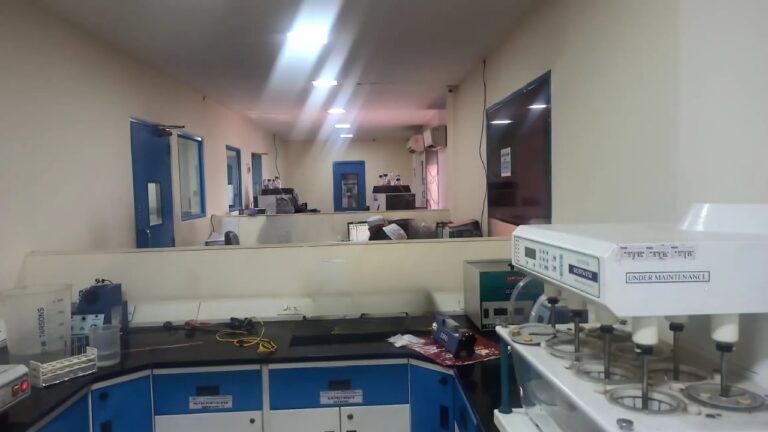
    • ☐ Testing lab adequacy: Does lab have all required equipment (HPLC, dissolution apparatus, etc.)?
    • ☐ Method validation: Are testing methods validated per USP/BP standards?
    • ☐ Out-of-specification (OOS) batch history: How many batches failed QC? What were reasons?
    • Red flags: OOS rate >2% of batches; inadequate testing equipment; SOPs not current
  4. Workforce & safety
    • ☐ Headcount verification (350 employees claimed)
    • ☐ Safety records (any accidents, injuries, regulatory violations?)
    • ☐ Union agreements (are there labor restrictions?)
    • ☐ Attrition rate (how many employees leave annually?)
    • Red flags: High attrition >15% annually; safety violations; pending labor disputes

Regulatory Due Diligence (Week 5, Cost: ₹3-5 Lakh)

Objective: Confirm regulatory status and compliance history.

What to verify:

  1. WHO-GMP certification
    • ☐ Certificate expiry date (remaining validity period)
    • ☐ Scope of certification (which product categories are covered?)
    • ☐ Inspection history (when was last inspection? Any observations?)
    • ☐ Remediation of previous observations (if any)
  2. CDSCO/Manufacturing license
    • ☐ Current license status (active, suspended, revoked?)
    • ☐ Scope: Which formulations are licensed?
    • ☐ Inspection reports (last 3 years CDSCO inspection records)
    • ☐ Any warning letters or observations?
  3. Product approvals
    • ☐ DCGI (Drugs Controller General of India) approvals for each product manufactured
    • ☐ Are all products properly approved, or are some manufactured under Schedule-C (research)?
    • ☐ International product approvals (FDA, EMA approvals if products exported)
  4. Environmental compliance
    • ☐ Wastewater treatment plant operational?
    • ☐ Hazardous waste disposal properly documented?
    • ☐ Air quality monitoring (if required)
    • ☐ Environmental pollution board clearance current?

Red flags: Expired certifications, pending regulatory observations, hazardous waste violations

Customer Due Diligence (Weeks 6-7, Cost: ₹2-3 Lakh for Consultant)

Objective: Understand customer quality, concentration risk, and contract terms.

What to verify:

  1. Top 10 customer analysis
    • ☐ Identify top 10 customers (should be no more than 25-35% of revenue combined)
    • ☐ Revenue per customer (rank by size)
    • ☐ Contract terms: pricing, volume commitments, price escalation clauses
    • ☐ Contract duration: How long until renewal?
    • Red flags: Top 3 customers >50% revenue (concentration risk); contracts expiring within 1-2 years
  2. Customer satisfaction assessment
    • ☐ Conduct 5-10 customer interviews (discretely, with seller approval)
    • ☐ Questions to ask:
      • “How long have you used this manufacturer?”
      • “Have you had quality issues? How were they resolved?”
      • “Would you continue ordering post-acquisition?”
      • “Are you aware of acquisition? Do you have concerns?”
    • ☐ Document feedback (look for confidence level)
  3. Churn rate analysis
    • ☐ How many customers added annually? (Target: 5-10% customer base growth)
    • ☐ How many customers lost annually? (Target: 5-10% churn = net stable growth)
    • ☐ Reasons for customer loss (quality issues? Price? Capacity?)
    • Red flags: >15% annual churn; customer loss due to quality issues

Objective: Confirm ownership, contracts, and legal obligations.

What to verify:

  1. Property ownership
    • ☐ Title deed verification (freehold vs. leasehold)
    • ☐ No encumbrances (banks, liens, third-party claims)
    • ☐ Clear ownership by current sellers
    • ☐ Property tax payments current
  2. Partnership structure
    • ☐ Partnership deed (if partnership entity)
    • ☐ Partner capital contributions
    • ☐ Partner authority to sell (all partners agree?)
    • ☐ Partnership disputes (any pending?)
  3. Material contracts
    • ☐ Long-term customer contracts (terms, volume commitments)
    • ☐ Supplier contracts (raw materials, equipment maintenance)
    • ☐ Bank loan agreements (any restrictions on ownership change?)
    • ☐ Lease agreements (if any leased equipment)
  4. Material change of control clauses
    • ☐ Do major customer contracts automatically terminate if ownership changes?
    • ☐ Does bank financing require approval for change of control?
    • ☐ Are there regulatory approvals needed for new ownership?
    • Red flags: Material contracts terminate on change of control (massive risk); bank financing requires new approval

Timeline for Due Diligence

Week 1: Initial assessment and information gathering
Weeks 2-3: Site visit, facility tour, management meetings
Weeks 3-5: Financial audit (parallel with operational audit)
Weeks 4-6: Operational assessment (equipment audit, capacity validation)
Week 5: Regulatory verification (CDSCO, WHO-GMP certificates)
Weeks 6-7: Customer interviews and satisfaction assessment
Weeks 5-8: Legal review (parallel with other workstreams)
Weeks 8-10: Valuation, negotiation, structure
Weeks 10-12: Deal documentation, final verifications
Weeks 12-16: Regulatory approvals, property transfer, closure

Total timeline: 4-5 months from interest to closure


Acquisition vs. Greenfield: The Economics of Your Decision

Many investors at this stage ask: “Should I buy this ready unit or build my own pharma manufacturing facility from scratch?”

Let’s compare honestly.

Comparative Economics

FactorAcquisition (This Unit)Greenfield Build
Capital Required₹58 crore₹60-80 crore
Time to First Production3-6 months (transition period)18-24 months (design, construction, installation, validation)
Regulatory ApprovalsAlready approved (low risk)6-12 months for CDSCO licensing, WHO-GMP certification can take 2-3 years
Operational RiskLower (team in place, processes established)Higher (hiring, training, process development, scale-up challenges)
Profitability TimelineImmediate (3-4 years to ROI if revenue grows modestly)3-4 years post-commissioning before profitability
Workforce350 trained employees (on day one)Zero employees; 6-12 months to build team
Customer base400+ customers (day one)Zero customers; 12-18 months to build customer base
Exit/Resale FlexibilityHigher (operating business is easier to sell)Lower (illiquid real estate until operational)
Maintenance capex₹1.5-2 crore annually (normalized operations)Higher initially (commissioning phase) then ₹1-1.5 crore

Scenario Analysis: Which Makes Sense for You?

Choose ACQUISITION if you:

  • Need to generate returns within 3-4 years
  • Don’t have 18+ months to wait for new facility to be operational
  • Want to minimize execution risk
  • Are acquiring from private equity perspective (faster exit opportunity)
  • Have limited pharma operations experience (inherited team reduces risk)

Choose GREENFIELD if you:

  • Have unique product IP requiring proprietary manufacturing
  • Can wait 18-24 months for commissioning
  • Want to design facility optimally (not inherit someone else’s choices)
  • Have deep pharma operations experience
  • Are building a long-term operating company (10+ year horizon)

For most investors: Acquisition is the better choice. Greenfield only makes sense if you have compelling reasons (IP advantage, specific product requirements, or unique market opportunity).


Your Step-by-Step Path from Interest to Ownership

Acquiring a ₹58 crore pharmaceutical manufacturing facility isn’t instantaneous. Here’s your realistic timeline and what happens at each stage.

Stage 1: Initial Assessment & Information Gathering (Week 1)

What you do:

  • ☐ Review provided financial statements (last 3 years P&L, balance sheet)
  • ☐ Review facility overview, product list, customer base size
  • ☐ Read WHO-GMP certificate, CDSCO license copies
  • ☐ Ask clarifying questions about revenue, EBITDA, capacity utilization

Outcome: Determine if worth proceeding to due diligence (should be yes, given the fundamentals)

Stage 2: Site Visit & Management Meeting (Week 2)

What you do:

  • ☐ Schedule facility tour (typically 3-4 hours)
  • ☐ Walk all production areas (tablets, capsules, liquids, ointments lines)
  • ☐ Visit QC lab, warehouse, utilities area
  • ☐ Meet senior management (Operations Manager, Quality Head, Finance Manager)
  • ☐ Ask operational questions: capacity utilization, customer satisfaction, staff turnover
  • ☐ Take photos/videos for your records

Outcome: Visual confirmation that facility exists and is operational; gut check on management quality

Stage 3: Financial Audit (Weeks 3-5)

What you do:

  • ☐ Hire chartered accountant (cost: ₹3-5 lakh)
  • ☐ Review last 3 years audited financial statements
  • ☐ Cross-verify with GST filings and bank statements
  • ☐ Analyze cost structure, identify unusual expenses
  • ☐ Project working capital requirements
  • ☐ Identify contingent liabilities

Outcome: Financial statements validated (or issues identified for negotiation)

Stage 4: Operational Assessment (Weeks 4-6)

What you do:

  • ☐ Hire mechanical engineer with pharma background (cost: ₹3-5 lakh)
  • ☐ Commission equipment audit: age, condition, maintenance records
  • ☐ Review production capacity claims: inspect batch records, production logs
  • ☐ Assess QC system: SOP review, lab equipment audit, method validation status
  • ☐ Review safety records, employee training documentation

Outcome: Equipment validated; no hidden capex surprises identified

Stage 5: Regulatory Verification (Week 5)

What you do:

  • ☐ Verify WHO-GMP certificate: expiry date, scope, inspection history
  • ☐ Verify CDSCO manufacturing license: active status, scope of approval
  • ☐ Confirm DCGI product approvals for key products
  • ☐ Verify environmental compliance: wastewater treatment, hazardous waste disposal

Outcome: Regulatory status confirmed; no hidden compliance risks

Stage 6: Customer Interviews & Satisfaction Assessment (Weeks 6-7)

What you do:

  • ☐ Identify top 10 customers (request from seller)
  • ☐ Contact 5-10 customers (with seller’s introduction)
  • ☐ Ask about product quality, delivery reliability, relationship duration
  • ☐ Assess likelihood of continuing post-acquisition
  • ☐ Document feedback in confidential report

Outcome: Customer satisfaction confirmed; concentration risks understood; retention confidence assessed

What you do:

  • ☐ Hire corporate lawyer (cost: ₹2-3 lakh)
  • ☐ Verify property title deed (freehold, no encumbrances)
  • ☐ Review partnership structure and partner agreements
  • ☐ Review material contracts (customers, suppliers, financing)
  • ☐ Check for litigation, regulatory actions against current owners

Outcome: Legal clarity confirmed; ownership structure understood; contract obligations known

Stage 8: Valuation & Negotiation (Weeks 8-10)

What you do:

  • ☐ Based on all due diligence, assess fair value
    • Conservative: 3.0x EBITDA = ₹54 crore
    • Fair: 3.2x EBITDA = ₹57.6 crore
    • Premium: 3.5x EBITDA = ₹63 crore
  • ☐ Propose offer with supporting analysis
  • ☐ Negotiate on price, payment terms, representations/warranties
  • ☐ Identify any deal breakers that emerged from due diligence

Outcome: Agreement on purchase price and terms

Stage 9: Deal Documentation & Structure (Weeks 10-12)

What you do:

  • ☐ Finalize purchase agreement (with lawyer)
    • Payment schedule (upfront vs. earn-out)
    • Representations and warranties
    • Indemnification clauses
    • Transition period (typically 30-90 days)
    • Key employee retention terms
  • ☐ Structure the acquisition (asset purchase vs. stock purchase)
  • ☐ Arrange financing (bank loans, investor capital, seller financing?)
  • ☐ Finalize transition management plan

Outcome: Deal documentation ready for signature

Stage 10: Closure & Transition (Weeks 12-16)

What you do:

  • ☐ Execute purchase agreement
  • ☐ Arrange payment (wire funds to seller)
  • ☐ Complete property transfer (land registry update)
  • ☐ Transfer manufacturing licenses to new ownership (CDSCO notification)
  • ☐ Transition management (old team trains new team)
  • ☐ Key customer visits (introduce yourself, confirm continuity)

Outcome: You’re now the owner; transition period begins.

The Bottom Line: Is This the Right Investment for You?

A pharmaceutical manufacturing unit isn’t a passive investment like stocks or bonds. It requires active management, ongoing operational engagement, and continuous market focus.

You should acquire this unit if you:

✅ Have operational experience in pharmaceutical manufacturing (or hire someone who does)
✅ Have appetite for 15-25% of your time managing the business (or delegate to a professional management team)
✅ Can commit ₹58 crore capital for 5+ years
✅ Understand pharmaceutical sector dynamics and can articulate a realistic growth thesis
✅ Have relationships in pharma (customers, suppliers, consultants) or can build them quickly
✅ Can tolerate 15-25% annual returns (good, not great) if leveraged returns don’t materialize

You should NOT acquire if you:

❌ Expect a completely passive investment
❌ Don’t understand pharmaceutical manufacturing at all
❌ Need to deploy capital to different sectors (this is pharma-specific)
❌ Can’t afford a ₹2-5 crore loss if worst-case scenarios materialize
❌ Want guaranteed returns (no such thing in manufacturing)

The Macro Opportunity (Why Now Matters)

The pharmaceutical sector’s structural growth—driven by India’s position as “pharmacy of the world,” rising healthcare spending, aging demographics, and government Make-in-India initiative—won’t reverse. The question isn’t whether to invest in pharma manufacturing, but whether to do it now with an operating asset, or later, at higher cost and lower capacity availability.

Your competitive advantage window: Third-party manufacturing capacity in India is tightening. Baddi’s best units are consolidating. If this resonates with your investment thesis and you have the capital and operational capacity, due diligence shouldn’t wait.


Ready to Proceed? Here’s Your Next Action

For Site Visit, Due Diligence Materials & Further Discussion

Production Capacity (8-hour shift):

  • Tablets: 20 lakh
  • Capsules: 10 lakh
  • Liquid Orals (syrups): 2.5 lakh units
  • Ointments: 1 lakh units

Contact Information:

What to Request (When You Contact)

  1. Financial statements (last 3 years audited)
  2. WHO-GMP certificate (current scope and expiry date)
  3. CDSCO manufacturing license (scope and approval status)
  4. Top 20 customer list (names and annual revenue contribution)
  5. Equipment specification sheet (age, condition, maintenance records)
  6. Capacity study (demonstrated production capacity backed by batch records)
  7. Environmental compliance documentation
  8. Proposed transition timeline (how long until you can assume full operations)

Schedule Your Site Visit

A site visit is essential. You can’t evaluate a pharmaceutical facility from documents alone. Plan for:

  • Duration: 1 day (3-4 hours facility tour + 2 hours meetings)
  • Who to bring: Operations advisor (to assess equipment), accountant (to review financial records on-site)
  • What to do during visit:
    • Tour all production areas
    • Meet senior management
    • Review batch records and production logs
    • Visit QC lab
    • Review maintenance records
    • Ask operational questions
    • Take photos/videos for your records

Final Word: The Real Opportunity

Pharmaceutical manufacturing in India isn’t a dying sector—it’s accelerating. A ready-to-operate, WHO-GMP certified facility in Baddi gives you three things that matter:

  1. Capital efficiency: Avoid ₹2-5 crore greenfield capex
  2. Time compression: Generate returns within 3-4 years, not 5+
  3. Execution risk reduction: Inherit team, customers, approvals, equipment

The business fundamentals are strong (₹100 crore revenue, 15-25% EBITDA, 400+ customers). The market is favorable (third-party manufacturing demand up 15-20% annually). The regulatory environment is supportive (WHO-GMP certification is a moat).

What you’re really evaluating is whether you want to be an active participant in India’s pharmaceutical sector. If the answer is yes, due diligence should start now.

Frequently Asked Questions

  1. What are the certifications included?

    The plant is WHO-GMP certified, meeting international manufacturing and quality standards.

  2. What is the price range of the unit?

    The asking price of the unit is INR 58 crore.

  3. What is the current production capacity?

    The facility can manufacture over 1,000 different formulations across tablets 20 lakh, capsules 10 lakh, syrups 2.5 lakh bottles, and ointments 1 lakh tubes per day.

Take the Next Step

Assets of this quality—compliant, profitable, and strategically located—rarely stay on the market long, especially with the 2025 regulatory deadline driving demand for compliant units.

Don’t miss this opportunity to dominate the pharma manufacturing space.

Contact Laafon Galaxy Pharmaceuticals / Listing Agent:

  • Phone: +91-98124-46733
  • Email: contact@laafon.com
  • Location: Baddi, Himachal Pradesh

Production Capacity: Tablets: 20 lakh, Capsules:10 lakh, Liquid Orals: 2.5 lakh units, Ointment: 1 lakh units /8 hours
Contact Regarding the Company:

Company Images