
Reviewed and updated: 12 August 2026. Regulatory status, indications and Indian commercial-availability status change frequently. Verify against the primary sources in the References before making any clinical, procurement or regulatory decision.
In brief
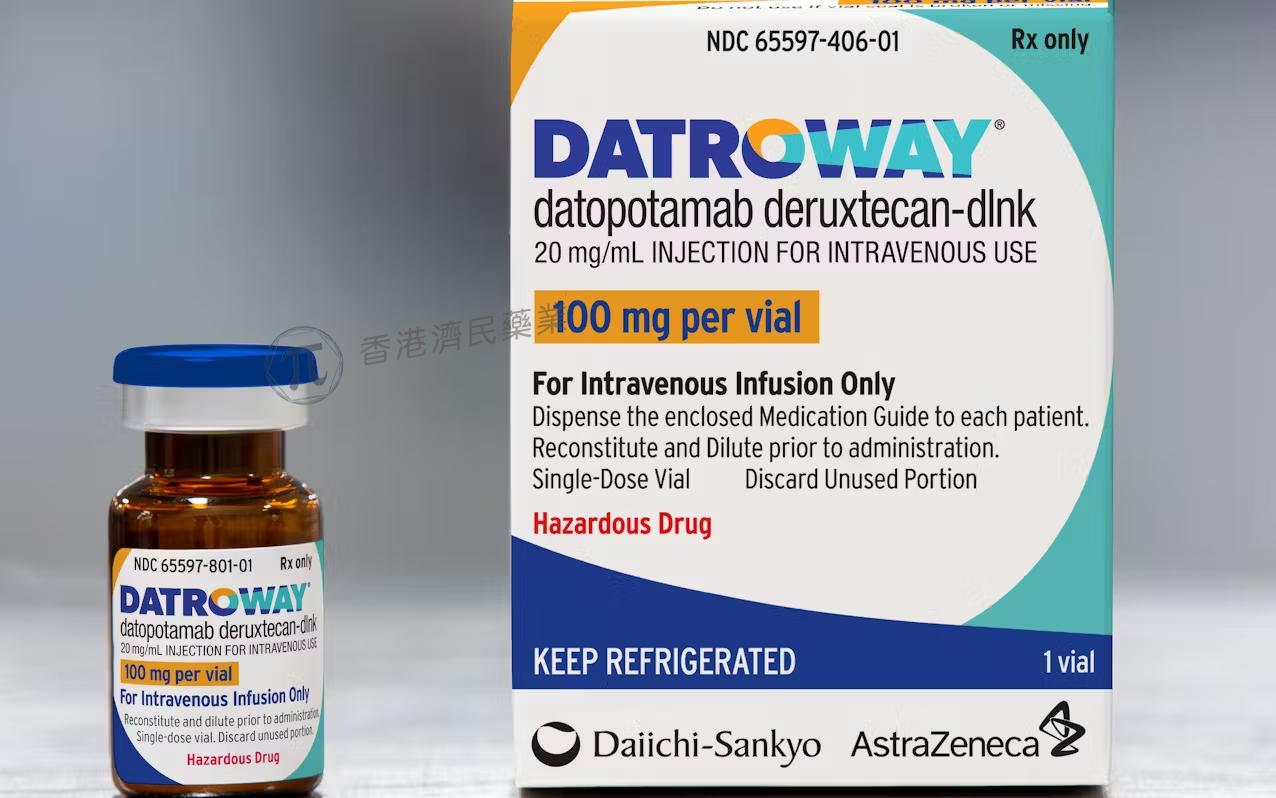
Datopotamab deruxtecan is a TROP2-directed antibody-drug conjugate sold as Datroway in the US, EU and Japan, and approved in India under a different brand name — Datverzo. It now holds three US indications: HR-positive/HER2-negative breast cancer (17 Jan 2025)[1], EGFR-mutated NSCLC by accelerated approval (23 Jun 2025)[2], and first-line triple-negative breast cancer (22 May 2026)[3]. The EU followed on the TNBC indication on 31 July 2026[9].
In India, CDSCO granted AstraZeneca Pharma India Limited permission to import, sell and distribute the product on 17 December 2025, for the breast-cancer indication only[5]. No commercial launch date or Indian list price has been publicly announced. Any figure you find quoted as a “Datroway price in India” is an importer’s indicative quotation, not a published Indian price.
- India brandDatverzo
- Presentation100 mg single-dose vial
- Dose (label)6 mg/kg IV q3w
- India priceNot published
Availability, access and price in India
This is the question most searches arrive with, so here is the verifiable position rather than a guess.
- Regulatory status. On 17 December 2025 CDSCO granted AstraZeneca Pharma India Limited permission to import for sale and distribution of datopotamab deruxtecan powder for concentrate for solution for infusion, 100 mg (r-DNA origin), under the brand name Datverzo, as a new drug in India[5]. This is AstraZeneca’s second ADC approval in India, after trastuzumab deruxtecan[5].
- Approved Indian indication. Adults with unresectable or metastatic HR-positive, HER2-negative (IHC 0, IHC 1+ or IHC 2+/ISH-) breast cancer who have received prior endocrine-based therapy and chemotherapy for unresectable or metastatic disease[5][6]. It does not extend to the EGFR-mutated NSCLC or triple-negative indications later approved in the US.
- Launch and price. AstraZeneca Pharma India’s own announcement said information on the potential Indian launch timeline would follow once all necessary approvals were obtained[5]. As of 12 August 2026 no launch date and no list price have been publicly announced.
Searches for a Datroway or Datverzo price in India return quotations from named-patient supply intermediaries. Those are commercial quotations for an import transaction — they are not a published Indian MRP, they are not NPPA-notified, and they vary by consignment. We have not found a verified Indian list price and will not publish an invented one. Unverified pricing on an oncology biologic is a patient-safety and credibility risk, not a convenience.
Which access route actually applies?
Indication and supply route determine the pathway. Select both to see the position.
1 · Which indication?
2 · Which supply route?
Select one option in each column
The pathway depends on whether the indication is covered by the Indian marketing permission, and whether you are seeking routine commercial stock or a single-patient import.
General regulatory description · not procurement or clinical advice
Vial, reconstitution and administration
This is the part of the label that hospital pharmacy, procurement and QA teams actually need, and it is almost never reproduced in drug-name search results. Everything below is FDA-label content[4], reported as label information — not as a direction to any individual patient.
The label explicitly directs that Sodium Chloride Injection, USP must not be used. Reconstitution is with Sterile Water for Injection; dilution is into 5% Dextrose Injection. This is a genuine preparation error risk in a unit that defaults to normal saline for infusions[4].
Reconstituting the 100 mg vial
- Supplied as a white to yellowish-white preservative-free lyophilised powder, 100 mg in a single-dose vial (NDC 65597-801-01)[4].
- Slowly inject 5 mL Sterile Water for Injection per vial using a sterile syringe, giving a final concentration of 20 mg/mL.
- Swirl gently until fully dissolved. Do not shake.
- More than one vial is usually needed — calculate dose, total reconstituted volume and vial count before starting.
- Reconstituted solution should be clear and colourless to light yellow. Discard if cloudy, discoloured or containing visible particles.
- If not used immediately, refrigerate in the original vial at 2 °C to 8 °C for up to 24 hours from reconstitution, protected from light. Do not freeze. No preservative is present, so discard after 24 hours.
Each vial also contains L-histidine 3.88 mg, L-histidine hydrochloride monohydrate 5.25 mg, polysorbate 80 1.50 mg and sucrose 450 mg; the reconstituted solution has a pH of 6.0[4].
Dilution into the infusion bag
- Dilute the calculated volume into an infusion bag containing 100 mL of 5% Dextrose Injection. Sodium Chloride Injection must not be used[4].
- Bag material: polyvinyl chloride, or polyolefin (polypropylene, or ethylene-propylene copolymer).
- Invert gently to mix. Do not shake. Cover the bag to protect from light.
- If not used immediately: up to 4 hours at room temperature (up to 25 °C, including preparation time), or up to 24 hours at 2 °C to 8 °C. Do not freeze.
- Discard any unused portion left in the vial.
Total time from vial reconstitution through end of administration must not exceed 24 hours[4]. If the prepared bag was refrigerated, allow it to reach room temperature before administration, protected from light.
Giving the infusion
- Intravenous infusion only. Never as IV push or bolus[4].
- Infusion line and tubing: polyvinyl chloride, polybutadiene or low-density polyethylene.
- Use a 0.2 micron in-line filter of polytetrafluoroethylene, polyethersulfone or nylon 66.
- Cover the bag to protect from light during administration.
- Do not mix with other drugs or run other drugs through the same line.
- First infusion over 90 minutes; if tolerated, second and subsequent infusions over 30 minutes.
- Observe for infusion-related reactions for at least 1 hour after each of the first two infusions, then at least 30 minutes thereafter.
- Administer where cardiopulmonary resuscitation medication and equipment are available.
Datopotamab deruxtecan is classified as a hazardous drug; applicable special handling and disposal procedures apply[4]. For teams building sterile-injectable capability, the handling constraints here are typical of the ADC class — see our injectable dosage-form overview.
Storage, premedication and required eye care
- Store unopened vials refrigerated at 2 °C to 8 °C in the original carton to protect from light until reconstitution. Do not freeze[4].
- Antihistamine: diphenhydramine 25 to 50 mg IV or oral, 30 to 60 minutes before each infusion.
- Antipyretic: acetaminophen 650 to 1,000 mg IV or oral, 30 to 60 minutes before each infusion.
- Antiemetic: a 5-HT3 receptor antagonist or appropriate alternative before each infusion.
- Eye drops: preservative-free lubricant drops at least four times daily and as needed.
- Mouthwash: a steroid-containing mouthwash — dexamethasone oral solution 0.1 mg/mL — four times daily and as needed. Patients hold ice chips or ice water in the mouth throughout the infusion.
- Ophthalmic examination including visual acuity, slit-lamp with fluorescein staining, intraocular pressure and fundoscopy: at initiation, annually during treatment, at end of treatment, and as clinically indicated.
Mechanism of action, in the detail the abstract leaves out
Datopotamab deruxtecan-dlnk is a Trop2-directed antibody and topoisomerase inhibitor conjugate built from three covalently linked components[4]:
- Datopotamab — a humanised anti-Trop2 IgG1 monoclonal antibody. TROP2 is a transmembrane glycoprotein broadly expressed across epithelial tumour types, including HR-positive/HER2-negative and triple-negative breast cancer.
- A protease-cleavable maleimide tetrapeptide linker, designed to stay intact in systemic circulation and to be cleaved only after internalisation.
- DXd — a topoisomerase I inhibitor derived from exatecan. Approximately four DXd molecules are attached per antibody (drug-to-antibody ratio, DAR, of about 4)[4].
After the antibody binds Trop2, the conjugate is internalised and lysosomal enzymes cleave the linker intracellularly. The released, membrane-permeable DXd inhibits topoisomerase I, causing DNA damage and apoptotic cell death[4]. Because DXd crosses membranes, it can diffuse into adjacent tumour cells — including cells expressing little or no TROP2 — producing the “bystander” effect characteristic of this ADC class.
The DAR of roughly 4, and the cleavable tetrapeptide linker, are what separate this molecule from the other marketed TROP2 ADC, sacituzumab govitecan, which carries an SN-38 payload on a hydrolysable linker. Same target, different payload chemistry and different release kinetics — which is why cross-trial safety comparison between the two is not straightforward.
Pharmacokinetically, the ADC has a median elimination half-life of about 4.8 days and released DXd about 5.5 days; DXd is roughly 98% plasma protein bound and is metabolised primarily by CYP3A4. Steady-state DXd exposure was 2.4-fold higher in patients with moderate hepatic impairment than in those with normal hepatic function[4]. The molecule is produced in Chinese hamster ovary cells by recombinant DNA technology; linker and payload are made by chemical synthesis and conjugated during manufacture[4].
Regulatory approval timeline
-
17 Jan 2025 · FDA
Approval — HR+/HER2-negative breast cancer
First approval for the molecule, on TROPION-Breast01. Adults with unresectable or metastatic disease after prior endocrine-based therapy and chemotherapy[1].
-
31 Jan 2025 · EMA CHMP
Positive opinion — HR+/HER2-negative breast cancer
A CHMP opinion is a recommendation, not the authorisation[7].
-
8 Apr 2025 · European Commission
EU marketing authorisation granted
The step that actually permits marketing across member states — roughly ten weeks after the CHMP opinion[10].
-
23 Jun 2025 · FDA
Accelerated approval — EGFR-mutated NSCLC
Pooled subgroup of 114 patients across TROPION-Lung05 and TROPION-Lung01; ORR 45% (95% CI 35, 54), median duration of response 6.5 months (95% CI 4.2, 8.4). Granted priority review and breakthrough therapy designation; continued approval may be contingent on confirmatory data[2].
-
17 Dec 2025 · CDSCO India
Import, sale and distribution permitted as Datverzo
Granted to AstraZeneca Pharma India Limited for the HR-positive/HER2-negative breast-cancer indication only. Launch timeline and price not announced[5][6].
-
22 May 2026 · FDA
Approval — first-line triple-negative breast cancer
PD-1/PD-L1-ineligible patients, on TROPION-Breast02. Reviewed under Project Orbis with the Australian TGA, Brazil’s ANVISA, Health Canada, Singapore’s HSA and Swissmedic[3].
-
23 Jun 2026 · EMA CHMP
Positive opinion on the TNBC indication
CHMP adopted a positive opinion recommending a variation to add first-line metastatic TNBC in PD-1/PD-L1-ineligible patients[8].
-
31 Jul 2026 · European Commission
EU approval — first-line metastatic TNBC
The second EU breast-cancer indication, and the first TROP2-directed therapy in this setting with a demonstrated overall-survival benefit[9].
The EU pathway is routinely summarised as “approved January 2025”. It was not. The CHMP positive opinion (31 Jan 2025) and the European Commission marketing authorisation (8 Apr 2025) are two separate steps about ten weeks apart[7][10]. The same two-step sequence repeated for TNBC in 2026: CHMP on 23 June, Commission decision on 31 July[8][9]. If you are building an approval tracker, log both dates, not one. Our FDA novel drug approvals tracker follows the same convention.
Safety profile, per the US label
Datroway’s US prescribing information carries no boxed warning. Interstitial lung disease, ocular reactions, stomatitis and embryo-fetal toxicity appear in Section 5, Warnings and Precautions[4]. Several secondary summaries — including an earlier version of this page — described them as boxed warnings. For regulatory-affairs use, the distinction is material: a boxed warning changes labelling, promotional and risk-communication obligations.
Safety was characterised in 360 patients who received at least one 6 mg/kg dose in TROPION-Breast01, with a median treatment duration of 6.7 months[4].
| Reaction | Incidence | Label-directed action |
|---|---|---|
| ILD / pneumonitis | 4.2% all grades 0.5% Grade 3–4 0.3% fatal | Median onset 3.5 months. Withhold if suspected and start corticosteroids; permanently discontinue for confirmed Grade 2 or higher. |
| Ocular reactions (total) | 51% all grades 1.9% Grade 3 | Median onset 2.1 months. Ophthalmic exam at initiation, annually, at end of treatment. Preservative-free lubricant drops; avoid contact lenses. 45% resolved completely. |
| — dry eye | 27% | Most common ocular event. |
| — keratitis | 24% | Graded action from monitoring through permanent discontinuation for corneal perforation. |
| — blepharitis / lacrimation | 8% each | Meibomian gland dysfunction 7%. |
| Stomatitis / oral mucositis | 59% all grades 7% Grade 3–4 | Median onset 0.7 months. Steroid mouthwash prophylaxis; ice chips during infusion. Caused dose reduction in 13% of patients. |
| Embryo-fetal toxicity | Mechanism-based | DXd is genotoxic. Contraception during treatment and for 7 months after the last dose (female patients) or 4 months (male patients with partners of reproductive potential). |
Scroll sideways to see all columns
Most common adverse reactions at 20% or above, including laboratory abnormalities: stomatitis, nausea, fatigue, decreased leukocytes, decreased calcium, alopecia, decreased lymphocytes, decreased haemoglobin, constipation, decreased neutrophils, dry eye, vomiting, increased ALT, keratitis, increased AST and increased alkaline phosphatase[4]. Serious adverse reactions occurred in 15% of patients; permanent discontinuation for an adverse reaction in 3.1%.
The label records a higher incidence of ILD/pneumonitis in patients with mild and moderate renal impairment (creatinine clearance 30 to under 90 mL/min), while still recommending no dose adjustment for that group. Monitor those patients more closely for respiratory reactions. The effect of severe renal impairment on pharmacokinetics is unknown[4].
Dosing per label, not a recommendation: 6 mg/kg by IV infusion once every three weeks (21-day cycle), to a maximum of 540 mg in patients weighing 90 kg or more, until progression or unacceptable toxicity. Dose reductions step to 4 mg/kg, then 3 mg/kg, then permanent discontinuation, with no re-escalation after a reduction[4].
Pivotal trial data
| Endpoint | TROPION-Breast01 (HR+/HER2−, pre-treated) | TROPION-Breast02 (TNBC, first line) |
|---|---|---|
| Randomised | 732 (365 vs 367) | 644 (323 vs 321) |
| Comparator | Eribulin 60%, capecitabine 21%, vinorelbine 10%, gemcitabine 9% | Nab-paclitaxel 54%, paclitaxel 28%, eribulin 11%, carboplatin 4.7%, capecitabine 2.2% |
| Median PFS | 6.9 vs 4.9 months HR 0.63 (0.52–0.76) p<0.0001 | 10.8 vs 5.6 months HR 0.57 (0.47–0.69) p<0.0001 |
| Median OS | 18.6 vs 18.3 months HR 1.01 (0.83–1.22) not significant | 23.7 vs 18.7 months HR 0.79 (0.64–0.98) p=0.0290 |
| Confirmed ORR | 36% vs 23% | 64% vs 30% |
| Median duration of response | 6.7 vs 5.7 months | Not stated in the FDA approval notice |
| Source | FDA label Table 7[4] | FDA approval notice[3] |
Scroll sideways to see both trials
Why TROPION-Breast01 missed overall survival — and what the final analysis showed
TROPION-Breast01 had dual primary endpoints. PFS was met decisively at the 17 July 2023 primary data cut-off[11]; OS was not. That much is well known. What is less often reported is the published final analysis, at a 24 July 2024 data cut-off and a median follow-up of 22.8 months, which confirmed the OS hazard ratio of 1.01[12].
The trial did not permit crossover between arms — a point frequently misstated. The confounder was subsequent therapy: several ADCs became available during the conduct of the study, and their uptake differed between arms. A prespecified sensitivity analysis using inverse probability censoring weighting to adjust for subsequent ADC use produced an adjusted OS hazard ratio of 0.86 (95% CI 0.70 to 1.06)[12]. That remains a confidence interval crossing 1, so it does not establish a survival benefit — but it quantifies the confounding rather than merely asserting it.
The contrast with TROPION-Breast02 is the useful part. In the first-line TNBC setting, where fewer alternatives existed, the trial produced a statistically significant five-month OS improvement[3][13]. Same molecule, same dose, different line of therapy and a very different survival readout.
Nonclinical data, kept in its two separate categories
- Reproductive and developmental toxicity: the label states plainly that no animal reproductive or developmental toxicity studies were conducted with datopotamab deruxtecan-dlnk. The embryo-fetal warning rests on mechanism, not on molecule-specific reproductive toxicology[4]. The label separately notes US general-population background risks of 2 to 4% for major birth defects and 15 to 20% for miscarriage — baseline figures, not drug-attributable risk.
- General toxicology: a 3-month repeat-dose study in rats at 200 mg/kg (approximately 29 times the human AUC exposure at 6 mg/kg) found reduced testicular and epididymal weight, germinal epithelium degeneration, seminiferous tubule atrophy and reduced sperm counts in males, and increased atretic ovarian follicles and vaginal mucosal single-cell necrosis in females. All findings except the testicular and epididymal lesions reversed after a 2-month recovery period[4].
- Genotoxicity: DXd was clastogenic in an in vivo rat bone-marrow micronucleus assay and an in vitro Chinese hamster lung chromosome aberration assay, and non-mutagenic in a bacterial reverse mutation assay. Carcinogenicity studies have not been conducted[4].
Datroway compared with Enhertu
Both are DXd-class ADCs from the same Daiichi Sankyo and AstraZeneca collaboration, and both are frequently searched together — but they target different antigens and therefore treat different populations.
| Attribute | Datroway (Dato-DXd) | Enhertu (T-DXd) |
|---|---|---|
| Target antigen | TROP2 | HER2 |
| Payload and linker | DXd via cleavable tetrapeptide linker, DAR approximately 4 | Same DXd payload, same cleavable-linker chemistry |
| Originator | Discovered by Daiichi Sankyo; co-developed and co-commercialised globally with AstraZeneca | |
| US indications | HR+/HER2− metastatic breast cancer (2025); EGFR-mutated NSCLC, accelerated (2025); first-line PD-1/PD-L1-ineligible TNBC (2026) | Broader and longer established: HER2-positive metastatic and early breast cancer, HER2-low and HER2-ultralow breast cancer, HER2-mutant NSCLC, HER2-positive gastric/GEJ, and HER2-positive solid tumours (tumour-agnostic, accelerated) |
| India status | CDSCO-approved as Datverzo, Dec 2025, breast-cancer indication only; launch and price not announced[5] | Separately CDSCO-approved; AstraZeneca India’s first ADC approval[5] |
Scroll sideways to see both agents
Selecting between TROP2- and HER2-directed therapy for a given patient is a biomarker- and case-specific decision for the treating oncologist. For a comparable ADC entry written to the same structure, see our note on telisotuzumab vedotin for NSCLC.
Frequently asked questions
The molecule is CDSCO-approved for import, sale and distribution in India since 17 December 2025, but under the brand name Datverzo rather than Datroway, and only for the HR-positive, HER2-negative breast-cancer indication. No commercial launch date and no Indian list price have been publicly announced as of 12 August 2026. Prices quoted online come from named-patient import intermediaries and are transaction quotations, not a published Indian price.
Yes. They are the same active substance, datopotamab deruxtecan, sold under two regional brand names. Datroway is the brand in the United States, European Union and Japan; Datverzo is the brand under which CDSCO approved import, sale and distribution in India. The confusion is common because almost all global coverage uses the Datroway name, while Indian regulatory documents use Datverzo.
Per the FDA label, each 100 mg single-dose vial is reconstituted with 5 mL of Sterile Water for Injection to give 20 mg/mL, swirled gently and not shaken, then diluted into 100 mL of 5% Dextrose Injection. Sodium Chloride Injection must not be used at either step. The infusion is given through a 0.2 micron in-line filter, protected from light, with total time from reconstitution to end of administration not exceeding 24 hours.
No. The US prescribing information for Datroway contains no boxed warning. Interstitial lung disease and pneumonitis, ocular adverse reactions, stomatitis and embryo-fetal toxicity are listed under Section 5, Warnings and Precautions. Some secondary summaries describe these as boxed warnings, which is incorrect and matters for labelling and promotional compliance purposes.
The final analysis reported an overall survival hazard ratio of 1.01, which was not statistically significant, despite a clear progression-free survival benefit. Crossover between arms was not permitted; the confounder was subsequent therapy, since several antibody-drug conjugates became available during the trial and uptake differed between arms. A sensitivity analysis adjusting for subsequent ADC use gave an adjusted hazard ratio of 0.86, with a confidence interval still crossing 1.
Approximately four molecules of deruxtecan are attached to each antibody molecule, giving a drug-to-antibody ratio of about 4. The payload DXd is a topoisomerase I inhibitor derived from exatecan, attached through a protease-cleavable maleimide tetrapeptide linker. The antibody itself is a humanised anti-Trop2 IgG1 produced in Chinese hamster ovary cells by recombinant DNA technology.
Related on laafon.com
- FDA novel drug approvals trackerRunning record of CDER novel approvals, updated monthly.
- FDA new drug list 2026This year’s approvals with indication and sponsor detail.
- Emrelis (telisotuzumab vedotin) for NSCLCAnother ADC entry, same structure — target, trial basis, India status.
- Wegovy FDA approval and CV riskHow an expanded indication changes label and access.
- USFDA approval roadmap for Indian formulation plantsFor manufacturers, not prescribers: what a US filing actually requires.
- All USFDA coverage on laafon.comApproval notes, guidance summaries and inspection topics.
Regulatory support for import, registration and dossier work
If you are assessing an import licence route, a CDSCO new-drug or import registration pathway, or the documentation behind a product like this one, we advise on the filing rather than the therapy.
Regulatory compliance consultationReferences
- U.S. Food and Drug Administration. FDA approves datopotamab deruxtecan-dlnk for unresectable or metastatic, HR-positive, HER2-negative breast cancer. Silver Spring (MD): FDA; 2025 Jan 17 [cited 2026 Aug 12]. Available from: fda.gov
- U.S. Food and Drug Administration. FDA grants accelerated approval to datopotamab deruxtecan-dlnk for EGFR-mutated non-small cell lung cancer. Silver Spring (MD): FDA; 2025 Jun 23 [cited 2026 Aug 12]. Available from: fda.gov
- U.S. Food and Drug Administration. FDA approves datopotamab deruxtecan-dlnk for unresectable or metastatic triple-negative breast cancer. Silver Spring (MD): FDA; 2026 May 22 [cited 2026 Aug 12]. Available from: fda.gov
- U.S. Food and Drug Administration. DATROWAY (datopotamab deruxtecan-dlnk) for injection: full prescribing information. Silver Spring (MD): FDA; 2025 Jan [cited 2026 Aug 12]. Available from: accessdata.fda.gov
- AstraZeneca Pharma India Ltd. AstraZeneca Pharma India receives CDSCO approval for Datopotamab Deruxtecan, a TROP2-directed antibody drug conjugate, for the treatment of metastatic breast cancer. Bangalore: AstraZeneca; 2025 Dec 17 [cited 2026 Aug 12]. Available from: astrazeneca.com
- Sharma R. AstraZeneca Pharma India wins CDSCO permission to import breast cancer drug Datverzo. Medical Dialogues; 2025 Dec 18 [cited 2026 Aug 12]. Secondary trade source, used only to corroborate the wording of the CDSCO permission. Available from: medicaldialogues.in
- European Medicines Agency. Datroway (datopotamab deruxtecan): European public assessment report. Amsterdam: EMA; 2025 [cited 2026 Aug 12]. Available from: ema.europa.eu
- European Medicines Agency. Datroway: opinion on variation to marketing authorisation. Amsterdam: EMA; 2026 Jun 23 [cited 2026 Aug 12]. Available from: ema.europa.eu
- AstraZeneca. Datroway approved in the EU as only TROP2-directed medicine with overall survival benefit for the 1st-line treatment of patients with metastatic TNBC who are not candidates for immunotherapy. 2026 Jul 31 [cited 2026 Aug 12]. Available from: astrazeneca.com
- Daiichi Sankyo. DATROWAY approved in the EU for patients with previously treated HR positive, HER2 negative breast cancer. Tokyo and Munich; 2025 Apr 8 [cited 2026 Aug 12]. Available from: daiichisankyo.com
- Bardia A, Jhaveri K, Im SA, et al. Datopotamab deruxtecan versus chemotherapy in previously treated inoperable/metastatic hormone receptor-positive, HER2-negative breast cancer: primary results from TROPION-Breast01. J Clin Oncol. 2025;43(3):285–296. doi:10.1200/JCO.24.00920. Available from: ascopubs.org
- Pistilli B, Jhaveri K, Im SA, et al. Datopotamab deruxtecan versus chemotherapy in previously treated inoperable/metastatic hormone receptor-positive, HER2-negative breast cancer: final overall survival analysis of the phase III TROPION-Breast01 study. Ann Oncol. 2026. PMID 41448362. Available from: pubmed.ncbi.nlm.nih.gov
- Dent R, Shao Z, Schmid P, et al. Datopotamab deruxtecan in patients with untreated, advanced triple-negative breast cancer (TROPION-Breast02): a randomised, open-label, international, phase III trial. Ann Oncol. 2026. doi:10.1016/j.annonc.2026.03.008. Available from: annalsofoncology.org
Written for oncologists, hospital pharmacists, regulatory affairs professionals and distributors as regulatory and scientific reference information. It is not treatment guidance, and it does not recommend any dosing, therapy or purchasing decision. Label content, approval status and Indian availability change; verify against the primary sources above before acting. Any patient-specific decision belongs to the treating oncologist.