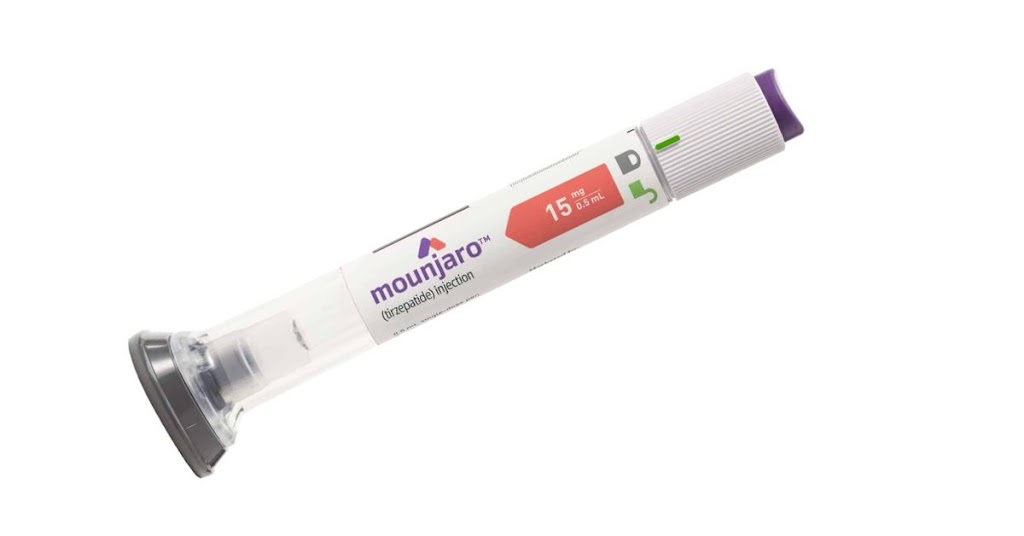

Diabetes is a global epidemic – in 2022 about 14% of adults had the disease (up from 7% in 1990). It causes serious complications (heart attack, stroke, kidney failure) and over 2 million deaths each year. New therapies are urgently needed. Mounjaro (tirzepatide) is a novel once-weekly injectable approved in 2022 to improve blood sugar control in adults with type 2 diabetes. It is the first dual incretin (GIP and GLP-1) receptor agonist on the market. By activating both glucose-dependent insulinotropic polypeptide (GIP) and glucagon-like peptide-1 (GLP-1) pathways, tirzepatide boosts insulin release only when needed and suppresses excess glucagon secretion. This dual action lowers blood glucose more powerfully than single-pathway drugs and also delays stomach emptying to enhance satiety.

Efficacy in Clinical Trials
Tirzepatide has shown strong glucose-lowering and weight-loss benefits in trials. In SURPASS phase 3 studies, adults with poorly controlled type 2 diabetes saw HbA1c reductions of roughly 1.9–2.4% on tirzepatide (5–15 mg once weekly) over ~40–52 weeks. For example, in the SURPASS-3 trial, mean HbA1c dropped 1.93%, 2.20%, and 2.37% on the 5 mg, 10 mg, and 15 mg doses, respectively, versus only –1.34% on insulin degludec. These reductions were statistically superior to comparators. In SURPASS-1 (treatment-naïve patients), tirzepatide beat placebo by –1.91% to –2.11% depending on dose. Even when added to other medications (metformin, sulfonylureas, GLP-1 agonists), tirzepatide consistently produced greater A1c drops than those therapies alone.
Weight loss was also dose-dependent and substantial. In SURPASS trials, patients on tirzepatide lost on average 6–15 kg more than comparators. (Tirzepatide arms lost weight while insulin-treated or placebo groups generally gained weight.) In obesity trials, 15 mg once-weekly tirzepatide produced mean losses of ~20% of body weight at 72 weeks. (For context, a 2.4 mg weekly dose of the GLP-1 agonist semaglutide yields ~15–20% weight loss in similar trials.)
Snippet: “Tirzepatide (Mounjaro) is a once-weekly dual GIP/GLP-1 agonist for type 2 diabetes. In trials it lowered HbA1c by ~2% and produced double-digit weight loss, outperforming insulin and other GLP-1 drugs.”
Safety and Side Effects
Tirzepatide has a GLP-1–type safety profile. Gastrointestinal side effects (nausea, vomiting, diarrhea, constipation) are the most common, occurring in roughly 10–20% of patients and generally mild-to-moderate. These often improve with time or dose titration. Injection-site reactions (redness, itching) occur occasionally. Because tirzepatide slows gastric emptying, patients are advised to eat small meals and stay hydrated to mitigate nausea. It can interact with other medications (by delaying their absorption) so monitoring is needed, especially with narrow-therapeutic-index drugs or hormonal contraceptives. Importantly, tirzepatide does not typically cause severe hypoglycemia (low blood sugar) by itself. In SURPASS-3, only 1–2% of tirzepatide patients had significant hypoglycemia vs 7% on insulin.
Contraindications: Like other GLP-1–based drugs, tirzepatide is contraindicated in patients with a personal or family history of medullary thyroid carcinoma or MEN2 syndrome. Pancreatitis risk is uncertain; if it occurs, tirzepatide should be stopped. Kidney or liver injury have not been seen to worsen on tirzepatide in trials. In summary, major adverse events were rare and overall safety was considered favorable.
Also Read: How to choose best cough syrup in India
Dosing and Administration
Mounjaro is given by self-injection under the skin (abdomen, thigh or arm) once weekly. The label recommends starting at 2.5 mg weekly for 4 weeks, then increasing by 2.5 mg increments every 4 weeks as needed to reach glycemic targets (up to 15 mg max). Patients continue the same day each week (with or without food). If a dose is missed, patients should take the next dose when scheduled and not double up. No dose adjustment is needed for renal or mild hepatic impairment. Because the effective dose often rises to 10–15 mg, titration is important to improve tolerance.
Cardiometabolic Benefits
Beyond glucose and weight, tirzepatide may improve cardiovascular and metabolic outcomes. In trials comparing tirzepatide to dulaglutide (Trulicity), a standard GLP-1 agonist, Mounjaro showed an 8% relative reduction in major cardiovascular events (CV death, MI, stroke). (This met the trial’s noninferiority goal, meaning tirzepatide was at least as safe as dulaglutide.) All-cause mortality was 16% lower on Mounjaro (not statistically significant). A pooled SURPASS analysis found no increase in 4-point MACE with tirzepatide vs insulin. Thus far, tirzepatide appears at least cardio-safe, and possibly cardioprotective – similar to other GLP-1 drugs. It may also modestly improve blood pressure, lipids, and liver fat in diabetics.
Patient Experience and Real-World Data
Real-world feedback on tirzepatide is overwhelmingly positive. On Drugs.com, Mounjaro users give it ~8.4/10 (78% positive). Common praise includes significant A1c and weight improvements. For example, one 58-year-old user (270 lb female) reported losing 26 lb in 8 weeks on tirzepatide, with only mild constipation and a transient injection-site redness. Another patient lost ~45 lb over months and was able to reduce other medications. Of course, individual results vary. Some users still struggle with GI side effects or find it hard to afford the drug.
Tip: Patients should be counseled on diet/exercise to augment benefits. Starting with a low dose and slowly titrating can improve comfort. Staying hydrated and eating small, frequent meals may reduce nausea. Blood glucose and weight should be monitored regularly. Any severe GI symptoms or allergic signs warrant prompt medical attention.
Cost and Access
Mounjaro’s list price in the US is high (over $1,000 per monthly dose). Without insurance, it can cost ~$12,000 per year. Many commercial insurance plans and Medicare Part D cover Mounjaro, but co-pays vary. Eli Lilly offers a Savings Card and patient assistance programs that can lower out-of-pocket costs (eligibility and savings vary). For uninsured patients, these programs can be critical. In practice, affordability is a major concern – patients should work with providers and payors to maximize coverage. (Generic tirzepatide should eventually become available, which would lower cost after patents expire.)
Comparison with Other Therapies
| Drug (dose) | Mechanism | Typical Weight Loss | Side Effects | Approx. Cost (US) |
|---|---|---|---|---|
| Mounjaro (15 mg) | GIP+GLP-1 agonist | ~20% of body weight | Nausea/vomiting/diarrhea, constipation | ~$1,100/month |
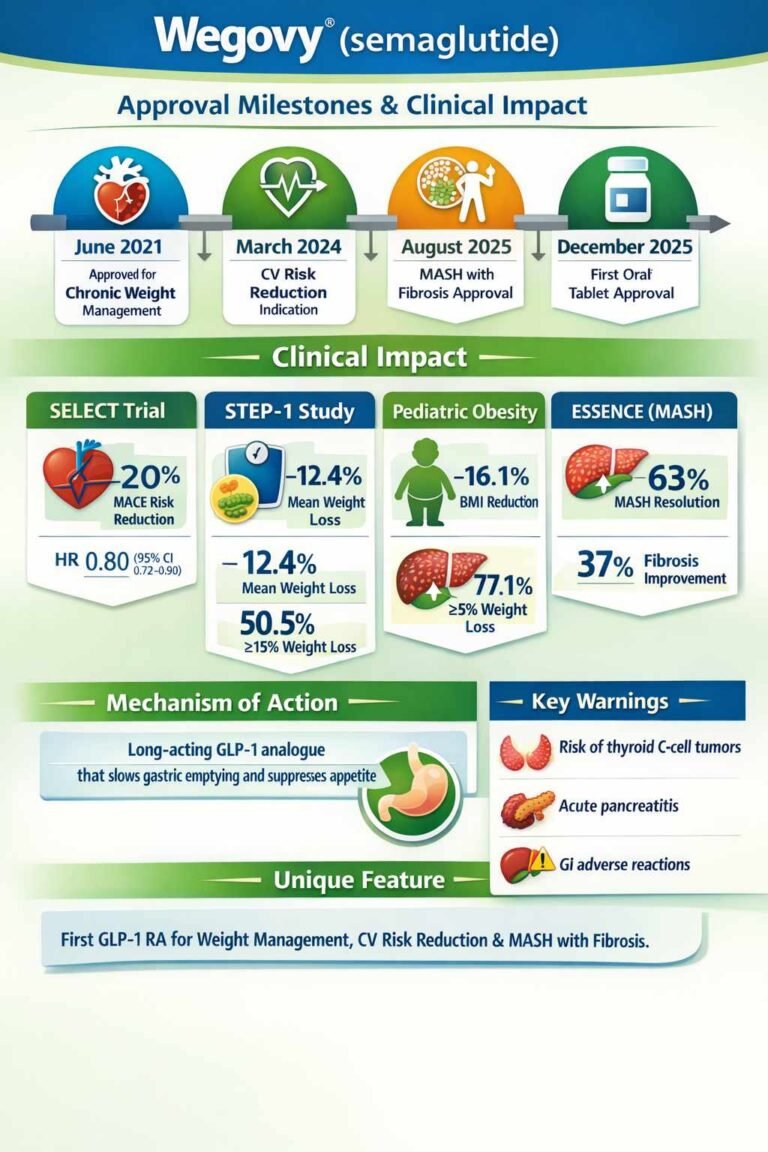
| Wegovy (semaglutide 2.4 mg) | GLP-1 agonist | ~15–20% (72 weeks) | Similar GI effects | ~$1,450/month (list) |
| Saxenda (liraglutide 3.0 mg) | GLP-1 agonist | ~7–10% (1 yr) | GI effects, injection site | ~$1,350/month |
| Qsymia (phentermine/topiramate) | CNS stimulant + anticonvulsant | ~5–9% | Dry mouth, insomnia, dizziness | ~$1,200/month |
Mounjaro’s dual agonism often yields greater weight loss than single-pathway drugs. Its efficacy on A1c and weight typically exceeds what is seen with semaglutide or liraglutide in head-to-head trials. Like other injectables, it beats most oral medications on efficacy, but at the expense of higher cost and GI side effects.
Who Should Use Mounjaro?
Tirzepatide is intended for adults with type 2 diabetes who need better glycemic control and/or significant weight loss. Guidelines (ADA, AACE) recommend it as add-on therapy after metformin, especially in patients with obesity or high cardiovascular risk. It is not approved for type 1 diabetes or for use in pregnancy. Doctors should avoid it in patients with thyroid cancer risk or pancreatitis history. Patient selection should consider insurance and tolerance for injections. A collaborative decision between doctor and patient is crucial.
Check Availability in India
Looking to access Mounjaro in India? Tirzepatide (Mounjaro) was approved by India’s regulator (CDSCO) and launched as Mounjaro KwikPen in 2025. It is prescription-only, available in 2.5–15 mg pens. Talk to your doctor about whether Mounjaro is right for you. If prescribed, ask your pharmacist for Mounjaro KwikPen – authorized sellers include major hospital pharmacies and licensed online pharmacies. For example, online portals (1mg, MedPlus, etc.) can deliver Mounjaro after verifying your prescription. The starting 2.5 mg dose is priced at about ₹14,000 (~$160), so check insurance coverage or patient assistance options as needed. Always ensure you purchase the genuine Lilly product from a reputable source. Use this guide – valid Rx + licensed pharmacy – to safely obtain Mounjaro in India.
FAQs
-
What is Mounjaro (tirzepatide) and what is it used for?
Mounjaro (tirzepatide) is a once-weekly subcutaneous injection approved for adults with type 2 diabetes. It is the first dual GIP/GLP-1 receptor agonist, used to improve glycemic control when diet and exercise alone are insufficient.
-
How does Mounjaro (tirzepatide) work?
Mounjaro activates both GIP and GLP-1 receptors, mimicking two natural hormones. It enhances insulin secretion and suppresses glucagon release in a glucose-dependent manner, and slows gastric emptying【23†L218-L224】. This dual incretin action leads to strong blood sugar reduction.
-
What are the benefits of Mounjaro (tirzepatide) in diabetes?
Clinical trials show Mounjaro substantially lowers HbA1c (often ~2% drop at higher doses) and typically induces double-digit weight loss【32†L1-L4】【25†L354-L362】. It also has potential cardiovascular benefits (trending lower MACE) while requiring only once-weekly dosing, improving patient adherence.
-
What are common side effects of Mounjaro (tirzepatide)?
The most common side effects are gastrointestinal: nausea, vomiting, diarrhea, and constipation【47†L504-L513】. These are generally mild-to-moderate and tend to decrease over time. Injection-site reactions (redness, itching) can occur. Patients are advised to stay hydrated and eat smaller meals to help manage these effects.
-
How is Mounjaro (tirzepatide) dosed and administered?
Mounjaro is given as a once-weekly subcutaneous injection. The recommended starting dose is 2.5 mg weekly for 4 weeks, then increased by 2.5 mg every 4 weeks if needed, up to a maximum of 15 mg weekly【47†L470-L479】. It can be injected with or without food on any day of the week.
References:
- Farzam K, Patel P. Tirzepatide. In: StatPearls [Internet]. Treasure Island (FL): StatPearls Publishing; 2025. Available from: https://www.ncbi.nlm.nih.gov/books/NBK585056/
- U.S. Food and Drug Administration (FDA). FDA approves novel, dual-targeted treatment for type 2 diabetes. Silver Spring (MD): FDA; 2022 May 13. Available from: https://www.fda.gov
- Syed YY. Tirzepatide: First Approval. Drugs. 2022;82(1):121–129. doi:10.1007/s40265-022-01746-8
- Gettman L. New Drug: Tirzepatide (Mounjaro™). Sr Care Pharm. 2023;38(2):50-62. doi:10.4140/TCP.n.2023.50
- Jastreboff AM, Aronne LJ, Ahmad NN, Wharton S, Connery L, Alves B, et al. Tirzepatide once weekly for the treatment of obesity. N Engl J Med. 2022;387:205-216. doi:10.1056/NEJMoa2206038
- Del Prato S, Kahn SE, Pavo I, Weerakkody GJ, Yang Z, Doupis J, et al. Tirzepatide versus insulin degludec as add-on therapy to metformin with or without SGLT2 inhibitors in patients with type 2 diabetes (SURPASS-3). Lancet. 2021;398(10300):583-598. doi:10.1016/S0140-6736(21)01443-4
- Frias JP, Davies MJ, Rosenstock J, Pérez Manghi FC, Fernández Landó L, Bergman BK, et al. Tirzepatide versus semaglutide once weekly in patients with type 2 diabetes (SURPASS-2). N Engl J Med. 2021;385:503-515. doi:10.1056/NEJMoa2107519
- Rosenstock J, Wysham C, Frías JP, Kaneko S, Lee CJ, Fernández Landó L, et al. Efficacy and safety of tirzepatide monotherapy versus placebo in patients with type 2 diabetes (SURPASS-1). Lancet. 2021;398(10295):143-155. doi:10.1016/S0140-6736(21)01324-6
- Heise T, Mari A, DeVries JH, Urva S, Li J, Pratt EJ, et al. Effects of subcutaneous tirzepatide versus placebo or semaglutide on insulin secretion and sensitivity in patients with type 2 diabetes. Diabetes Care. 2022;45(3):746-753. doi:10.2337/dc21-1153
- World Health Organization (WHO). Diabetes fact sheet. Geneva: WHO; 2024. Available from: https://www.who.int/news-room/fact-sheets/detail/diabetes
- American Diabetes Association. Standards of care in diabetes—2024. Diabetes Care. 2024;47(Suppl 1):S1-S350. doi:10.2337/dc24-SINT
- Eli Lilly and Company. Mounjaro (tirzepatide) injection prescribing information. Indianapolis (IN): Eli Lilly; 2024. Available from: https://pi.lilly.com/us/mounjaro-uspi.pdf
- Eli Lilly and Company. Mounjaro® savings and patient support programs. Available from: https://pricinginfo.lilly.com/mounjaro
- Drugs.com. Mounjaro (tirzepatide) user reviews & ratings. Available from: https://www.drugs.com/comments/tirzepatide/mounjaro.html