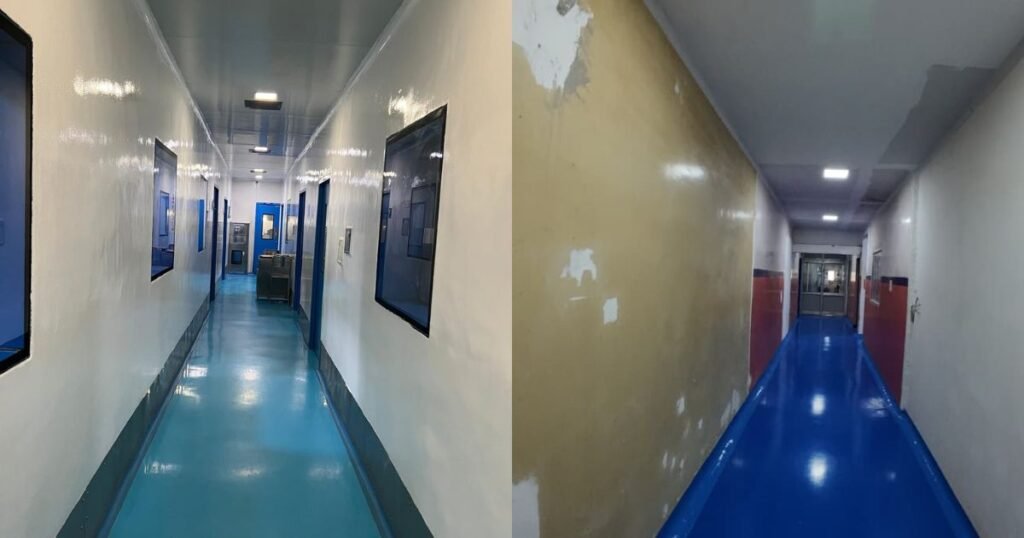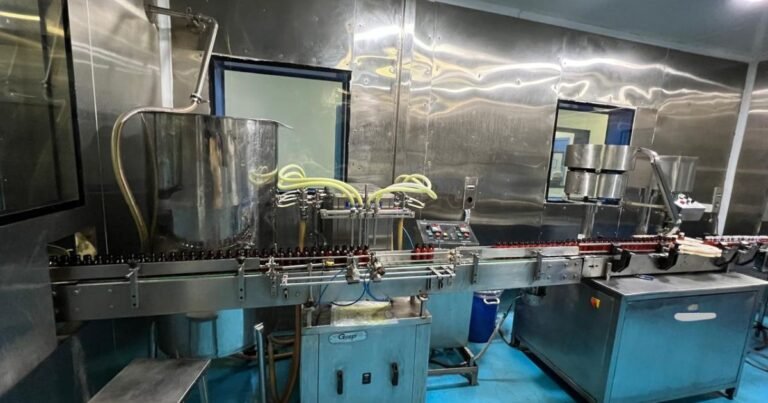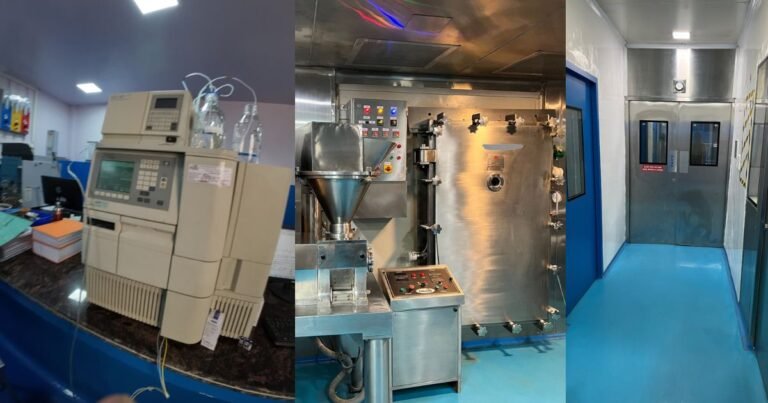
Pharma Unit for Sale in Paonta Sahib — Licensed & Ready to Run
A running non-beta-lactam manufacturing unit — tablets, capsules and liquid orals — declared by the seller as GMP and Revised Schedule M compliant, with a 450+ formulation portfolio, a 100+ domestic client book and substantial spare capacity. Offered as a clean asset-and-licence acquisition, not a passive holding.
*Turnover, gross margin and capacity are seller-declared and subject to independent due-diligence verification. Figures are indicative and do not constitute an offer, a valuation, or financial advice.
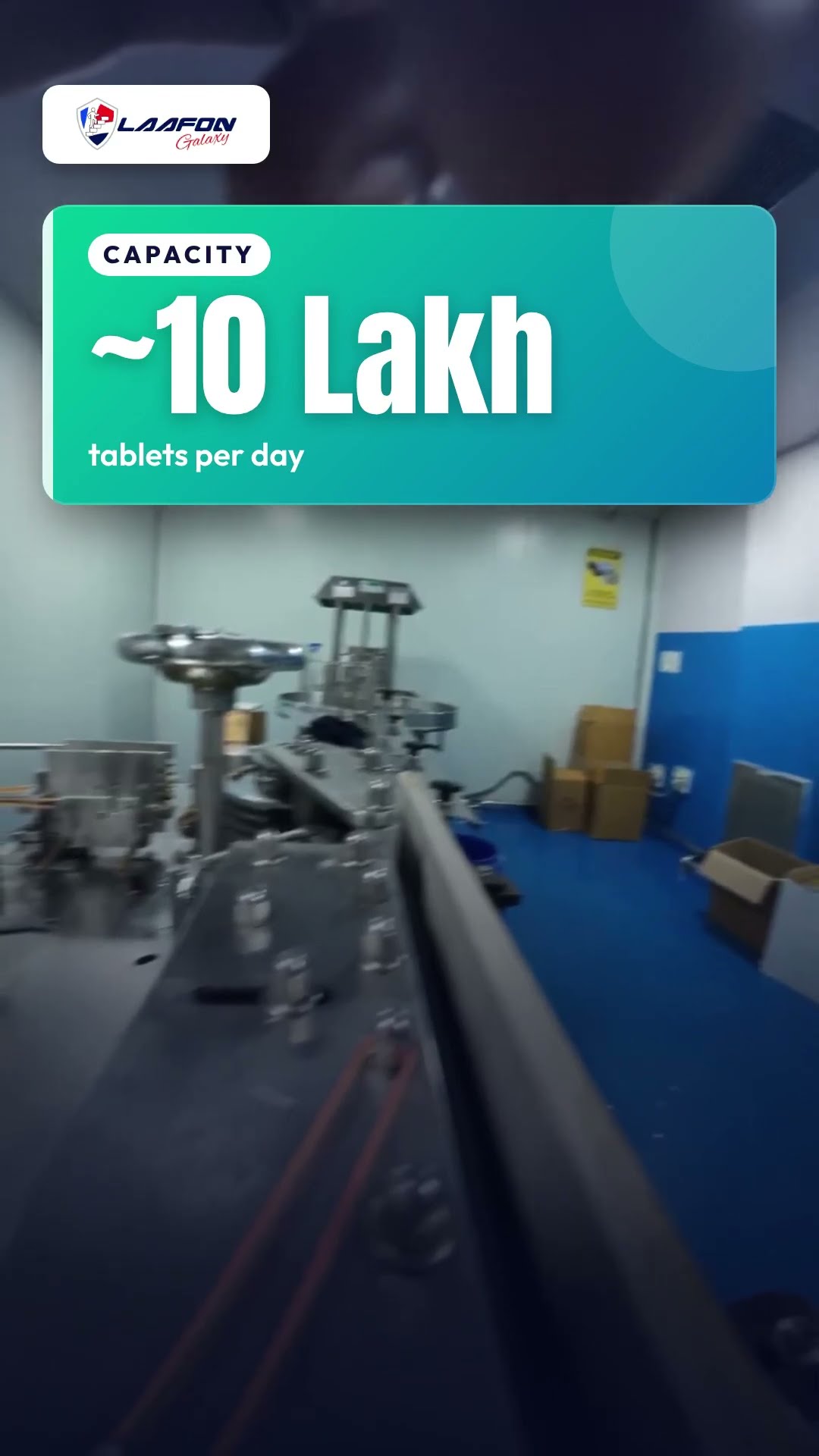
See the Paonta Sahib unit in under 3 minutes
Darshan Singh, Laafon Galaxy, walks through the facility and the deal in Hindi, with English on-screen cards.
- Facility: corridors, airlocks, granulation, coating, compression and QC
- Business: three sections, 450+ approvals, 100+ clients
- Numbers: ~₹5 Cr turnover, ~20% gross margin (seller-declared)
- Deal: ₹14 Cr asking price and the next steps for buyers
A fully-licensed platform — ready to produce from day one
This pharma unit for sale in Paonta Sahib, Himachal Pradesh, is a running, GMP-certified pharmaceutical manufacturing unit available for acquisition at ₹14 crore. It is a compact, cleanly-run non-beta-lactam pharma manufacturing unit — producing tablets, capsules and liquid orals for the domestic market — that comes with state manufacturing licences, a documented portfolio of 450+ approved formulations, and a 100+ client book. This page sets out exactly what is on offer, what it earns, where the growth sits, and what to verify before you sign — written for real diligence, not a brochure.
For an investor or established pharma company, the logic is direct: you inherit a licensed, Schedule M-compliant platform with a ready product range and spare capacity rather than spending 18–24 months building and certifying a greenfield site while competitors capture demand (compare the cost with our plant setup cost calculator). This is a pharma business for sale priced on its assets, licences and approvals — the return comes from filling capacity that is already installed and monetising a product portfolio that already exists.
- Location
- Paonta Sahib, Sirmaur district, Himachal Pradesh — an established HP pharma belt near the Uttarakhand border, ~45 km from Dehradun, within a day’s road reach of Delhi-NCR.
- Facility type
- Non-beta-lactam — tablets, capsules and liquid orals under one roof.
- Compliance
- GMP · GLP · Revised Schedule M compliant (seller-declared) — manufacturing licence issued by the Himachal Pradesh State Licensing Authority; scope and validity shared under NDA.
- Product portfolio
- 450+ approved formulations across the three dosage forms — full schedule available on request / under NDA.
- Commercials
- ₹5 crore turnover at ~20% gross margin; 100+ domestic third-party / trade clients (seller-declared).
- Team
- 40 trained staff across production, QA/QC, stores and administration.
- Structure
- Partnership entity — transferable as a slump/asset sale or entity sale, subject to buyer preference and advice.
- Headroom
- Installed capacity (seller-declared: 5 lakh tablets per 8-hour shift) materially exceeds current output — the core growth thesis of the deal.
Why Paonta Sahib
Paonta Sahib is one of Himachal Pradesh’s long-standing pharmaceutical manufacturing hubs, alongside Baddi, Kala Amb and Solan. For a buyer, the value isn’t the address — it’s the operating ecosystem you inherit on day one:
- Established cluster
- Excipient and packaging suppliers, contract testing labs and pharma-equipment engineers operate locally — keeping lead times and machine downtime short.
- Trained talent pool
- A mature HP pharma workforce means GMP-literate operators, QA/QC analysts and documentation staff are available without a long hire-and-train runway.
- Connectivity
- Road links to Dehradun, Chandigarh and Delhi-NCR support both raw-material inflow and pan-India dispatch of finished goods.
- Regulatory familiarity
- HP state drug authorities and local consultants handle CDSCO and Schedule M processes routinely, smoothing licence variations and renewals.
- Legacy base
- The region built its scale in the HP excise-incentive era; the supplier density and infrastructure remain, even though the original tax holiday has ended.
The physical asset & what its certifications unlock
The 10,000 sq ft built-up block on the 1,500 sq m plot is laid out for compliant oral-solid and liquid manufacturing — segregated production, warehousing and QC areas built around GMP material and personnel flow. As a brownfield, operating asset, you take on a facility with a known construction and utility history rather than greenfield unknowns. A full asset and utility schedule (HVAC and cleanroom classification, purified-water system, DG backup, air handling, ETP and QC instrumentation) is provided with the due-diligence pack and should be independently audited.
| Certification (seller-declared) | What it enables | Market access |
|---|---|---|
| GMP (Schedule M) | Good Manufacturing Practice certificate issued by the State Licensing Authority | Legal manufacture & pan-India distribution of approved formulations |
| Revised Schedule M | Compliance with India’s upgraded GMP norms (notified Dec 2023; MSME extension ended 31 Dec 2025) | Reduces exposure in the CDSCO and state inspections under way since Nov 2025 — ask for the gap-assessment closure record |
| GLP | Good Laboratory Practice in the QC function | Reliable in-house release testing and method integrity |
| Product permissions | Product-wise permissions endorsed on the state manufacturing licence | Legal manufacture of the 450+ approved formulation list |
Production capacity by dosage form
Installed capacity across three non-beta-lactam lines, as declared by the seller per 8-hour shift. The unit runs two shifts a day (seller-confirmed); annual figures assume ~250 working days:
| Dosage form | Per 8-hour shift | Per day (2 shifts) | Annual (250 days) |
|---|---|---|---|
| Tablets (non-beta) | 5 lakh | 10 lakh | 25 crore |
| Capsules (non-beta) | 3 lakh | 6 lakh | 15 crore |
| Liquid orals (syrups/suspensions) | 10,000 bottles | 20,000 bottles | 50 lakh bottles |
A ready-to-sell range of 450+ approved formulations
The unit carries a documented portfolio of 450+ approved product formulations — a genuine value driver, since each approval carries the time, cost and paperwork a new manufacturer would otherwise have to build from scratch. The range spans all three dosage forms and the high-volume domestic therapeutic segments:
| Therapeutic segment | Representative range |
|---|---|
| Analgesics & NSAIDs | Aceclofenac, diclofenac, nimesulide and paracetamol combinations |
| Antibiotics & antimicrobials | Ofloxacin–ornidazole, fluconazole and related anti-infectives |
| Gastro / PPIs | Pantoprazole and domperidone-based formulations |
| Anti-allergics & respiratory | Levocetirizine, ambroxol and cough/cold combinations |
| Nutraceuticals & haematinics | Ferrous ascorbate–folic acid, calcium, and multivitamin range |
The full molecule-level approval schedule is shared with qualified buyers under NDA. Segment breadth makes the portfolio well-suited to third-party manufacturing, PCD supply, and — after a WHO-GMP upgrade — export registration.
A ready third-party manufacturing platform
The unit serves 100+ domestic clients (seller-declared) on a third-party / contract manufacturing basis — the sticky, capital-light model that underpins much of India’s oral-solids sector. These relationships are durable because moving a product to a new site forces the customer through re-validation and fresh regulatory filings, so an inherited client book carries real switching-cost protection.
For a buyer, the platform supports three revenue modes at once: continuing the existing third-party manufacturing unit business, adding loan-licence arrangements, and — for an operating pharma company — in-housing its own brand production to reclaim margin currently paid to outside manufacturers. The multi-dosage flexibility under one licence lets you re-mix output as client demand shifts — both diversification and client-retention insurance.
The numbers — read honestly
The figures below are seller-declared and must be validated in diligence against audited accounts and GST filings. Note the correction that matters most: the ~20% figure is gross margin, not EBITDA. On ₹5 crore of turnover that’s roughly ₹1 crore of gross profit; the operating (EBITDA) margin sits below that once overheads are counted and should be confirmed from the accounts.
| Metric | Seller-declared | Note for buyer |
|---|---|---|
| Annual turnover | ₹5.00 Cr | Reconcile to GST returns + bank statements |
| Gross margin | ~20% | ≈ ₹1.0 Cr gross profit; thin, consistent with job-work mix |
| EBITDA | Below gross profit | Confirm from audited P&L — not the 20% figure |
| Capacity utilisation | Low | Large installed headroom vs current output |
| Approved formulations | 450+ | Core intangible value — verify against licence |
| Client base | 100+ | Verify top-10 contribution & churn |
| Workforce | 40 | Key-staff retention plan pre-close |
Asking price — and how to read it
The asking price is ₹14 crore, negotiable subject to due diligence. It’s worth being direct about what that number is:
How to value it: commission an independent valuation of (1) land + building at prevailing HP industrial rates, (2) plant & machinery at fair market value, and (3) intangibles — the 450+ approvals, licences and client relationships. Then test whether the sum, plus a premium for a ready, running platform with headroom, supports the ask. Negotiate on the gap. Treat current earnings as the floor return while you scale utilisation and improve mix — not as the basis for the price.
Investment calculator
Because the thesis here is utilisation-and-margin-led, the calculator works from gross margin, lets you deduct your own operating cost to reach EBITDA, and shows a scale-up scenario. Unlevered (all-equity) — layer in your own debt separately.
Illustrative only. Excludes working-capital movements, tax, and capex beyond the operating cost you set. Not financial advice — verify all inputs in due diligence.
Why now
Revised Schedule M was notified in December 2023, applied to large manufacturers from mid-2024, and the extension for MSMEs that applied ran out on 31 December 2025; since November 2025 the DCGI has asked state regulators to inspect units for compliance (status as of 30 Oct 2026). Non-compliant units face costly retrofits and downtime. The seller declares this facility already compliant — confirm it against the gap assessment and inspection record, and if it holds, that retrofit cost doesn’t apply to you.
India is the world’s generics workshop, and outsourcing keeps rising — startups avoid crores in capex by using contract manufacturers, and larger firms offload commoditised products. A ready, licensed unit with a 450+ approval portfolio captures that demand immediately; a greenfield build sits out the first 18–24 months.
The gap between installed capacity and current ₹5 crore output is the clearest lever any buyer has: filling existing lines and improving product mix drives revenue and margin with limited incremental capex. A WHO-GMP upgrade on this base opens export markets on top.
What works in your favour
What you’re taking on
| Risk | Impact | Mitigation |
|---|---|---|
| Valuation vs earnings | ₹14 Cr is many multiples of current profit | Value on independent asset + approval + intangible basis; negotiate the gap; scale-up drives the return |
| Thin operating margin | 20% gross; EBITDA lower | Confirm cost structure; improve mix toward higher-value products post-close |
| Capacity under-utilisation | Return stays low if lines aren’t filled | Named client-acquisition plan; loan-licence deals; export/WHO-GMP path |
| Nameplate vs actual capacity | Overstated throughput inflates upside | Validate against batch records & utility capacity pre-close |
| Client concentration / churn | Revenue shock if key accounts exit | Top-10 contribution check; transition & retention agreements |
| Partnership-entity transfer | Liabilities carried in an entity deal | Prefer slump/asset sale where advised; full liability & litigation search |
None of these is fatal with active management — but this is an operating business bought on its platform value, not a passive holding.
Who this is right for
- Existing pharma company
- Wanting ready, compliant non-beta capacity plus a 450+ product range to in-house production without the greenfield wait.
- Marketing / PCD / distribution firm
- Ready to secure its own supply, own the manufacturing margin, and sell an established portfolio under its own brand.
- Entrepreneur / investor with operations capability
- Able to fill the installed capacity and pursue a WHO-GMP export upgrade on the compliant base.
- Not a fit if
- You want passive income, have no route to operating expertise, or expect current earnings to justify the price on their own — the value is in what you build on the platform. If you need capacity without buying, see pharma units for rent.
Next steps for serious buyers
A site visit is essential — a facility can’t be assessed from documents alone. Work through our pharma plant acquisition checklist, and when you request the due-diligence pack, ask for:
- Financials
- Audited accounts (last 3 years), reconciled to GST filings — and a clear split of gross margin vs EBITDA.
- Licences
- GMP certificate and the state manufacturing licence (scope, validity, and how the State Licensing Authority will treat the change of ownership).
- Product approvals
- Full 450+ formulation / approval schedule, checked against the licence.
- Plant & machinery
- Equipment schedule with age, condition and maintenance history.
- Schedule M
- Revised Schedule M gap assessment, closure evidence and any inspection reports.
- Capacity
- Throughput validation backed by batch records, per shift and per line.
- Clients
- Top-client list with revenue contribution and churn history.
- Property & legal
- Title / tenure documents, environmental consents (ETP), and a change-of-control review of key contracts.
Request the due-diligence pack & arrange a site visit
Product-approval schedule, GMP & CDSCO licence scope, machinery list, three-year financials, client-contribution summary and a transition timeline — shared with qualified, funding-ready buyers. Handled in confidence.
Serious, funding-ready buyers only · Site visits by appointment
Pharma plants for sale, due diligence and Schedule M advisory — listing prepared by Darshan Singh, 23+ years in pharma QA/QC and regulatory affairs.
Frequently asked questions
What certifications does the unit hold?
What is the asking price, and how is it justified?
Is the 20% figure EBITDA?
What is the production capacity?
How many products are approved?
Does the unit export?
Is there a video of the unit?
What is the legal structure of the deal?
Figures on this page relating to turnover, margin, capacity, approvals and returns are indicative, are seller-declared where noted, and are subject to independent verification. Land tenure, certifications and approvals must be confirmed by title search and regulatory checks. Nothing here constitutes an offer, a valuation, or investment/financial advice.