Plant listing · IIE SIDCUL Pantnagar, Rudrapur, Uttarakhand
Pharma Facility for Sale in Rudrapur — Turn-Key Non-Beta Lactam Formulation Unit
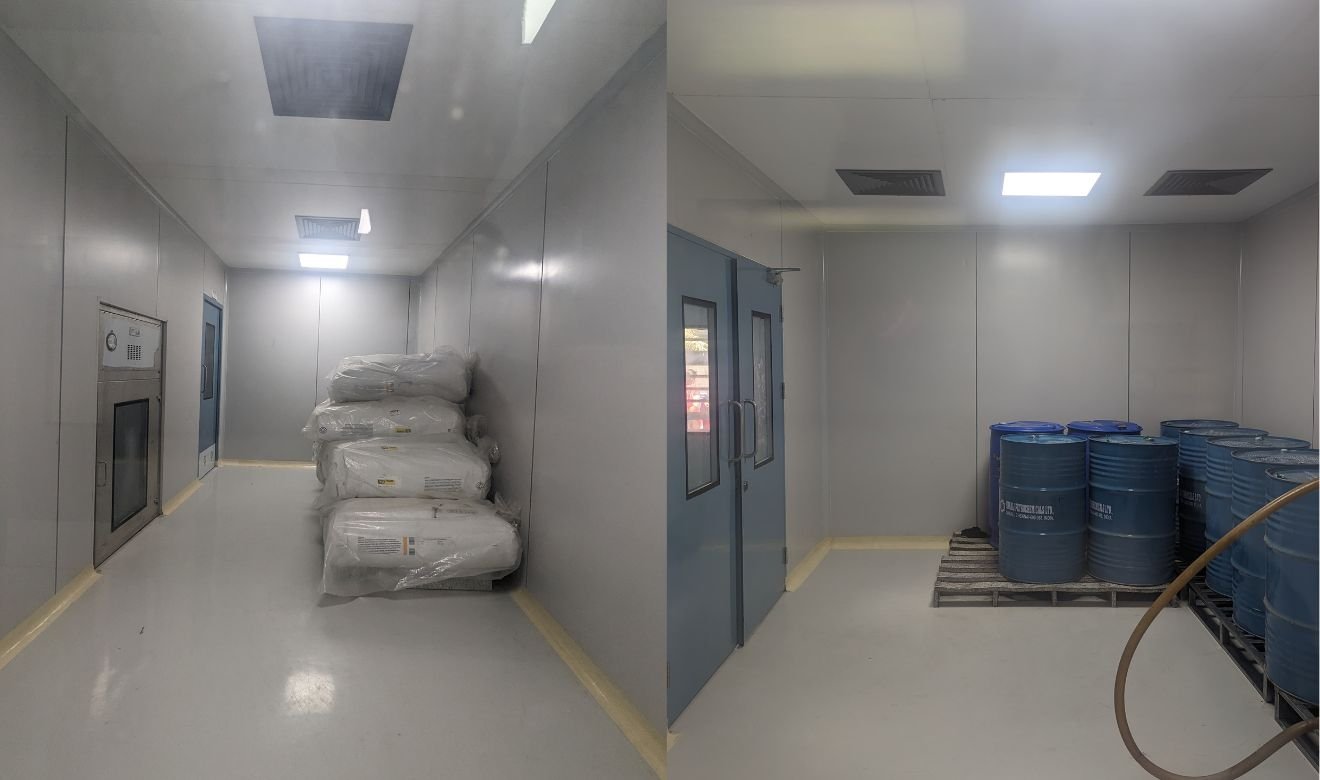
A fully documented, four-dosage-form formulation plant at Sector 3, IIE SIDCUL, Pantnagar. Commissioned in 2007, 30,528 sq. ft. of RCC construction across three floors, live Form 25 and Form 28 manufacturing licences, WHO-GMP-GLP and ISO 9001:2015 certification, 25 AHUs, a full QC and microbiology laboratory, and 123 people on site.
At a glance
Facility overview
This is the most thoroughly documented plant currently on our books. The seller has disclosed the site master file position, the validation regime, the AHU schedule, the equipment register and the technical headcount — disclosure most Indian plant listings never reach. What has not been disclosed is anything commercial: no price, no turnover, no EBITDA. Read the technical sections as substantiated and the financial section as blank.
| Parameter | Details |
|---|---|
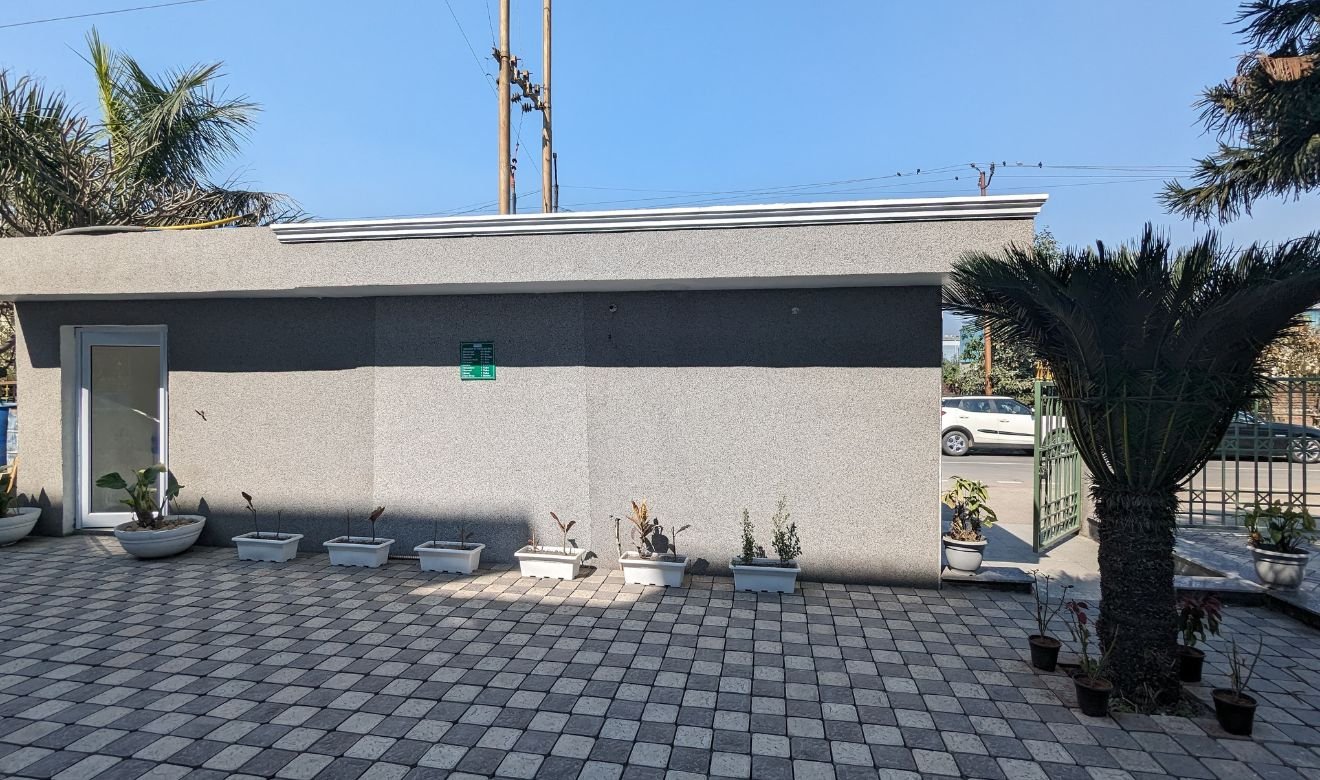
| Location | Sector 3, Integrated Industrial Estate (IIE) SIDCUL, Pantnagar, Rudrapur, District Udham Singh Nagar, Uttarakhand 263153 |
| Setting | Designated green-belt industrial estate; no pesticide, bulk drug or other hazardous manufacturing on site |
| Commissioned | Commercial production since June 2007 |
| Land area | Approximately 2,000 sq. metres (about 21,528 sq. ft.) |
| Factory building | Approximately 30,528 sq. ft. across ground, first and second floors — roughly 10,176 sq. ft. per floor, about 47% ground coverage |
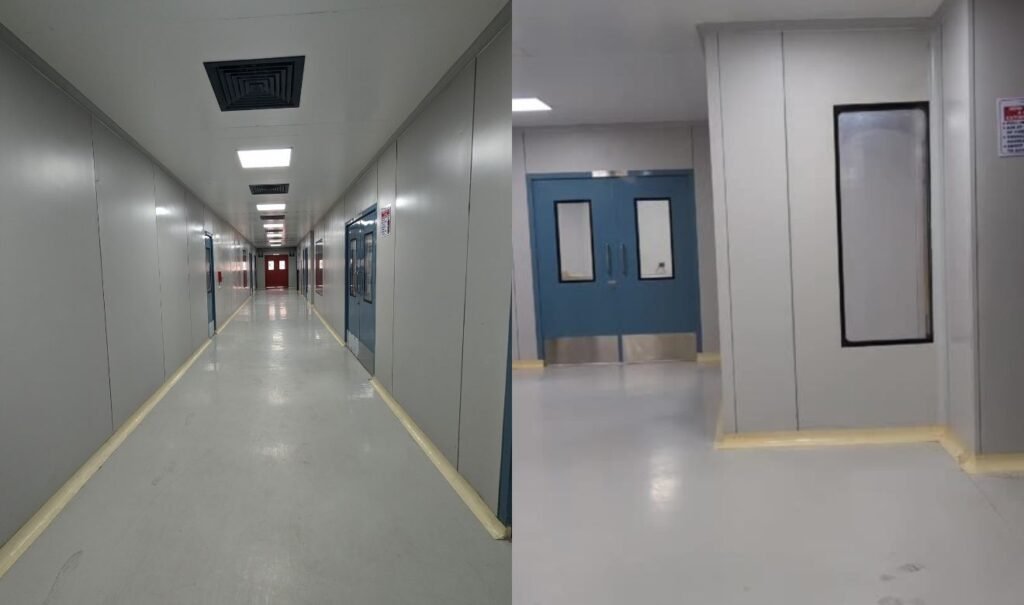
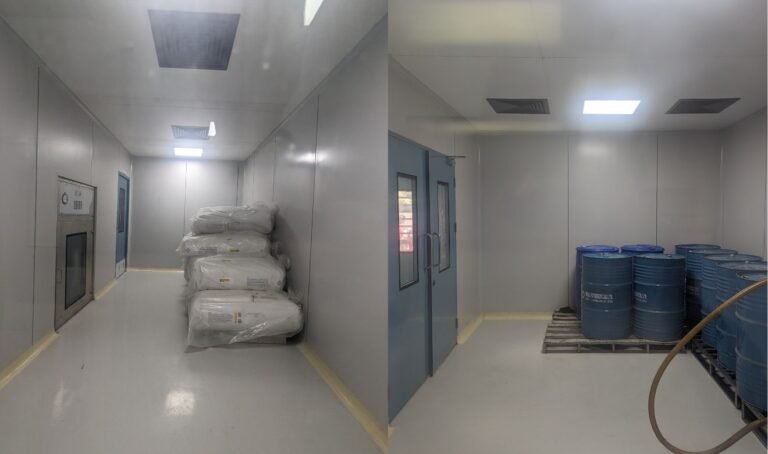
| Construction | RCC frame structure; epoxy flooring and epoxy paint with coving in core manufacturing areas |
| Manufacturing licences | Form 25 (No. xx/UA/2007) and Form 28 (No. xx/UA/SC/P-2007), Uttarakhand State Licensing Authority. Retention date shown as 04-04-2027 |
| Certifications | WHO-GMP-GLP certified; ISO 9001:2015 certified company; operations stated to follow Schedule M of the Drugs and Cosmetics Rules, 1945 |
| Dosage forms | Non-beta lactam only — tablets, capsules, oral liquids (syrup and suspension), and external preparations (ointments, creams, lotions) |
| Business model | Contract manufacturing for third-party principals |
| Workforce | 123 employees, of which 32 are technical: Production 8, QC 8, QA 9, Engineering 4, Stores 3 |
| Site Master File | Effective 28 December 2023; next review due 27 December 2026 |
| Asking price | Not disclosed — available to qualified buyers on request |
| Turnover and EBITDA | Not disclosed — provided in the confidential information memorandum |
Location
Why IIE SIDCUL Pantnagar is a serious industrial address
The Integrated Industrial Estate at Pantnagar is one of seven estates developed by SIIDCUL, the State Infrastructure and Industrial Development Corporation of Uttarakhand. It spans roughly 3,339 acres on the national highway corridor and hosts large anchor manufacturers alongside a substantial pharmaceutical cluster. For a formulation buyer that translates into serviced infrastructure, reliable power and water, an established logistics corridor and a pool of technicians who have already worked inside licensed premises.
Connectivity
Road, rail and air links
- Rudrapur city: approximately 4 km.
- Pantnagar Airport: approximately 8–10 km — a domestic airport, so plan international movement through Delhi.
- Nearest railway: Rudrapur City station, roughly 8–10 km; the estate rail yard is around 10 km.
- Delhi: approximately 235 km · Dehradun: approximately 300 km.
- Codes: PIN 263153 · District Udham Singh Nagar.
Land and administration
Who you will actually deal with
Plots in SIIDCUL estates are generally allotted on long-term lease rather than sold freehold, and a change of ownership is legally a transfer of leasehold rights requiring the corporation’s permission and a transfer fee, not a simple sale deed. Confirm the tenure on this specific plot before you structure the deal — it changes the documentation, the stamp duty and the timeline.
- Land and estate: SIIDCUL, Government of Uttarakhand
- Drug licensing and inspection: Food Safety and Drug Administration, Uttarakhand
- Environment: Uttarakhand Environment Protection and Pollution Control Board
Do not price in a tax holiday. Uttarakhand’s area-based income tax deduction under Section 80-IC ran for ten years from the start of commercial production. For a unit commissioned in June 2007 that window closed around FY 2016-17. Any residual excise or GST benefit should be verified with a chartered accountant rather than assumed from the location.
Output
Installed capacity, as stated
These are the figures supplied by the seller. Annual figures are simply twelve times the monthly figures, so they describe theoretical installed capacity at continuous full utilisation, not achieved output. Read them alongside the reconciliation immediately below.
| Category | Per month (installed) | Per year (installed) | Per shift (operational) |
|---|---|---|---|
| Tablets | 10.50 crore | 126 crore | 2.0 million |
| Capsules | 2.08 crore | 24.96 crore | 1.0 million |
| Oral liquids | 528,000 litres | 6,336,000 litres | 75,000 litres |
| Creams and ointments | 62,400 kg | 748,800 kg | 30,000 units |
| Lotions and solutions | 260,000 litres | 3,120,000 litres | Not stated |
Independent analysis
Capacity reconciliation — what the equipment list actually supports
We worked the stated capacities back against the machinery and utilities disclosed in the same document. Two of the four sections reconcile reasonably. Two do not, by a wide margin. This is not an allegation of misstatement — installed, nameplate and achievable capacity are three different things, and listings routinely quote the first. It is a list of numbers a buyer must have confirmed in writing before valuing the asset.
| Section | Stated figure | What the disclosed equipment supports | Binding constraint |
|---|---|---|---|
| Tablets | 2.0 million per shift; 10.50 crore per month | The 45-station and 37-station rotaries together give 179,400 tablets per hour, or about 1.44 million in an eight-hour shift at 100% uptime. The monthly figure needs roughly 585 compression hours, which is about 22.5 hours a day across 26 days. | Per-shift figure runs about 39% above theoretical maximum. Monthly figure requires three shifts at near-zero downtime and no changeovers. |
| Capsules | 1.0 million per shift; 2.08 crore per month | Internally consistent — the monthly figure works out to roughly 21 shifts. The capsule filling machine speed has not been disclosed, so the per-shift claim cannot be independently checked. | Reasonable. Ask for the filling machine make, model and rated speed. |
| Oral liquids | 75,000 litres per shift; 528,000 litres per month | The eight-head filler at 120 bottles per minute yields 57,600 bottles per shift — about 5,760 litres in 100 mL packs. Reaching 75,000 litres in one shift would require an average pack size of about 1.3 litres, and 21 batches on a 3.5 KL manufacturing tank. | Per-shift figure is not achievable with the disclosed filling line. Likely a units or basis error. |
| Creams and ointments | 62,400 kg per month | That is about 2,400 kg a day, or twelve batches a day on a 200 L vacuum emulsifier. A typical emulsifier cycle including heating, phase addition, homogenising and cooling runs several hours. | Manufacturing, not filling. Realistic output on one 200 L emulsifier is a fraction of the stated figure. |
| All liquids combined | 788,000 litres per month across oral liquids plus lotions and solutions | That is roughly 30,300 litres a day. The purified water plant is rated at 500 litres per hour, which is 12,000 litres a day at continuous 24-hour operation — before any equipment cleaning water is drawn. | The purified water system is the hard ceiling on the entire liquid and external preparation business. It supplies under 40% of the water the stated liquid capacity would need. |
The one number that matters most: a 500 litre per hour purified water plant caps this facility. Any buyer planning to run the liquid or ointment sections anywhere near the stated capacities should budget for a larger purified water generation and distribution loop, and should check that the 3 KL per day effluent treatment plant and the site’s consent to operate can carry the resulting load. Both are solvable engineering problems with known costs. Neither is free, and neither is priced into a headline capacity table.
Assets
Equipment, laboratory and utilities
The disclosed asset register is unusually detailed for a listing at this size, which is a genuine positive. The recurring question across all of it is age: this equipment was installed to commission a plant in 2007.
HVAC and air
25 air handling units
AHUs are numbered across all three floors, with dedicated units serving sampling, dispensing, granulation, compression, coating, capsule filling, liquid manufacturing, bottle filling, blister and strip packing, and ointment manufacturing. The system is designed for positive pressure in corridors with temperature control and relative humidity not more than 65%.
Ask for the current AHU validation and requalification reports, filter integrity records, pressure differential trend data and the HVAC qualification protocol. Nineteen-year-old coils, dampers and ducting are the single largest hidden capex item in a plant of this vintage.
Process equipment
Four independent lines
- Solids: double rotary tableting machines at 45 station and 37 station, fluid bed dryer 120 kg, double cone blender 120 kg, mass mixer 400 L, conventional coater to 120 kg, capsule filling machine.
- Liquids: manufacturing tank 3.5 KL, sugar melting tank 2.5 KL, homogeniser 7.5 HP, eight-head filler at 120 bottles per minute, bottle washer at 120 bottles per minute.
- External preparations: vacuum emulsifier 200 L, mixing tank 300 L, ointment filling machine.
- Packing: blister at up to 300 packs per minute, ALU-ALU at up to 300 packs per minute, strip at up to 50 packs per minute.
Laboratory and utilities
QC, micro and services
- QC: three Waters 2487 HPLC units, Shimadzu UV-visible spectrophotometer, Shimadzu gas chromatograph, Sotax dissolution apparatus, friability, melting point and Karl Fischer apparatus.
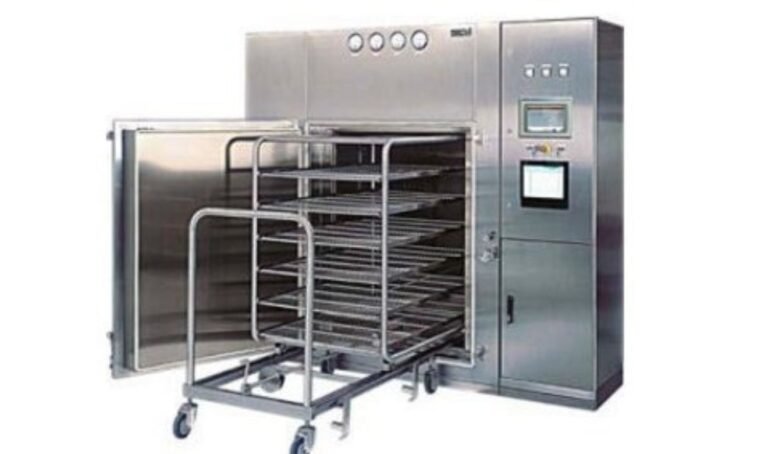
- Microbiology: two BOD incubators, hot air oven, vertical autoclave, laminar air flow.
- Water: centralised purified water plant at 500 L/hr with RO, EDI and UV sanitisation, stored in SS 316L tanks at 80 °C under continuous circulation.
- Services: 250 KVA diesel generator, 200 cfm oil-free air compressor, 3 KL/day effluent treatment plant.
Worth noting on the water system: storage at 80 °C under continuous circulation is textbook correct practice and matches what an auditor expects to see on a purified water loop. The design intent here is sound — it is the capacity, not the design, that constrains the plant. Our note on high-purity water system expectations sets out what the qualification package should contain.
Data integrity is the quiet risk in this asset list. The Waters 2487 is a long-discontinued absorbance detector, and QC instrumentation of that generation is frequently run on standalone software without user-level access control, audit trails or secure electronic records. Revised Schedule M brings computerised system validation and data integrity expectations into scope for every Indian manufacturer. Ask specifically which chromatography data system these instruments run on, what version, whether audit trails are enabled and reviewed, and whether any regulator has raised an observation on it.
Compliance
Licences, certification and quality systems
This facility is presented as a compliant, certified, actively licensed unit, and the disclosed quality system supports that presentation. Four corrections and clarifications belong alongside it — none of them undermines the asset, and all four are things a competent buyer will raise anyway.
Quality management system
What has been disclosed
- An independent Quality Assurance department with decision-making authority, and a QA Manager responsible for batch release.
- An approved chemist responsible for technical activities, as required under the licence.
- Systems covering cGMP and GLP, vendor qualification, change control, and self-inspection carried out twice a year.
- Validated process, cleaning and sterilisation procedures; validated HVAC, water and compressed air systems; process validation on three consecutive batches within limits.
- Cleaning validation by direct surface swab and indirect rinse sampling, evaluated visually and by chemical residue and microbial testing.
- Master documents controlled by a QA documentation cell; batch records retained for one year after expiry or five years from manufacture.
- Rejected materials segregated under lock in a secured rejection area, with QA deciding final disposition.
- Finished goods held at 25 °C ± 2 °C and 50% ± 5% RH, dispatched first-in-first-out.
Four clarifications
Read these before you value the certification
- The licence does not expire in 2027. Since the amendment to Rule 63, manufacturing licences in Form 25 and Form 28 remain valid perpetually unless suspended or cancelled, subject to a retention fee every five years, with compliance assessed at least once in three years on a risk basis. The 04-04-2027 date is almost certainly the retention date, not an expiry. Confirm it, and confirm the retention fee is paid.
- “GMP-GLP” is one certificate, not two regimes. In Indian practice this refers to the state-issued certificate covering the manufacturing and testing facility. It is not OECD Good Laboratory Practice accreditation, which applies to non-clinical safety studies and is a different thing entirely. Obtain the certificate and read its scope.
- ISO 9001:2015 remains valid, but a transition is coming. ISO 9001:2026 is expected around September 2026 with a roughly three-year transition to 2029. Separately, the climate-change amendment to ISO 9001:2015 published in 2024 took effect immediately with no transition period, so a currently certified company should already have addressed it. Check the certificate body, its accreditation, the validity dates and the last surveillance audit report.
- The Site Master File predates Revised Schedule M. It is dated 28 December 2023 with review due 27 December 2026. Revised Schedule M became mandatory for all manufacturers from 1 January 2026, so an SMF written in December 2023 almost certainly does not describe the current pharmaceutical quality system. It needs revision, and the review date is only months away.
The Revised Schedule M question applies here too. Notified on 28 December 2023, the revised standard allowed manufacturers below ₹250 crore turnover to apply in Form A for an extension to 31 December 2025. That window closed, and CDSCO directed state licensing authorities to inspect extension applicants from an effective date of 1 January 2026 with no relaxations remaining. Ask for the Form A filing, the evidence of completed upgradation, and any risk-based inspection report issued since. For a 2007-vintage building this is the item most likely to carry real capital cost, particularly around HVAC requalification, computerised system validation and the formal pharmaceutical quality system documentation.
Decision support
Due diligence score
Scored on disclosed information only. This asset scores well on everything technical and poorly on everything commercial — the inverse of most listings we handle.
Overall, disclosed information only
16 of 25 points — the highest technical score of the three units currently listed, and the lowest commercial disclosure. Price and audited financials are the two documents that move this number.
Before you sign
Buyer checklist
Tick items as you clear them. Nothing is stored or transmitted — the list resets when you reload the page.
Checklist progress
0 of 18 items cleared
Numbers
Investment snapshot
There is no honest way to dress this up: the commercial side of this listing is empty. Every field below that says “not disclosed” is genuinely not disclosed, and the modelling tool underneath works entirely on figures you supply.
Indicative valuation model
Build your own number
Because no price has been published, this tool works the other way round from our usual payback calculator: you supply the trading assumptions and it returns an indicative enterprise value. Work in lakh throughout — 100 lakh equals ₹1 crore. Nothing here comes from the seller.
Read this before using the numbers: every output above is generated from figures you type in. No price, turnover or margin for this facility has been published. The model ignores working capital, interest, depreciation, tax, stamp duty, SIIDCUL transfer fees, employee liability and transaction costs, and it is not a valuation, forecast or financial advice. For a single-site asset like this, buyers frequently cross-check any earnings-based number against the replacement cost of land, building and validated equipment, and take the lower of the two. Have a chartered accountant and a lawyer run the real numbers.
Data quality
Six points that need clarification
- No price, no financials. A listing with this much technical depth and zero commercial disclosure is unusual. It is not a red flag by itself — contract manufacturers are often reluctant to expose principal pricing early — but no offer can be framed until turnover, EBITDA and the ask are on the table.
- The liquid and ointment capacities do not reconcile with the equipment. Set out in detail in the reconciliation section above. Get machine-wise rated output and twelve months of actual production volumes rather than a capacity table.
- The purified water plant is the real ceiling. At 500 litres per hour it cannot support the stated liquid capacity. Anyone buying this plant to scale the liquid business is also buying a water system project.
- The licence numbers were published inconsistently. The original listing document redacted them in one place and printed them in full in another. We have redacted them consistently here. Full numbers go to serious buyers under an enquiry, and buyers should verify them against the licensing authority’s records rather than the listing.
- The valuation guidance circulating on this asset is too high. A 9.9× to 12× EBITDA range describes listed pharma companies and large platform transactions. It is not the range at which one nineteen-year-old single-site formulation plant changes hands in India. Anchoring on it will cost a buyer money and will stall a sale.
- Age is the theme running through everything. The building, the 25 AHUs, the purified water loop, the compression and filling lines and the QC instruments all date from a 2007 commissioning. Some will have been replaced; the asset register will say which. Until it does, assume the remaining useful life on the utilities is the number that decides whether this is a bargain or a project.
If you are comparing this against building new, run the numbers through the pharma plant setup cost calculator. Smaller entry points are available at the cGMP unit at Tahliwal, Una and the WHO-certified unit at Baddi. If the plan is to load the plant with your own marketing network rather than third-party work, see how PCD and propaganda-cum-distribution models operate. Buyers who need sterile capacity should look at injectable manufacturing instead — this is a non-beta lactam oral and topical plant. Before a site visit, review the SOP framework you will be auditing against, and if regulated-market export is the eventual plan, benchmark current systems against WHO-GMP and USFDA expectations.
FAQs
Questions buyers ask about this facility
Request the CIM, licences and full equipment list
Send an enquiry and we will share the confidential information memorandum covering the financial profile, site schematics and complete equipment register, and arrange a site visit at Pantnagar. Independent verification and professional due diligence are recommended before any commitment.
More listings and advisory: browse pharma plants for sale or contact Laafon Galaxy Pharmaceuticals.
References
- Ministry of Health and Family Welfare, Government of India. Schedule M, Drugs and Cosmetics Rules, 1945 — Good Manufacturing Practices and Requirements of Premises, Plant and Equipment for Pharmaceutical Products, as revised by G.S.R. 922(E) dated 28 December 2023.
- Ministry of Health and Family Welfare, Government of India. Drugs (Amendment) Rules, 2025 — G.S.R. 127(E) dated 11 February 2025, allowing small and medium manufacturers below ₹250 crore turnover to apply in Form A for extension of the Revised Schedule M timeline to 31 December 2025.
- Central Drugs Standard Control Organisation. Directive of the Drugs Controller General of India dated 7 November 2025 to state licensing authorities to plan inspections of Revised Schedule M extension applicants, effective implementation date 1 January 2026.
- Ministry of Health and Family Welfare, Government of India. Amendment to Rule 63 of the Drugs and Cosmetics Rules, 1945 — perpetual validity of licences subject to a retention fee every five years and compliance assessment at least once in three years.
- World Health Organization. WHO good manufacturing practices for pharmaceutical products: main principles. WHO Technical Report Series.
- International Organization for Standardization. ISO 9001:2015 Quality management systems, including Amendment 1:2024 on climate change; revision to ISO 9001:2026 expected September 2026 with an approximately three-year transition period.
- State Infrastructure and Industrial Development Corporation of Uttarakhand Limited (SIIDCUL). Integrated Industrial Estate, Pantnagar — estate profile, allotment and post-allotment transfer procedure.
Listing details, areas, installed capacities, equipment, certifications, licence particulars, workforce figures, availability and commercial terms are supplied by the seller for enquiry purposes and must be independently verified. The capacity reconciliation and regulatory commentary on this page are Laafon Galaxy Pharmaceuticals’ own analysis of the seller’s disclosure and are offered as diligence prompts, not as findings of fact about the facility. Licence numbers are shown partially redacted; full numbers are provided to serious buyers on request and should be verified against the licensing authority’s records. Laafon Galaxy Pharmaceuticals acts as an introducer and does not warrant seller-supplied information. This content is not legal, regulatory, investment or financial advice.