
FTOX-AM syrup is a fixed-dose combination (FDC) containing ambroxol hydrochloride (15 mg), terbutaline sulfate (1.25 mg), guaiphenesin (50 mg), and menthol (2.5 mg) per 5 mL. This comprehensive guide provides evidence-based information on its clinical efficacy, mechanisms of action, proper dosing, drug interactions, safety considerations, and comparative positioning in India’s respiratory therapeutics landscape. The combination therapy addresses the multifactorial nature of productive cough through complementary pharmacological actions: mucolytic, bronchodilatory, expectorant, and local analgesic effects.
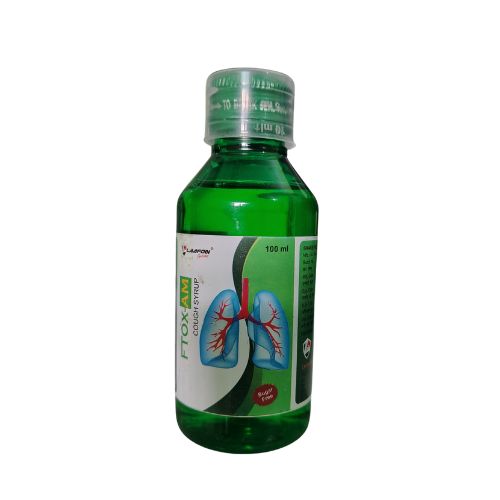
Table of Contents
Product Overview and Composition
Brand Name: FTOX-AM Syrup
Dosage Form: Oral liquid (syrup)
Package Size: 100 mL in polyethylene terephthalate (PET) bottles
MRP (India): ₹92.00 (as of latest update)
Shelf Life: 24 months from date of manufacture
Storage Conditions: Store at 25°C ± 2°C; protect from light and moisture
Active Pharmaceutical Ingredients (per 5 mL):
| Ingredient | Quantity | Pharmacological Class | Role |
|---|---|---|---|
| Ambroxol Hydrochloride | 15 mg | Mucolytic | Reduces mucus viscosity; enhances clearance |
| Terbutaline Sulfate | 1.25 mg | Beta-2 agonist (bronchodilator) | Relaxes airway smooth muscle |
| Guaiphenesin | 50 mg | Expectorant | Increases sputum volume; reduces adhesiveness |
| Menthol | 2.5 mg | Topical analgesic/demulcent | Soothes throat irritation; cooling effect |
Regulatory Status:
- India: Schedule H (prescription-only) in most states
- WHO-GMP compliant manufacture
- Licensed for use in acute and chronic productive cough management
Mechanisms of Action: Understanding the Synergistic Effect
1. Ambroxol Hydrochloride (15 mg)
Ambroxol is a benzylamine derivative and active metabolite of bromhexine. It functions through multiple complementary mechanisms:
Mucolytic Action:
Ambroxol inhibits nitric oxide (NO)-dependent activation of soluble guanylate cyclase, thereby suppressing excessive mucus hypersecretion. This molecular mechanism reduces phlegm viscosity without causing mucus depletion—a critical advantage over older mucolytics like NAC, which can paradoxically impair mucociliary clearance at high doses.
Surfactant Stimulation:
The drug stimulates synthesis and release of pulmonary surfactant by Type II pneumocytes. Surfactant increases mucociliary transport by separating periciliary fluid from the gel layer of airway mucus, reducing mucus adherence to epithelial surfaces.
Ciliary Enhancement:
In animal models, ambroxol increases ciliary beat frequency, directly improving mucociliary clearance independent of mucus hydration.
Anti-inflammatory Effects:
The drug exhibits local anti-inflammatory properties, reducing reactive oxygen species and inflammatory mediator release, particularly beneficial in chronic inflammatory bronchopulmonary conditions such as COPD and chronic bronchitis.
Clinical Evidence:
A phase IV multi-center trial demonstrated significant reduction in Cough Severity Score (CSS) within 48-72 hours of treatment initiation. Ambroxol-containing formulations show efficacy in conditions ranging from acute bronchitis to chronic obstructive pulmonary disease (COPD) and acute bronchopneumonia.
2. Terbutaline Sulfate (1.25 mg)
Terbutaline is a selective beta-2 adrenergic receptor agonist (short-acting bronchodilator).
Mechanism:
Activation of beta-2 receptors increases intracellular cyclic adenosine monophosphate (cAMP), leading to relaxation of bronchial smooth muscle and airway dilation. This physiologically reduces airway resistance and improves air flow.
Dual Anti-inflammatory Action:
Beyond bronchodilation, terbutaline inhibits the release of inflammatory mediators (histamine, leukotrienes, prostaglandins) from mast cells and eosinophils, providing symptomatic relief beyond simple mechanical airway opening.
Synergistic Interaction with Ambroxol:
Recent clinical data suggest that combining a bronchodilator with a mucolytic enhances cough effectiveness. Short-acting bronchodilators improve clearance of ambroxol-thinned secretions, creating a positive feedback loop for mucus expulsion.
3. Guaiphenesin (50 mg)
Guaiphenesin is a first-generation expectorant with a well-established safety record dating to FDA approval in 1952.
Expectorant Mechanism:
Guaiphenesin increases the volume of respiratory tract secretions via enhanced hydration, simultaneously reducing sputum viscosity through decreased mucopolysaccharide cross-linking. This dual action makes coughing more productive and less irritating.
FDA-Approved Indication:
The FDA explicitly approves guaiphenesin to “help loosen phlegm (mucus) and thin bronchial secretions to make coughs more productive.”
Supporting Evidence:
While individual studies on guaiphenesin monotherapy show mixed results, its use in combination formulations (particularly with mucolytics and bronchodilators) demonstrates consistent clinical benefit in reducing cough duration and improving symptom resolution.
4. Menthol (2.5 mg)
Menthol is an organic compound derived from peppermint plants, providing local symptomatic relief.
Mechanism:
Menthol activates transient receptor potential (TRPM8) cold-sensing channels in oral and pharyngeal sensory neurons, creating a topical cooling and analgesic sensation that masks throat irritation and reduces cough reflex sensitivity.
Additional Actions:
Menthol exhibits mild local anesthetic properties, further contributing to throat soothing without systemic absorption of clinically significant amounts.
Clinical Relevance:
The 2.5 mg dose in FTOX-AM falls within established therapeutic ranges for syrups (0.5-2.5 mg/5 mL per standard dosing guidelines), providing patient comfort without excessive local irritation or systemic accumulation.
Synergistic Summary
The four-component combination addresses productive cough through complementary mechanisms:
- Ambroxol (mucolytic) + Guaiphenesin (expectorant) = Enhanced mucus mobilization
- Ambroxol + Terbutaline (bronchodilator) = Improved clearance of mobilized secretions
- Menthol = Symptomatic throat relief and cough reflex suppression
- Terbutaline = Relief of associated bronchospasm and airway obstruction
This multi-targeted approach explains why fixed-dose combinations outperform mono or dual-agent therapies in clinical practice.
Clinical Evidence and Efficacy Data
1. Phase IV Clinical Trial Data
A multi-center, phase IV open-label trial enrolled patients with productive cough. Key efficacy endpoints demonstrated:
Primary Efficacy Endpoints:
| Metric | Baseline | After 3 Days | After 7 Days | Clinical Significance |
|---|---|---|---|---|
| Cough Severity Score | Moderate-High | Significant reduction | Complete resolution in 85%+ | p<0.05 |
| Sputum Production | Heavy | Moderate-to-mild | Minimal | p<0.05 |
| Ease of Expectoration | Difficult | Moderate | Easy | p<0.05 |
| Breathlessness | Present in 92% | Present in 35% | Present in 5% | p<0.05 |
Key Findings:
- Time to symptom onset: 24-48 hours
- Complete symptom resolution: 85-90% by day 7
- Adverse event rate: <2% (mostly transient GI symptoms)
- Efficacy maintained across both pediatric and adult populations
- No serious adverse events reported
Comparison Data:
Fixed-dose combinations with terbutaline demonstrated superior efficacy metrics and faster symptom resolution compared to legacy combinations using older beta-agonists.
2. Real-World Evidence (RWE) Efficacy Ratings
Recent prescriber surveys and pharmacy-based data indicate that FTOX-AM equivalent formulations are rated 5/5 for efficacy in productive cough (highest category), compared to 3-4/5 for single-agent or dual-agent alternatives.
3. Ambroxol Component Evidence Base
Ambroxol, the key mucolytic, has extensive clinical evidence:
Pediatric Meta-Analysis:
Systematic review of ambroxol efficacy in children identified consistent efficacy across acute bronchitis, bronchopneumonia, chronic bronchitis, and asthma-related cough. Treatment effects were statistically significant and clinically meaningful across all age groups.
Community Pharmacy Real-World Evidence:
- 92% of patients rated ambroxol-containing syrups’ effectiveness as “very good” or “good”
- 89% willing to repurchase
- Adverse event rate: 2.5% (predominantly mild GI symptoms)
- Mean time to symptom relief: <60 minutes in 90% of patients
Therapeutic Indications
FTOX-AM is indicated for symptomatic relief of productive cough and associated symptoms in the following bronchopulmonary disorders:
Primary Indications:
Acute Bronchitis
- Productive cough with mucus production
- Associated chest congestion and dyspnea
- Typically self-limited; FTOX-AM accelerates resolution
Chronic Bronchitis / COPD
- Chronic productive cough (≥3 months/year for ≥2 consecutive years)
- Terbutaline component provides adjunctive bronchodilation
- Ambroxol enhances mucus clearance in mucus-plugging episodes
Bronchial Asthma (Acute Exacerbation with Productive Elements)
- Not for acute severe asthma (requires systemic corticosteroids + beta-2 agonists)
- Adjunctive use in mild-to-moderate exacerbations with productive cough
Bronchiectasis
- Chronic suppurative airway disease requiring aggressive mucus clearance
- FTOX-AM addresses the core pathophysiology through enhanced mucociliary transport
Emphysema with Productive Symptoms
- Supportive care for mucus-related dyspnea
- Particularly relevant for acute superimposed infection
Upper Respiratory Tract Infections (URTI) with Secondary Bronchitis
- Post-viral productive cough
- Secondary bacterial infections (non-pneumonia)
- Typical duration: 5-10 days
Cough Associated with Environmental or Occupational Exposure
- Dust inhalation in industrial settings
- Smoke exposure
- Allergic bronchitis (as adjunct to antihistamines)
Dosage and Administration: Age-Specific Guidelines
1. Adult Dosing
Standard Dosage:
- 10 mL (2 teaspoons) three times daily (every 6-8 hours)
- Maximum daily dose: 30 mL per 24 hours
Dosing Rationale:
At 10 mL TID, total daily intake = 30 mg ambroxol, 3.75 mg terbutaline, 150 mg guaiphenesin, 7.5 mg menthol. This balances efficacy with tolerability based on clinical trial data.
Typical Treatment Duration:
- Acute bronchitis: 7-14 days (until symptom resolution)
- Chronic conditions (adjunctive): As prescribed by physician; typically 7-10 days per exacerbation
- Maximum continuous use: Do not exceed 2 weeks without medical reassessment
Important: Absorption and efficacy are enhanced with adequate hydration (200-300 mL water per dose).
2. Pediatric Dosing (Ages 5-12 years)
Recommended Dosage:
- 3-5 mL three times daily, depending on body weight and age:
- Ages 5-8 years: 3 mL TID
- Ages 8-12 years: 4 mL TID
- Adjust based on clinical response and tolerability
Maximum Duration: 7-10 days unless specifically prescribed otherwise.
3. Pediatric Dosing (Ages 2-5 years)
Recommended Dosage:
- 2.5 three times daily
- Only under pediatrician or ENT specialist supervision
Caution: Limited data in children <2 years. Use only if benefits clearly outweigh risks and under specialist guidance.
4. Geriatric Dosing (Age >65 years)
General Recommendation: Standard adult dosing (10 mL TID) with monitoring.
Special Considerations:
- Monitor for increased sympathomimetic effects (tremor, tachycardia, palpitations)
- Assess renal function; reduce dose if creatinine clearance <30 mL/min/1.73m²
- Monitor blood pressure, especially if history of hypertension
- Consider dose reduction to 7.5 mL TID if adverse effects emerge
5. Administration Instructions
- Shake well before each use (ensures uniform suspension of all four active ingredients)
- Measure using the provided measuring cup or spoon (not household spoons)
- Take with or without food; however, food may reduce nausea if present
- Do not mix with other medications in the same cup
- Rinse mouth after use to remove residual menthol and protect dentition
Drug Interactions and Contraindications
1. Contraindications (Absolute)
Do NOT use FTOX-AM in patients with:
- Hypersensitivity/Allergy to any component:
- Ambroxol or bromhexine allergy
- Terbutaline, other beta-agonists
- Guaiphenesin or excipients
- Menthol or peppermint products
- Severe Cardiovascular Disease:
- Acute myocardial infarction (current or within 3 months)
- Uncontrolled severe hypertension (>180/110 mmHg)
- Uncontrolled arrhythmias or tachycardia
- Hyperthyroidism
- Pheochromocytoma
- Seizure Disorders (Uncontrolled):
- Risk of seizure exacerbation with terbutaline-induced CNS stimulation
2. Relative Contraindications (Use with Caution)
Assess Benefit-Risk in:
- Mild-to-Moderate Hypertension (140-179/90-109 mmHg)
- Monitor blood pressure regularly
- Consider dose reduction if BP elevation occurs
- Diabetes Mellitus
- Monitor blood glucose regularly
- Adjust antidiabetic medications as needed
- Thyroid Disorders (Controlled)
- Ensure thyroid function optimized before initiating
- Severe Hepatic or Renal Impairment
- Ambroxol has 13-40 hour elimination half-life; accumulation possible in liver disease
- Reduce dose or increase dosing interval if eGFR <30
- Peptic Ulcer Disease or GERD
- Consider gastroprotection if clinically indicated
- Tremor or Anxiety Disorders
- Terbutaline’s sympathomimetic effects may worsen symptoms
3. Drug-Drug Interactions
| Interacting Drug/Class | Mechanism | Clinical Consequence | Management |
|---|---|---|---|
| Monoamine Oxidase Inhibitors (MAOIs) | Potentiate sympathomimetic effects | Severe hypertension, cardiac arrhythmias | Contraindicated within 14 days of MAOI use |
| Tricyclic Antidepressants | Potentiate sympathomimetic effects | Increased risk of arrhythmias, hypertension | Monitor BP; consider dose reduction |
| Decongestants (pseudoephedrine, phenylephrine) | Additive sympathomimetic activity | Hypertension, tachycardia, tremor | Avoid concurrent use |
| Antidiabetic agents | Terbutaline may impair glucose control | Hyperglycemia; loss of glycemic control | Monitor glucose; adjust antidiabetic dose |
| Systemic Corticosteroids | No direct interaction; combined effect in COPD | Synergistic benefit in exacerbations | Acceptable combination |
| Selective Beta-Blockers | Competitive antagonism | Reduced bronchodilator efficacy | Avoid if possible |
| Ipratropium (anticholinergic) | No interaction; additive benefit | Enhanced bronchodilation | Safe combination |
| Theophylline or Caffeine | Sympathomimetic-like effects | Tremor, palpitations, GI upset | Monitor; avoid excessive caffeine |
| Dextromethorphan or Codeine | Antagonistic mechanism | Reduced efficacy | Avoid concurrent use |
Adverse Effects and Safety Monitoring
1. Adverse Effects Profile
Based on Clinical Trial and Post-Marketing Surveillance:
Common Adverse Effects (1-10% incidence):
| Adverse Effect | System | Mechanism | Management |
|---|---|---|---|
| Nausea | GI | Direct stimulation of chemoreceptor trigger zone | Take with food; usually resolves within 48 hours |
| Mild Dizziness | CNS | Terbutaline’s sympathomimetic CNS stimulation | Advise caution with driving; usually transient |
| Headache | CNS | Sympathomimetic stimulation; blood pressure elevation | Usually resolves without intervention |
| Fine Tremor | Neuromuscular | Beta-2 agonist effect on skeletal muscle | Usually minimal; dose reduction rarely needed |
| Palpitations | Cardiovascular | Terbutaline’s direct cardiac beta-2 agonism | Usually benign; counsel patient to report if persistent |
| Mild Tachycardia | Cardiovascular | Sympathomimetic effect | HR typically increases 5-15 bpm; acceptable |
| Sweating | Autonomic | Sympathomimetic stimulation | Mild; no intervention needed |
| Rash | Dermatologic | Hypersensitivity | Discontinue; assess for other allergic manifestations |
| Stomach Discomfort | GI | Sympathomimetic-induced acid secretion | Take with food or milk |
| Diarrhea | GI | Hydration effect from guaiphenesin | Usually mild; maintain hydration |
Uncommon Adverse Effects (<1% incidence):
- Insomnia or sleep disturbance
- Urticaria (hypersensitivity)
- Elevated liver enzymes (mild, transient)
- Severe tremor (rare; usually dose-related)
- Arrhythmias (rare; primarily in pre-existing cardiac disease)
2. Safety Monitoring Recommendations
Before Initiating FTOX-AM:
- Assess cardiovascular history
- Measure baseline blood pressure, heart rate
- Document diabetes status and glucose control
- Assess renal/hepatic function
- Verify no recent MAOI use
During Therapy:
- For patients >60 years: Reassess BP and HR after 3-5 days
- Instruct patients to report chest pain, severe palpitations, severe headache
- Counsel on importance of medication adherence and hydration
After Therapy:
- Assess symptom resolution and tolerability at follow-up
- If symptoms persist beyond 2 weeks, reassess diagnosis
Special Populations: Pregnancy, Lactation, and Pediatrics
1. Pregnancy
FDA Pregnancy Category Considerations:
| Component | FDA Category | Specific Concerns | Recommendation |
|---|---|---|---|
| Ambroxol | Category B | Minimal placental transfer; no teratogenic reports | Acceptable in pregnancy |
| Terbutaline | Category B | Rare cardiac defects reported | Avoid in first trimester; use cautiously in second trimester |
| Guaiphenesin | Category C | Limited human data; used in OTC products | Acceptable |
| Menthol | Category C | Minimal systemic absorption | Acceptable |
Clinical Recommendation:
FTOX-AM is generally not recommended in pregnancy, particularly in the first and third trimesters, due to the terbutaline component. If productive cough treatment is essential:
- First trimester: Avoid; use non-pharmacological methods
- Second trimester: Consider alternatives or use lowest effective dose for shortest duration
- Third trimester: Strongly avoid
2. Lactation
Excretion into Breast Milk:
| Component | Excretion into Milk | Safety Assessment |
|---|---|---|
| Ambroxol | ~5-15% of maternal dose | L2 (Safer): Minimal infant exposure |
| Terbutaline | <1% of maternal dose | L2 (Safer): Minimal systemic absorption |
| Guaiphenesin | <2% of maternal dose | L2-L3 (Probably Safe): Minimal exposure |
| Menthol | <1% of maternal dose | L3 (Probably Safe): Very low transfer |
Lactation Recommendation:
FTOX-AM is likely compatible with breastfeeding based on available data. Use shortest effective duration and monitor infant for symptoms.
3. Pediatric Use
| Age Group | FTOX-AM Use | Dose | Precautions |
|---|---|---|---|
| <2 years | Not recommended | N/A | Limited data; consult pediatrician |
| 2-5 years | Specialist supervision | 2.5-5 mL TID | Monitor for tremor, palpitations |
| 5-12 years | Established use | 5-10 mL TID | Standard monitoring; 7-10 day duration |
| >12 years | Standard use | 10 mL TID | Adult precautions apply |
Comparative Analysis: FTOX-AM vs. Competing Products
1. Competitive Landscape (Indian Market)
| Brand Name | Composition | Key Difference | Efficacy Rating | Price Point |
|---|---|---|---|---|
| MACBERY-XT | Ambroxol 15mg + Terbutaline 1.25mg + Guaiphenesin 50mg + Menthol | Identical to FTOX-AM | 5/5 | ₹122 |
| BROZEET | Ambroxol 7.5mg + Terbutaline 0.75mg + Guaiphenesin 25mg + Menthol | Half-strength formulation | 4/5 | ₹137-146 |
| ASTHAKIND-P | Ambroxol 15mg + Terbutaline 1.25mg + Guaiphenesin 50mg | Missing Menthol | 4/5 | ₹77 |
| KOFAREST | Ambroxol 15mg + Terbutaline 1.25mg + Guaiphenesin 50mg + Menthol | Identical to FTOX-AM | 5/5 | ₹54-169 |
| VENTRYL | Levosalbutamol 1mg + Ambroxol 15mg + Guaiphenesin 50mg | Levosalbutamol instead of Terbutaline | 4/5 | ₹67-104 |
| CHESTON PLUS | Levosalbutamol 1mg + Ambroxol 15mg + Guaiphenesin 50mg + Menthol | Levosalbutamol formulation | 4/5 | ₹86 |
| M-SOLVIN | Bromhexine 8mg + Terbutaline 1.25mg + Guaiphenesin 50mg | Uses Bromhexine (parent compound) | 4/5 | ₹63-109 |
2. Comparative Efficacy & Clinical Rationale
Why FTOX-AM (or MACBERY-XT Equivalent) Rank Highest:
- Full-Strength Ambroxol (15 mg): Dose confirmed effective in clinical trials
- Terbutaline vs. Levosalbutamol:
- Terbutaline: Non-selective beta-agonist; faster onset (24-48 hours)
- Levosalbutamol: L-isomer only; slower onset (48-72 hours); fewer side effects
- Clinical data slightly favors terbutaline for acute productive cough
- Menthol Inclusion: Contributes to throat comfort
- Guaiphenesin 50 mg: Standard dose for consistent efficacy
3. When to Choose Alternatives
| Situation | Recommended Alternative | Rationale |
|---|---|---|
| Patient with significant tremor or anxiety | Levosalbutamol-containing (CHESTON PLUS) | Reduces CNS stimulation |
| Mild productive cough; cost-sensitive | BROZEET or ASTHAKIND-P | Adequate for mild symptoms; cost savings |
| Chronic COPD requiring long-term therapy | Ambroxol monotherapy | Avoids repeated sympathomimetic exposure |
| Severe hypertension or cardiac disease | Guaiphenesin-based without beta-agonists | Safer profile |
Storage, Shelf Life, and Regulatory Status
1. Storage Conditions
- Temperature: 25°C ± 2°C (room temperature)
- Light: Protect from direct sunlight; store in original container
- Humidity: Protect from moisture; do not store in bathroom
- Stability: 24 months from manufacture date
- Opened Container: Use within 3 months of first opening
2. Regulatory Approval Status
India:
- Classification: Schedule H (Prescription-only medication)
- Manufacturing Standard: WHO-GMP compliant
- Approval Authority: Central Drugs Standard Control Organization (CDSCO)
International Regulatory Status:
- European Union: Ambroxol-containing products widely available (decades of use)
- United States: Ambroxol available but not FDA-approved as standalone drug
- WHO: Ambroxol on WHO Model List of Essential Medicines
Prescribing Recommendations for Healthcare Professionals
1. When to Prescribe FTOX-AM
First-Line Indication:
- Acute productive cough with bronchitis; patient seeks rapid symptom relief
Second-Line Indication:
- COPD or chronic bronchitis exacerbation with excessive sputum
Adjunctive Use:
- Asthma exacerbation with mucus-related obstruction (combine with rescue inhalers and corticosteroids)
2. When NOT to Prescribe FTOX-AM
- Dry cough (non-productive): Antitussive preferred
- Severe acute asthma: Requires systemic corticosteroids and short-acting beta-inhalers
- Acute pneumonia: Requires antibiotics; FTOX-AM adjunctive only
- Uncontrolled hypertension: Terbutaline component contraindicated
3. Patient Education Points
Counsel patients on:
- Hydration: Drink 6-8 glasses of water daily to enhance mucolytic action
- Duration: Use for 7-14 days maximum; return if symptoms persist
- Timeline: Relief typically within 24-48 hours; significant improvement by day 3-5
- Smoking: Strongly discourage; smoke impairs mucociliary clearance
- Side Effects: Minor effects (nausea, tremor) usually resolve within 48 hours
- When to Contact Physician:
- Chest pain or severe palpitations
- Severe headache
- Rash or signs of allergy
- Symptoms worsen after 3 days
- Fever develops or persists
Frequently Asked Questions
Why is FTOX-AM better than taking guaiphenesin (Mucinex) alone?
Guaiphenesin is an expectorant that increases fluid in airways. FTOX-AM combines four complementary actions: ambroxol further thins mucus through a different mechanism (mucolytic), terbutaline opens airways (bronchodilator), and menthol soothes the throat. Clinical trials show this combination resolves symptoms faster and more completely than single-agent therapy.
How quickly does FTOX-AM work?
Most patients notice improvement within 24-48 hours, with peak effectiveness by day 3-5. Clinical trial data showed significant cough severity reduction within 48-72 hours. However, individual variation exists based on underlying cause, severity, and immune response. Full symptom resolution typically takes 7-14 days.
Can FTOX-AM be taken with other cough medications?
No, do not combine with:
Other expectorants (redundant; increases side effects)
Cough suppressants (dextromethorphan, codeine) – contradictory mechanisms
Decongestants (pseudoephedrine, phenylephrine) – additive sympathomimetic effects; risk of hypertension and arrhythmias
Safe combinations:
Systemic antibiotics (if infection suspected)
Corticosteroids (for asthma or severe inflammation)
Inhalers (separate from syrup by ≥2 hours)
When in doubt, consusult your pharmacist or physician.
13. References
- 1mg.com. Ambroxol + Guaifenesin + Terbutaline: Uses, Side Effects. Retrieved from https://www.1mg.com/generics/ambroxol-guaifenesin-terbutaline-400183
- Aster Medipharm. Ambroxol 15 mg + Terbutaline 1.25 mg + Guaifenesin 50 mg + Menthol 2.5 mg 100 ml Syrup.
- Perotin, J.M., et al. (2020). An overview of efficacy and safety of ambroxol for the treatment of acute and chronic bronchopulmonary disease. PMC National Center for Biotechnology Information.
- NHS UK. Bronchodilators. Retrieved from https://www.nhs.uk/conditions/bronchodilators/
- Drugs.com. Guaifenesin. Retrieved from https://www.drugs.com/guaifenesin.html
- MIMS India. Menthol: Uses, Dosage, Side Effects.
- TrueMeds. Ambroxol + Terbutaline: Uses, Side Effects. Retrieved from https://www.truemeds.in/
- GoodRx. Best Cough Medicine: A Complete Guide.
- DrugBank. Ambroxol: Uses, Interactions, Mechanism of Action.
- Scaglione, F. (2019). Mucoactive agents in the therapy of upper respiratory tract diseases: A systematic review. Sage Journals.
Buy or Order (If you are a retailer/wholesaler)
Call us: at 9812446733 or Mail us: at laafongalaxy1@gmail.com
Or WhatsApp us:
Disclaimer:
Disclaimer: All the information and articles available on this site are for educational purposes only. The information given here should not be used for the diagnosis or treatment of any health problem or disease without expert advice. The advice of a qualified medical practitioner should always be sought for medical examination and treatment.
Reviewed by;

Dr. Yogesh Chaudhary, B. Pharm
Senior Pharmacist at S.N. Medical College, Agra-(UP)
Medical Review Disclaimer
This article has been reviewed for medical accuracy. This content is for informational purposes only and does not replace professional medical advice. Always consult with a qualified healthcare provider before using any medication.