Pharma Unit for Sale in Paonta Sahib — Licensed & Ready to Run
A running, GMP & Revised Schedule M-compliant non-beta-lactam manufacturing unit — tablets, capsules and liquid orals — with a 450+ formulation portfolio, a 100+ domestic client book and substantial spare capacity. Offered as a clean asset-and-licence acquisition, not a passive holding.
*Turnover and gross margin are as represented by the seller and subject to independent due-diligence verification. Figures are indicative and do not constitute an offer, a valuation, or financial advice.
A fully-licensed platform — ready to produce from day one
This pharma unit for sale in Paonta Sahib, Himachal Pradesh, is a running, GMP-certified pharmaceutical manufacturing unit available for acquisition at ₹14 crore. It is a compact, cleanly-run non-beta-lactam pharma manufacturing unit — producing tablets, capsules and liquid orals for the domestic market — that comes with live CDSCO licences, a documented portfolio of 450+ approved formulations, and a 100+ client book. This page sets out exactly what is on offer, what it earns, where the growth sits, and what to verify before you sign — written for real diligence, not a brochure.
For an investor or established pharma company, the logic is direct: you inherit a licensed, Schedule M-compliant platform with a ready product range and spare capacity rather than spending 18–24 months building and certifying a greenfield site while competitors capture demand. This is a pharma business for sale priced on its assets, licences and approvals — the return comes from filling capacity that is already installed and monetising a product portfolio that already exists.
- Location
- Paonta Sahib, Sirmaur district, Himachal Pradesh — an established HP pharma belt near the Uttarakhand border, ~45 km from Dehradun, within a day’s road reach of Delhi-NCR.
- Facility type
- Non-beta-lactam — tablets, capsules and liquid orals under one roof.
- Compliance
- GMP certified · GLP · Revised Schedule M compliant (CDSCO).
- Product portfolio
- 450+ approved formulations across the three dosage forms — full schedule available on request / under NDA.
- Commercials
- ₹5 crore turnover at ~20% gross margin; 100+ domestic third-party / trade clients (seller-represented).
- Team
- 40 trained staff across production, QA/QC, stores and administration.
- Structure
- Partnership entity — transferable as a slump/asset sale or entity sale, subject to buyer preference and advice.
- Headroom
- Installed capacity materially exceeds current output — the core growth thesis of the deal.
Why Paonta Sahib
Paonta Sahib is one of Himachal Pradesh’s long-standing pharmaceutical manufacturing hubs, alongside Baddi, Kala Amb and Solan. For a buyer, the value isn’t the address — it’s the operating ecosystem you inherit on day one:
- Established cluster
- Excipient and packaging suppliers, contract testing labs and pharma-equipment engineers operate locally — keeping lead times and machine downtime short.
- Trained talent pool
- A mature HP pharma workforce means GMP-literate operators, QA/QC analysts and documentation staff are available without a long hire-and-train runway.
- Connectivity
- Road links to Dehradun, Chandigarh and Delhi-NCR support both raw-material inflow and pan-India dispatch of finished goods.
- Regulatory familiarity
- HP state drug authorities and local consultants handle CDSCO and Schedule M processes routinely, smoothing licence variations and renewals.
- Legacy base
- The region built its scale in the HP excise-incentive era; the supplier density and infrastructure remain, even though the original tax holiday has ended.
The physical asset & what its certifications unlock
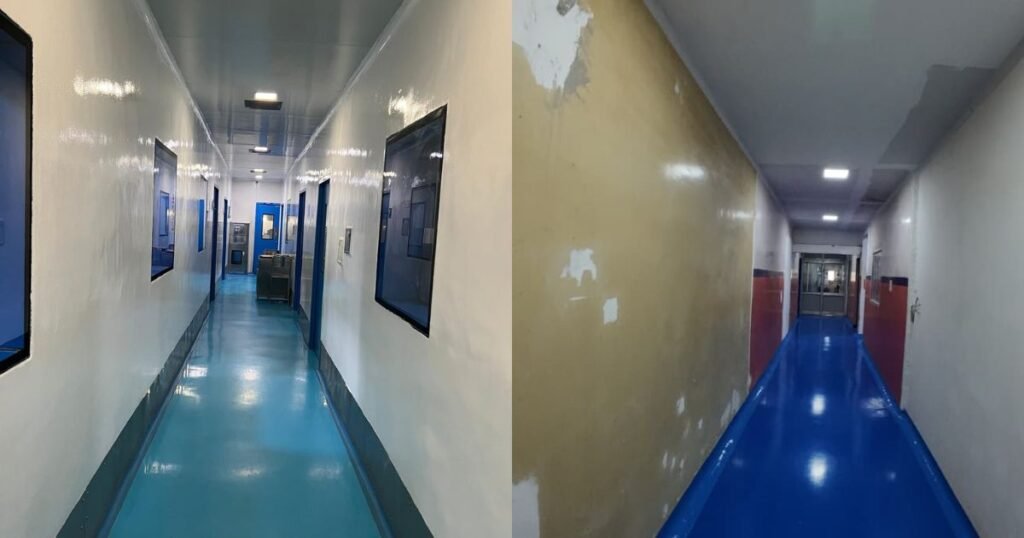
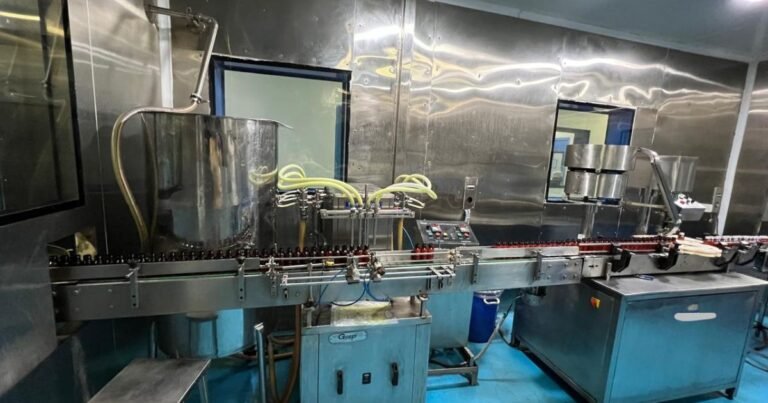
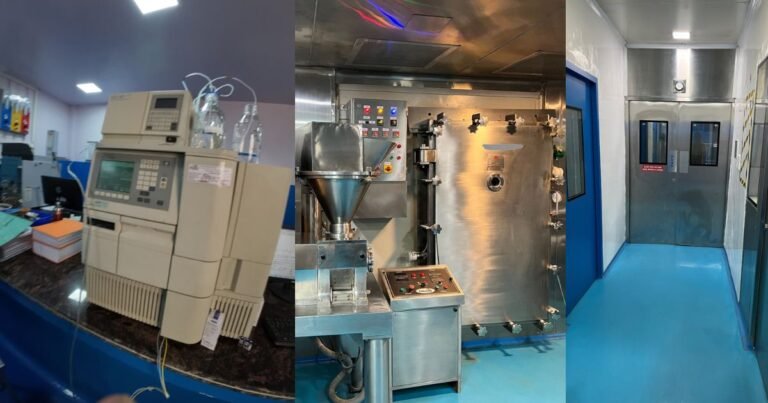
The 10,000 sq ft built-up block on the 1,500 sq m plot is laid out for compliant oral-solid and liquid manufacturing — segregated production, warehousing and QC areas built around GMP material and personnel flow. As a brownfield, operating asset, you take on a facility with a known construction and utility history rather than greenfield unknowns. A full asset and utility schedule (HVAC and cleanroom classification, purified-water system, DG backup, air handling, ETP and QC instrumentation) is provided with the due-diligence pack and should be independently audited.
| Certification | What it enables | Market access |
|---|---|---|
| GMP (CDSCO) | Recognised current Good Manufacturing Practice | Legal manufacture & pan-India distribution of approved formulations |
| Revised Schedule M | Compliance with India’s upgraded GMP norms (in force 1 Jan 2025) | De-risks the unit against ongoing CDSCO risk-based inspections |
| GLP | Good Laboratory Practice in the QC function | Reliable in-house release testing and method integrity |
| DCGI / CDSCO product approvals | Product-level regulatory recognition | Legal manufacture of the 450+ approved formulation list |
Production capacity by dosage form
Installed daily capacity across three non-beta-lactam lines, annualised at ~250 working days:
| Dosage form | Per day | Weekly (6 days) | Annual (250 days) |
|---|---|---|---|
| Tablets (non-beta) | 4 lakh | 24 lakh | 10 crore |
| Capsules (non-beta) | 3 lakh | 18 lakh | 7.5 crore |
| Liquid orals (syrups/suspensions) | 20,000 units | 1.2 lakh units | 50 lakh units |
A ready-to-sell range of 450+ approved formulations
The unit carries a documented portfolio of 450+ approved product formulations — a genuine value driver, since each approval carries the time, cost and paperwork a new manufacturer would otherwise have to build from scratch. The range spans all three dosage forms and the high-volume domestic therapeutic segments:
| Therapeutic segment | Representative range |
|---|---|
| Analgesics & NSAIDs | Aceclofenac, diclofenac, nimesulide and paracetamol combinations |
| Antibiotics & antimicrobials | Ofloxacin–ornidazole, fluconazole and related anti-infectives |
| Gastro / PPIs | Pantoprazole and domperidone-based formulations |
| Anti-allergics & respiratory | Levocetirizine, ambroxol and cough/cold combinations |
| Nutraceuticals & haematinics | Ferrous ascorbate–folic acid, calcium, and multivitamin range |
The full molecule-level approval schedule is shared with qualified buyers under NDA. Segment breadth makes the portfolio well-suited to third-party manufacturing, PCD supply, and — after a WHO-GMP upgrade — export registration.
A ready third-party manufacturing platform
The unit serves 100+ domestic clients on a third-party / contract manufacturing basis — the sticky, capital-light model that underpins much of India’s oral-solids sector. These relationships are durable because moving a product to a new site forces the customer through re-validation and fresh regulatory filings, so an inherited client book carries real switching-cost protection.
For a buyer, the platform supports three revenue modes at once: continuing the existing third-party manufacturing unit business, adding loan-licence arrangements, and — for an operating pharma company — in-housing its own brand production to reclaim margin currently paid to outside manufacturers. The multi-dosage flexibility under one licence lets you re-mix output as client demand shifts — both diversification and client-retention insurance.
The numbers — read honestly
The figures below are as represented by the seller and must be validated in diligence against audited accounts and GST filings. Note the correction that matters most: the ~20% figure is gross margin, not EBITDA. On ₹5 crore of turnover that’s roughly ₹1 crore of gross profit; the operating (EBITDA) margin sits below that once overheads are counted and should be confirmed from the accounts.
| Metric | As represented | Note for buyer |
|---|---|---|
| Annual turnover | ₹5.00 Cr | Reconcile to GST returns + bank statements |
| Gross margin | ~20% | ≈ ₹1.0 Cr gross profit; thin, consistent with job-work mix |
| EBITDA | Below gross profit | Confirm from audited P&L — not the 20% figure |
| Capacity utilisation | Low | Large installed headroom vs current output |
| Approved formulations | 450+ | Core intangible value — verify against licence |
| Client base | 100+ | Verify top-10 contribution & churn |
| Workforce | 40 | Key-staff retention plan pre-close |
Asking price — and how to read it
The asking price is ₹14 crore, negotiable subject to due diligence. It’s worth being direct about what that number is:
How to value it: commission an independent valuation of (1) land + building at prevailing HP industrial rates, (2) plant & machinery at fair market value, and (3) intangibles — the 450+ approvals, licences and client relationships. Then test whether the sum, plus a premium for a ready, running platform with headroom, supports the ask. Negotiate on the gap. Treat current earnings as the floor return while you scale utilisation and improve mix — not as the basis for the price.
Investment calculator
Because the thesis here is utilisation-and-margin-led, the calculator works from gross margin, lets you deduct your own operating cost to reach EBITDA, and shows a scale-up scenario. Unlevered (all-equity) — layer in your own debt separately.
Illustrative only. Excludes working-capital movements, tax, and capex beyond the operating cost you set. Not financial advice — verify all inputs in due diligence.
Why now
The Revised Schedule M took effect on 1 January 2025 and the extension window for smaller manufacturers has closed, with CDSCO running risk-based inspections. Non-compliant units face costly retrofits and downtime; this facility is already compliant, so that cost simply doesn’t apply — and as enforcement tightens, compliant capacity gains share.
India is the world’s generics workshop, and outsourcing keeps rising — startups avoid crores in capex by using contract manufacturers, and larger firms offload commoditised products. A ready, licensed unit with a 450+ approval portfolio captures that demand immediately; a greenfield build sits out the first 18–24 months.
The gap between installed capacity and current ₹5 crore output is the clearest lever any buyer has: filling existing lines and improving product mix drives revenue and margin with limited incremental capex. A WHO-GMP upgrade on this compliant base opens export markets on top.
What works in your favour
What you’re taking on
| Risk | Impact | Mitigation |
|---|---|---|
| Valuation vs earnings | ₹14 Cr is many multiples of current profit | Value on independent asset + approval + intangible basis; negotiate the gap; scale-up drives the return |
| Thin operating margin | 20% gross; EBITDA lower | Confirm cost structure; improve mix toward higher-value products post-close |
| Capacity under-utilisation | Return stays low if lines aren’t filled | Named client-acquisition plan; loan-licence deals; export/WHO-GMP path |
| Nameplate vs actual capacity | Overstated throughput inflates upside | Validate against batch records & utility capacity pre-close |
| Client concentration / churn | Revenue shock if key accounts exit | Top-10 contribution check; transition & retention agreements |
| Partnership-entity transfer | Liabilities carried in an entity deal | Prefer slump/asset sale where advised; full liability & litigation search |
None of these is fatal with active management — but this is an operating business bought on its platform value, not a passive holding.
Who this is right for
- Existing pharma company
- Wanting ready, compliant non-beta capacity plus a 450+ product range to in-house production without the greenfield wait.
- Marketing / PCD / distribution firm
- Ready to secure its own supply, own the manufacturing margin, and sell an established portfolio under its own brand.
- Entrepreneur / investor with operations capability
- Able to fill the installed capacity and pursue a WHO-GMP export upgrade on the compliant base.
- Not a fit if
- You want passive income, have no route to operating expertise, or expect current earnings to justify the price on their own — the value is in what you build on the platform.
Next steps for serious buyers
A site visit is essential — a facility can’t be assessed from documents alone. When you make contact, request:
- Financials
- Audited accounts (last 3 years), reconciled to GST filings — and a clear split of gross margin vs EBITDA.
- Licences
- GMP certificate and CDSCO manufacturing licence (scope + validity).
- Product approvals
- Full 450+ formulation / approval schedule, checked against the licence.
- Plant & machinery
- Equipment schedule with age, condition and maintenance history.
- Capacity
- Throughput validation backed by batch records.
- Clients
- Top-client list with revenue contribution and churn history.
- Property & legal
- Title / tenure documents, environmental consents (ETP), and a change-of-control review of key contracts.
Request the due-diligence pack & arrange a site visit
Product-approval schedule, GMP & CDSCO licence scope, machinery list, three-year financials, client-contribution summary and a transition timeline — shared with qualified, funding-ready buyers. Handled in confidence.
Serious, funding-ready buyers only · Site visits by appointment
Frequently asked questions
What certifications does the unit hold?
What is the asking price, and how is it justified?
Is the 20% figure EBITDA?
What is the production capacity?
How many products are approved?
Does the unit export?
What is the legal structure of the deal?
Figures on this page relating to turnover, margin, capacity, approvals and returns are indicative, are as represented by the seller where noted, and are subject to independent verification. Land tenure, certifications and approvals must be confirmed by title search and regulatory checks. Nothing here constitutes an offer, a valuation, or investment/financial advice.